
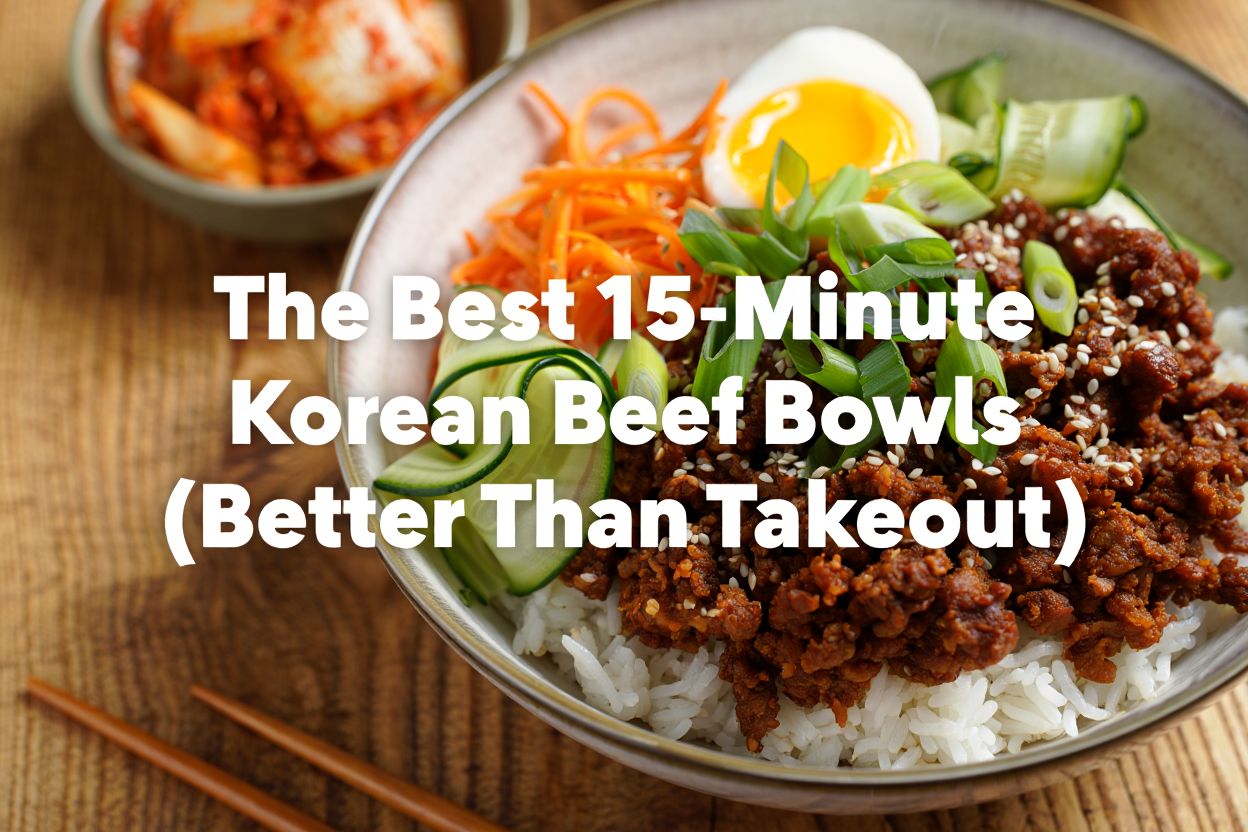
I still remember the first time I tried to make Korean beef bowls at home. It was a chaotic Tuesday night, the kids were hungry, and I had about twenty minutes before someone declared a snack emergency. I threw things together without really understanding the balance of sweet, savory, and spicy that makes this dish sing. The result? Edible, but boring.
Fast forward through about a dozen test batches (and one memorable disaster where I used way too much gochugaru), and I’ve finally landed on a version that my family actually requests. Like, requests. My husband, who typically eats whatever I put in front of him without comment, recently said, “This is better than the place down the street.”
That’s when I knew I had to share this recipe.
These Korean beef bowls come together in literally 15 minutes, use one skillet, and deliver that deep, caramelized, garlic-ginger flavor you crave from your favorite Korean spot. Plus, they’re budget-friendly and endlessly customizable. Whether you’re meal prepping for the week or need a lightning-fast dinner between soccer practice and homework, this one’s got your back.
Let me show you exactly how I make them.
Table of Contents
Why You’ll Love This Recipe
- Lightning fast. From fridge to table in 15 minutes flat. I’ve timed it repeatedly (usually on nights when I forgot to thaw anything else).
- One skillet cleanup. My absolute favorite kind of cooking. No mountain of dishes waiting for you after dinner.
- That perfect sweet-savory glaze. The sauce reduces into a sticky, glossy coating that clings to every bit of beef. When it hits the hot pan? The smell alone will bring your family running.
- Budget-friendly. Ground beef keeps this meal affordable, unlike pricier steak cuts used in traditional bulgogi.
- Crowd-pleaser status. Even my picky eater (she’s seven and lives on buttered noodles half the time) cleans her bowl when I make these Korean beef bowls.
- Meal prep hero. The beef mixture reheats beautifully, and you can batch cook everything on Sunday for easy lunches all week.
Recipe Overview
| Detail | Info |
|---|---|
| Prep time | 5 minutes |
| Cook time | 10 minutes |
| Total time | 15 minutes |
| Servings | 4 bowls |
| Calories per serving | ~480 (without rice) |
| Cuisine type | Korean-inspired |
| Diet type | Can be gluten-free, dairy-free |
I usually make these Korean beef bowls on busy weeknights when I need something satisfying but have zero energy for complicated cooking. They’re also my go-to for “clean out the fridge” nights toss in whatever vegetables are wilting in the crisper drawer.
Ingredients
For the Beef & Sauce:
- 1 lb lean ground beef (85/15 works great; I’ve used 90/10 too)
- 3 cloves garlic, minced (don’t skimp here)
- 1 teaspoon fresh ginger, grated (I use a microplane worth every penny)
- ½ cup low-sodium soy sauce (or coconut aminos for gluten-free)
- ¼ cup brown sugar, packed (light or dark both work)
- 2 tablespoons rice vinegar (unseasoned)
- 1 tablespoon sesame oil (toasted, please the dark kind)
- ½ teaspoon red pepper flakes (gochugaru is traditional, but regular red pepper flakes work)
- ¼ teaspoon black pepper
- 1 tablespoon cornstarch mixed with 2 tablespoons cold water (slurry)
For Serving:
- 4 cups cooked white rice (jasmine or short-grain)
- 2 green onions, thinly sliced
- 1 tablespoon sesame seeds (toasted if you have them)
- Optional: cucumber ribbons, shredded carrots, pickled radish, or a fried egg
Substitutions I’ve Personally Tested:
You can swap the ground beef for ground turkey or chicken just add an extra tablespoon of oil to the pan since poultry is leaner. My sister-in-law uses Beyond Meat and says it works beautifully (she adds a splash more soy sauce for umami). For low-carb, serve over cauliflower rice or in butter lettuce cups. And if you’re out of rice vinegar? Use mirin or even a teaspoon of apple cider vinegar. I’ve done it in a pinch, and honestly, no one noticed.
Step-by-Step Instructions
1. Start your rice first.
If you’re not using leftover rice (I almost always make extra the night before), get it going in a rice cooker or pot before you touch anything else. By the time the beef is done, your rice will be ready. Timing is everything here.
2. Whisk together the sauce.
In a medium bowl, combine the soy sauce, brown sugar, rice vinegar, sesame oil, red pepper flakes, and black pepper. Whisk until the sugar mostly dissolves. Set this bowl right next to the stove — once the beef browns, you’ll need it fast.
3. Brown the beef.
Heat a large skillet or wok over medium-high heat. Add the ground beef and break it apart with a wooden spoon. Let it cook undisturbed for about 2 minutes to get some browning (that’s where the flavor lives). Then stir and continue cooking until no longer pink, about 4-5 minutes total.
*Don’t drain the fat if you’re using 85/15 that fat carries flavor. If you used 80/20, drain a little, but leave about a tablespoon.*
4. Add the aromatics.
Push the beef to one side of the skillet and add the minced garlic and grated ginger to the empty space. Sauté for 30-45 seconds until fragrant. I cannot stress this enough: do not burn the garlic. Once I got distracted by my phone and ended up with bitter, acrid garlic that ruined the whole batch. Learn from my mistake.
When you smell that warm, spicy, almost sweet aroma blooming in the pan? That’s when you know you’re on the right track.
5. Pour in the sauce.
Add the sauce mixture to the skillet and stir everything together. Bring it to a simmer you’ll see bubbles forming around the edges. The color will deepen to a rich mahogany, and the smell will shift from savory to irresistibly sweet-savory.
6. Thicken with the slurry.
Give your cornstarch slurry a quick stir (it settles fast) and pour it into the simmering sauce. Stir continuously for about 1 minute. Watch closely the liquid will transform from thin and watery to glossy and thick, coating the back of your spoon (and every piece of beef).
7. Simmer and glaze.
Let everything cook together for another 1-2 minutes until the beef is fully glazed and the sauce has reduced to a thick, sticky consistency. The sound here matters it should go from a watery bubble to a slower, thicker glub-glub. That’s how you know you’re done.
8. Assemble your bowls.
Scoop rice into four bowls. Top with the saucy beef mixture. Garnish generously with green onions and sesame seeds. Add any fresh vegetables you like cucumber ribbons add a cool, crisp contrast to the warm, rich beef.
Pro Tips for Perfect Results
Get your pan hot enough. Medium-high heat is non-negotiable. If your pan isn’t hot enough, the beef will steam instead of brown, and you’ll miss that deep, caramelized flavor.
Don’t overcook the garlic. Burnt garlic tastes bitter and sharp. Add it after the beef is mostly cooked, and only let it sizzle for 30 seconds before adding the sauce.
Make extra sauce. I learned this the hard way after a few dry bowls. I now double the sauce recipe and refrigerate half for next time. It keeps for two weeks and works on chicken, tofu, or even roasted veggies.
Toast your sesame seeds. Raw sesame seeds are fine. Toasted sesame seeds are magic. Just toss them in a dry pan over medium heat for 2-3 minutes until golden and fragrant. The nutty aroma is worth the tiny effort.
Taste before serving. Every soy sauce has a different salt level. I always do a quick taste and sometimes add a pinch more brown sugar or a splash of rice vinegar to balance things out.
Variations & Add-Ons
Spicy Korean Beef Bowls: Double the red pepper flakes or add 1 tablespoon of gochujang (Korean red pepper paste) along with the sauce. My husband loves this version. I add a dollop of mayo to mine to cool it down don’t judge until you try it.
Low-Carb / Keto: Swap the brown sugar for monk fruit sweetener or allulose. Use coconut aminos instead of soy sauce (lower carb) and serve over cauliflower rice. I’ve made this for my keto neighbor, and she asked for the recipe.
Vegetarian: Use crumbled tempeh or finely chopped mushrooms. Portobellos have that meaty texture. Cook them the same way, but let them brown longer about 8 minutes total to drive off moisture.
Extra Veggie: Shredded carrots, thinly sliced bell peppers, or bok choy can go right in the skillet after the beef browns. Sauté for 2 minutes before adding the sauce. This is how I sneak vegetables past my kids.
With a Fried Egg: Oh, this is my personal favorite. A runny yolk mixed into the beef and rice creates a creamy, rich sauce that’s absolutely next-level. I make this version on weekends when I have an extra five minutes.
Storage and Meal Prep Tips
Fridge: Store the beef mixture in an airtight container for up to 4 days. Keep rice separate if possible it gets mushy when stored together.
Freezer: The cooked beef freezes beautifully for up to 3 months. I portion it into single-serving containers for easy lunches. Thaw overnight in the fridge.
Reheating: Skillet over medium-low heat with a splash of water or broth to loosen the sauce. Microwave works in a pinch (60 seconds, stir, another 30 seconds), but the skillet preserves that sticky glaze better.
My meal prep routine: On Sundays, I cook a double batch of rice, make the beef mixture, and chop all my garnishes (green onions, cucumber, sesame seeds). Then on weeknights, I just reheat and assemble. Dinner in 3 minutes flat. This routine has saved me more times than I can count.
FAQ Section
Can I use ground chicken or turkey instead of beef?
Absolutely. I’ve done both. Just add 1 tablespoon of oil to the pan first since poultry is leaner. Ground turkey needs a little more seasoning to add an extra pinch of black pepper and a dash of garlic powder.
Why is my sauce not thickening?
Two possibilities: either you didn’t bring the sauce to a full simmer before adding the slurry, or you didn’t stir the slurry enough before pouring it in. Cornstarch settles fast. Always re-whisk right before adding. And make sure the liquid is bubbling heat activates the thickening power.
Are Korean beef bowls spicy as written?
Not really. With just ½ teaspoon of red pepper flakes, they have a mild warmth that most kids handle fine. Leave the flakes out entirely for zero heat, or bump them up (and add gochujang) for serious spice. I usually make a mild batch for my daughter and add extra flakes to my own bowl at the table.
Can I make this with steak instead of ground beef?
Yes, though it won’t be a 15-minute meal anymore. Use thinly sliced ribeye or sirloin (freeze it for 20 minutes first to make slicing easier). Sear quickly in a hot pan, remove it, make the sauce, then toss the steak back in at the end to coat. Cook time jumps to about 25 minutes.
What’s the best rice for Korean beef bowls?
Short-grain white rice is traditional — it’s sticky and clumps together perfectly to pick up all that sauce. Jasmine rice works too (that’s what I usually have on hand). Brown rice is fine but chewier. Just don’t use instant rice if you can help it. The texture is… sad.
Let’s Make Korean Beef Bowls Tonight
I hope you give these Korean beef bowls a try on your next crazy weeknight. They’ve genuinely changed the way my family eats on busy days no more drive-thru guilt or sad freezer meals. Just real, delicious food that comes together faster than takeout delivery.
When you make them, I’d love to hear how they turn out. Did you add the fried egg? Spice it up with gochujang? Get creative with your toppings? Drop a comment below or tag me in your photos. Cooking is better when we share it.
Now go fire up that skillet. Your 15-minute dinner is waiting.
Happy cooking,
Joanna