
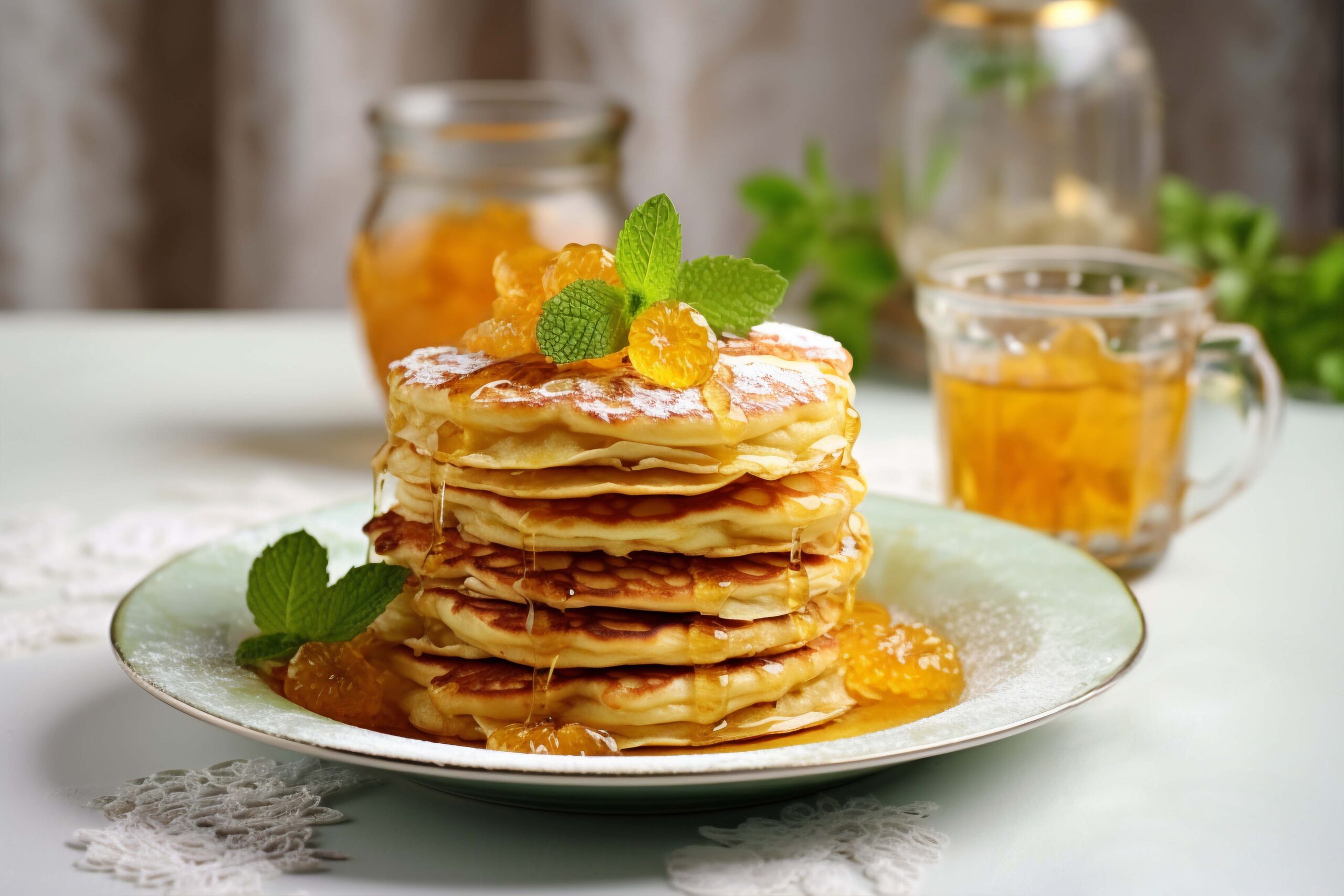
There’s something magical about a stack of pancakes that manages to be both impossibly light and deeply satisfying at the same time. That’s exactly what these lemon ricotta pancakes deliver a delicate texture that practically melts in your mouth, balanced with the bright, sunny flavor of fresh citrus.
I still remember the first time I tasted lemon ricotta pancakes at a tiny café during a weekend trip to the coast. The waiter set down this golden stack, dusted with powdered sugar, and I took one bite and literally paused mid-conversation. “What is this?” I asked my husband, who was already reaching for another slice from my plate. The secret, I later learned, was ricotta cheese in the batter something I’d never thought to try at home.
When I got back to my own kitchen, I made it my mission to recreate that experience. After about seven test batches (my family was very patient), I landed on this version. These pancakes are my go-to for lazy Sunday mornings, holiday brunches, or any day when I want something that feels just a little special without spending hours at the stove. They come together quickly, use simple ingredients, and honestly taste like something from a fancy brunch spot except you get to stay in your pajamas.
Table of Contents
Why You’ll Love This Recipe
- Incredibly light and fluffy – The ricotta adds moisture without weighing the pancakes down, while whipped egg whites give them that signature airy lift.
- Bright, fresh lemon flavor – We’re using both zest and juice, so every bite has that clean, citrusy brightness.
- No buttermilk required – The ricotta and a splash of milk create the perfect tender crumb without needing specialty ingredients.
- Impressive but actually simple – These look and taste like something from a high-end brunch spot, but they come together in one bowl (plus a separate one for the egg whites).
- My kids request these constantly – My eight-year-old says they taste like “pancakes and lemon cake had a baby,” which I think is the highest compliment.
- Freezer-friendly – Make a double batch and stash some in the freezer for busy mornings. They reheat beautifully.
Recipe Overview
| Detail | Info |
|---|---|
| Prep Time | 10 minutes |
| Cook Time | 15 minutes |
| Total Time | 25 minutes |
| Servings | 4 (about 10–12 pancakes) |
| Calories | 285 per serving (about 3 pancakes) |
| Cuisine | American / Italian-inspired |
| Diet | Vegetarian |
I usually make these on weekend mornings when I have an extra ten minutes to zest a lemon and whip the egg whites properly. The extra step is absolutely worth it.
Ingredients
For the Pancakes:
- 1 ½ cups all-purpose flour
- 2 tablespoons granulated sugar
- 2 teaspoons baking powder
- ½ teaspoon baking soda
- ½ teaspoon fine sea salt
- 3 large eggs, separated (yolks and whites in separate bowls)
- 1 cup whole milk ricotta cheese (full-fat gives the best texture)
- ⅓ cup milk (I use whole milk, but 2% works too)
- Zest of 2 large lemons (about 2 tablespoons)
- 2 tablespoons fresh lemon juice
- 1 teaspoon vanilla extract
- 2 tablespoons unsalted butter, melted (plus extra for the pan)
For Serving (Optional but Recommended):
- Powdered sugar for dusting
- Fresh berries (blueberries, raspberries, or sliced strawberries)
- Maple syrup or honey
- Extra lemon zest
- A drizzle of melted butter
Ingredient Substitutions I’ve Tried:
If you don’t have ricotta on hand, I’ve successfully used full-fat cottage cheese that I whizzed in the food processor until smooth the texture is slightly different but still delicious. For a dairy-free version, I’ve used plant-based ricotta alternatives, though the pancakes won’t get quite as fluffy. If you’re out of lemons, orange zest and juice work beautifully for a sweeter variation. One thing I don’t recommend: low-fat ricotta. It has more moisture and less richness, and the pancakes tend to come out a bit denser. Treat yourself to the full-fat version it makes a difference.
Step-by-Step Instructions
1. Separate the eggs while they’re cold.
I’ve learned this trick over years of baking: eggs separate more cleanly when they’re straight from the fridge. Place your egg whites in a medium bowl and the yolks in a larger mixing bowl. Let the whites sit on the counter for about 10 minutes while you prep everything else—room-temperature whites whip up fluffier.
2. Combine the dry ingredients.
In a separate bowl, whisk together the flour, sugar, baking powder, baking soda, and salt. Whisking aerates the flour and ensures the leaveners are evenly distributed, so you don’t get bitter pockets of baking powder in your finished pancakes. Set this aside for now.
3. Build the wet base.
To the bowl with your egg yolks, add the ricotta, milk, lemon zest, lemon juice, vanilla, and melted butter. Whisk until everything is smooth and well combined. The mixture will look creamy with little flecks of lemon zest throughout—it smells incredible at this stage. I always pause here and let my kids smell the bowl because that bright lemon aroma is pure happiness.
4. Fold in the dry ingredients.
Pour the dry mixture into the ricotta mixture and stir gently with a rubber spatula just until combined. A few small lumps are perfectly fine. Overmixing at this stage develops gluten, which leads to tough pancakes. I learned this the hard way during my second test batch when I ended up with pancakes that had the texture of hockey pucks. Trust me stop mixing when you no longer see streaks of dry flour.
5. Whip the egg whites to soft peaks.
Using a handheld mixer or a stand mixer with the whisk attachment, beat the egg whites on medium-high speed until they form soft, billowy peaks. You’re looking for a texture that holds its shape but still looks creamy and moist not stiff and dry. This takes about 2–3 minutes. If you lift the whisk, the peaks should curl over gently at the tips.
Here’s a moment where patience matters: don’t rush this step. Properly whipped whites are what give these lemon ricotta pancakes their signature cloud-like texture.
6. Gently fold the whites into the batter.
Add about one-third of the whipped whites to the batter and fold them in to lighten the mixture. Then add the remaining whites and fold gently, using a wide spatula to cut down through the center and scoop up from the bottom. Rotate the bowl as you go. You want to incorporate the whites without deflating all that lovely air you just created. The final batter should be thick, fluffy, and pale yellow with a creamy consistency.
7. Cook the pancakes over medium-low heat.
Heat a large nonstick skillet or griddle over medium-low heat. Add a little butter and let it melt until it’s bubbling but not browning. Drop the batter by ⅓-cup portions onto the skillet. I use a cookie scoop for even sizing. Let the pancakes cook for about 2–3 minutes you’ll know they’re ready to flip when you see small bubbles forming on the surface and the edges look set.
8. Flip once, and only once.
Gently slide a spatula under each pancake and flip with confidence. The cooked side should be a beautiful golden-brown. Cook for another 1–2 minutes on the second side until puffed and cooked through. Resist the urge to press down on them with the spatula you’ll squeeze out all that wonderful air.
9. Keep warm while you finish cooking.
I like to place finished pancakes on a baking sheet in a 200°F oven while I cook the remaining batter. This keeps them warm without drying them out, and everyone can sit down together with a fresh stack.
10. Serve immediately with your favorite toppings.
A dusting of powdered sugar, a handful of fresh berries, and a drizzle of maple syrup is my go-to. Sometimes I add an extra sprinkle of lemon zest on top for even more brightness.
Pro Tips for Perfect Results
Don’t skip separating the eggs. I know it adds an extra dish to wash, but this is the secret to the pancakes’ incredible lightness. The whipped whites act as a natural leavener, creating a texture that baking powder alone can’t achieve.
Use a light hand when folding. I ruined a batch early on by being too aggressive with the egg whites. Think of it like folding a soufflé gentle, sweeping motions from the bottom of the bowl. A few streaks of white are better than a deflated batter.
Temperature control matters. Medium-low heat is your friend here. I made the mistake of cranking the heat to “speed things up” once and ended up with pancakes that were burnt on the outside and raw in the center. A slower cook gives the interior time to set while the outside turns golden.
Measure your lemon zest correctly. When a recipe calls for the zest of two lemons, use two lemons—not one giant lemon and a prayer. The zest provides concentrated lemon oil that juice alone can’t replicate. I use a microplane zester and make sure to get only the yellow part, avoiding the bitter white pith underneath.
Let the batter rest if you have time. If you can let the mixed batter sit for 10 minutes before cooking, the gluten relaxes and the pancakes become even more tender. I often prep the batter, then set the table and brew coffee while it rests.
Variations & Add-Ons
Blueberry Lemon Ricotta Pancakes: Fold 1 cup of fresh or frozen blueberries into the batter right after adding the dry ingredients (before folding in the egg whites). Toss the blueberries with a tablespoon of flour first to prevent them from sinking to the bottom. This is my personal favorite variation the sweet-tart pop of blueberry with the creamy lemon flavor is absolutely perfect.
Double Lemon Poppy Seed: Add 1 tablespoon of poppy seeds to the dry ingredients and increase the lemon zest to 3 lemons. The poppy seeds add a lovely crunch and nutty flavor that complements the lemon beautifully.
Gluten-Free Option: I’ve tested this with a 1:1 gluten-free flour blend (I use Bob’s Red Mill) and had great results. The pancakes are slightly more delicate, so handle them gently when flipping.
Savory Herb Variation: For a brunch twist, omit the sugar and add 2 tablespoons of finely chopped chives, 1 tablespoon of fresh dill, and an extra ½ teaspoon of salt. Serve with smoked salmon, crème fraîche, and capers. This one was inspired by a friend who prefers savory breakfasts, and honestly, it’s a showstopper for a special brunch spread.
Storage and Meal Prep Tips
Refrigerator: Store any leftover pancakes in an airtight container in the fridge for up to 3 days. I like to place a piece of parchment paper between layers to prevent sticking.
Freezer: These freeze beautifully. Arrange the cooled pancakes in a single layer on a baking sheet and freeze until solid (about 1–2 hours). Transfer to a freezer-safe bag or container, and they’ll keep for up to 3 months. I always make a double batch specifically for this purpose having pancakes ready to go on a hectic weekday morning feels like a superpower.
Reheating: From the fridge, I pop them in the toaster or toaster oven for a quick reheat this restores a bit of crispiness on the edges. From frozen, I microwave for 30–45 seconds, then finish in the toaster for another minute. In my house, my husband prefers his reheated in a skillet with a tiny pat of butter, which gives them a lightly crisp exterior. Everyone has their method, and they all work.
FAQ
Can I make the batter the night before?
I don’t recommend it. The leaveners start activating as soon as they’re mixed with the wet ingredients, and the whipped egg whites will deflate over time. For the best texture, mix the batter right before cooking. If you want to get ahead, you can measure your dry and wet ingredients separately the night before, then combine and whip the egg whites in the morning.
Why did my pancakes turn out dense?
Dense pancakes usually come from one of three things: overmixing the batter (which develops gluten), not whipping the egg whites to proper soft peaks, or folding the whites in too aggressively. If you’re careful with all three steps, you’ll get that lovely light texture. I’ve definitely made all these mistakes myself it’s part of the learning process!
Can I use low-fat ricotta?
You can, but I’ve found the pancakes aren’t quite as tender or rich. Full-fat ricotta has less moisture and more creaminess, which gives the best texture. If you only have low-fat, you might want to drain it in a fine-mesh sieve for 30 minutes before using to remove excess liquid.
What’s the best way to zest lemons for this recipe?
A microplane zester is my absolute favorite tool for this job. It produces fine, fluffy zest that incorporates seamlessly into the batter. Just be careful to zest only the yellow outer layer the white pith underneath is bitter and can affect the flavor. I also recommend zesting before juicing the lemons, since a whole lemon is much easier to hold and grate.
Can I make these dairy-free?
Yes, with adjustments. I’ve used Kite Hill’s plant-based ricotta and oat milk in place of the dairy ingredients. The texture is slightly less fluffy, and the flavor is a bit milder, but they still make a delicious pancake. I also add an extra tablespoon of lemon juice to brighten things up.
Conclusion
I hope these lemon ricotta pancakes become as beloved in your kitchen as they are in mine. There’s something so satisfying about pulling together a stack of pancakes that feels special enough for a celebration but easy enough for any random Tuesday when you need a little brightness. The combination of creamy ricotta, zesty lemon, and that impossibly fluffy texture is one I keep coming back to again and again.
If you make these, I’d genuinely love to hear how they turn out. Drop a comment below with your thoughts, any variations you tried, or even a photo if you’re feeling proud of your stack. And if you tag me on social media, I’ll be there cheering you on from my own kitchen.
Now go zest some lemons, whip up those egg whites, and treat yourself to a truly wonderful breakfast. You deserve it.
please try our Whipped Coffee Pancakes
Happy cooking,
Joanna