
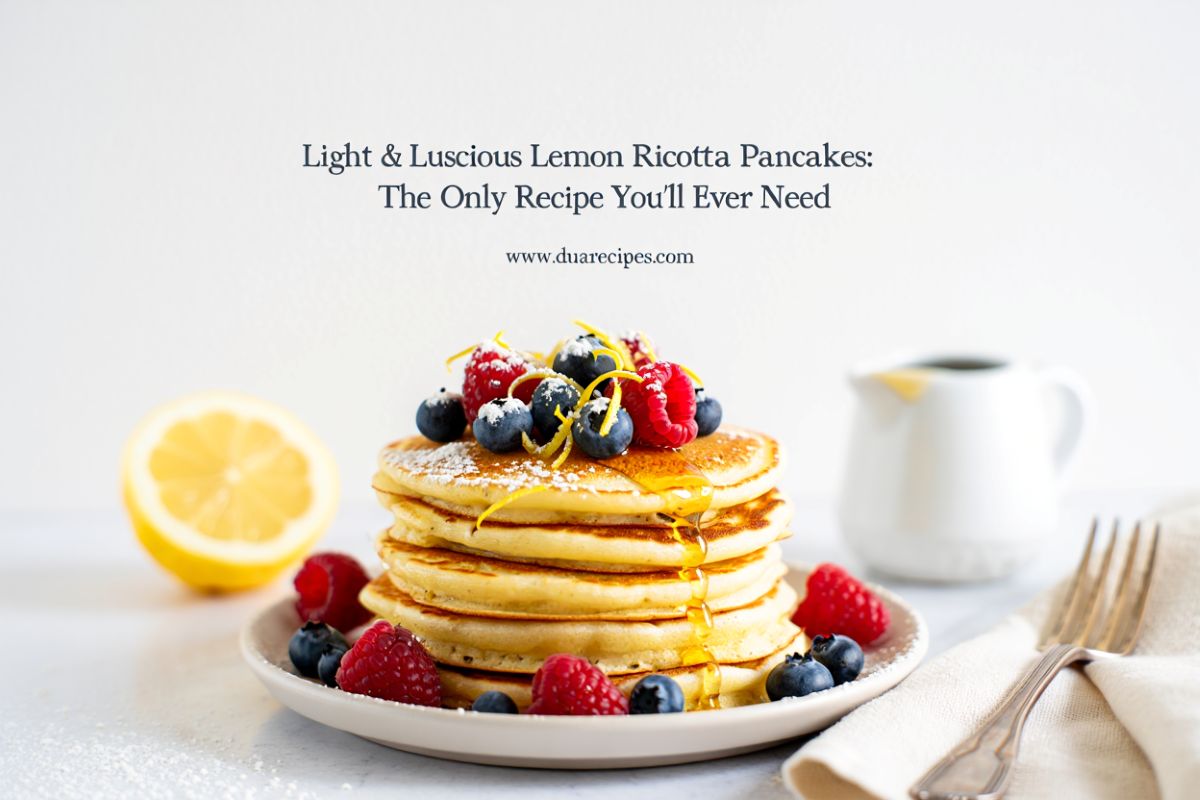
There’s something magical about a lazy weekend morning when the whole house is still quiet, and the only mission is to make a breakfast that feels like a hug on a plate. For years, I was a loyal buttermilk pancake person don’t get me wrong, I still am but everything changed the first time I made Lemon Ricotta Pancakes.
I remember testing the recipe for a brunch gathering, slightly skeptical that ricotta belonged anywhere near my griddle. The moment the batter hit the pan, though, I knew I was onto something. The kitchen filled with the most incredible aroma: warm, buttery, with bright pops of fresh lemon zest cutting through. When I flipped that first pancake and saw the golden, pillowy surface with those signature crispy edges, I actually laughed out loud. They were perfect.
These aren’t your average pancakes. They’re light, almost airy, with the creamy ricotta melting into the batter to create a texture that’s tender on the inside and beautifully crisp on the outside. Plus, they come together in about 20 minutes, making them feel special enough for a holiday but simple enough for a spontaneous Tuesday morning. If you’re looking for a pancake that’s impressive, foolproof, and bursting with citrus flavor, you’ve just found your new favorite.
Table of Contents
Why You’ll Love This Recipe
- Incredibly Fluffy Texture: The combination of ricotta cheese and whipped egg whites creates pancakes that rise beautifully and stay light, not dense or gummy.
- Bright, Fresh Flavor: Fresh lemon zest and a hint of juice cut through the richness, giving every bite a vibrant, refreshing taste that doesn’t feel heavy.
- Perfectly Crispy Edges: I’ve perfected the technique to get that golden, slightly caramelized crust while keeping the centers soft and custard-like. My husband, who is usually a “plain pancake purist,” now refuses to eat any other kind because of those edges.
- Surprisingly Easy: Despite sounding fancy, these come together with simple ingredients and one bowl (plus a separate bowl for whipping egg whites don’t skip this!).
- Restaurant-Quality at Home: This is the kind of recipe that makes you feel like a professional chef. Every time I serve these to guests, I get asked, “Are you sure you didn’t get these from a café?”
Recipe Overview
| Detail | Information |
|---|---|
| Prep Time | 10 minutes |
| Cook Time | 15 minutes |
| Total Time | 25 minutes |
| Servings | 4 (about 12-14 pancakes) |
| Calories per serving | 365 kcal |
| Cuisine Type | Italian-American |
| Diet Type | Vegetarian |
I usually make this recipe on Sunday mornings when there’s no rush. The sound of the batter sizzling on the griddle and the smell of lemon zest drifting through the kitchen have become my official signal that the weekend has truly begun.
Ingredients
For the Pancakes:
- 1 ½ cups all-purpose flour (spooned and leveled)
- 2 tablespoons granulated sugar
- 1 ½ teaspoons baking powder
- ½ teaspoon baking soda
- ½ teaspoon salt
- 3 large eggs, separated (this is key for fluffiness)
- 1 cup whole milk ricotta cheese (full-fat is best for creaminess)
- ⅓ cup milk (I use whole milk, but 2% works too)
- Zest of 2 large lemons (don’t skimp this is where the flavor lives!)
- 2 tablespoons fresh lemon juice
- 1 teaspoon vanilla extract
- 3 tablespoons unsalted butter, melted, plus more for the pan
For Serving (Optional but Highly Recommended):
- Powdered sugar, for dusting
- Fresh berries (blueberries, raspberries, or strawberries)
- Maple syrup (or a homemade blueberry compote)
- Additional lemon zest
Substitutions & Swaps:
I’ve tested this recipe a few different ways over the years. If you don’t have whole milk ricotta, part-skim will work, but I’ve found the pancakes are slightly less creamy. For a dairy-free version, you can try a high-quality plant-based ricotta and oat milk my sister-in-law does this, and while the texture is a bit different, the flavor still shines. If you’re out of lemons (the horror!), you can use orange zest and juice for a sweeter, milder citrus pancake.
Step-by-Step Instructions
1. Prep Your Station.
Before I even touch the mixing bowl, I set up my griddle or a large non-stick skillet over medium-low heat. I’ve learned the hard way that rushing to heat the pan while the batter is waiting leads to uneven cooking. Let it warm up slowly while you work.
2. Combine the Dry Ingredients.
In a large mixing bowl, whisk together the flour, sugar, baking powder, baking soda, and salt. Make sure everything is evenly distributed. I used to skip the whisking step and just stir with a spoon, but I found that this leads to pockets of baking powder, which can make one pancake taste bitter. A good whisk is your friend here.
3. Create the Ricotta Base.
In a separate medium bowl, whisk the egg yolks until they’re slightly lighter in color, about 30 seconds. Add the ricotta cheese, milk, lemon zest, lemon juice, vanilla extract, and melted butter. Whisk until the mixture is smooth and creamy. It should look like a thick, fragrant custard. Stop here for a second and just smell it—that bright lemon aroma is exactly what we’re going for.
4. Whip the Egg Whites.
This is the non-negotiable step. In a clean, dry bowl (I use my stand mixer with the whisk attachment, but a hand mixer works great too), beat the egg whites until stiff peaks form. You’ll know they’re ready when you lift the whisk and the peak stands straight up without drooping. Don’t rush this step like I once did—under-whipped whites won’t give you that airy lift, and over-whipped whites will become grainy and hard to fold in. You’re looking for a glossy, marshmallow-like texture.
5. Combine Wet and Dry.
Pour the ricotta mixture into the bowl with the dry ingredients. Stir gently with a rubber spatula until just combined. The batter will be thick and a little lumpy that’s okay. Over-mixing at this stage develops gluten, which leads to tough pancakes.
6. Fold in the Egg Whites.
Here’s where the magic happens. Add about a third of the whipped egg whites to the batter and fold them in gently to lighten the mixture. Then, add the remaining egg whites. Use a wide, sweeping motion with your spatula—cut down through the center, scrape along the bottom, and fold over the top. Rotate the bowl as you go. Stop as soon as you no longer see white streaks. The final batter should be thick, fluffy, and almost soufflé-like.
7. Cook to Golden Perfection.
Now, test your pan. Flick a drop of water onto the griddle if it sizzles and dances, you’re ready. Lightly butter the surface. I use about a ¼ cup measure to scoop the batter, gently pouring it onto the griddle. Don’t spread it out; let the batter do its thing. Cook for 2-3 minutes, until you see small bubbles forming on the surface and the edges look set and slightly dry. You’ll also smell that irresistible nutty, buttery scent.
8. Flip Once, and Only Once.
This is my golden rule. Use a thin, wide spatula to get under the pancake. If it feels sturdy and the bottom is a deep golden brown, flip it confidently. Cook for another 1-2 minutes on the second side. Resist the urge to press down on the pancakes that squishes all the air out and ruins the fluffy texture. I always wait until the second side is perfectly browned, then transfer the pancakes to a plate.
Pro Tips for Perfect Results
- Don’t Over-Mix the Batter. I cannot stress this enough. A few small lumps are a good sign. Over-mixing activates gluten, and gluten is the enemy of a fluffy pancake. When you fold in the egg whites, a gentle hand is everything.
- Use a Griddle for Consistency. If you have an electric griddle, set it to 325°F (165°C). It provides a large, even surface and consistent heat. If you’re using a skillet, avoid high heat. Medium-low is your sweet spot—you want the pancakes to cook through without burning the outside.
- Keep Finished Pancakes Warm. I learned this trick from my mom: place a wire rack on a baking sheet and put it in a 200°F oven. As you cook each batch, transfer the pancakes to the rack in a single layer. This keeps them warm and crispy—stacking them on a plate traps steam and makes them soggy.
- The Right Zest Technique. Use a microplane for the lemon zest, and only zest the yellow part. The white pith underneath is bitter and can overpower the delicate flavor of the pancakes.
- Let the Batter Rest (Briefly). If you have time, let the mixed batter sit for 5-10 minutes before cooking. This allows the gluten to relax and the baking powder to activate, resulting in even fluffier pancakes. I don’t always have time for this, but when I do, the difference is noticeable.
Variations & Add-Ons
Blueberry Lemon Ricotta Pancakes: This is my personal favorite variation. After pouring the batter onto the griddle, scatter a handful of fresh (or frozen, unthawed) blueberries over the top before flipping. The blueberries burst slightly, creating little pockets of jammy sweetness. My daughter specifically requests these, and she calls them “jewel pancakes.”
Lemon Poppy Seed: Add 1 tablespoon of poppy seeds to the dry ingredients for a classic, nutty flavor and a beautiful speckled look. I love this version with a simple honey butter instead of syrup.
Gluten-Free Option: I’ve successfully made these using a 1-to-1 gluten-free baking flour blend (the kind with xanthan gum). The texture is slightly more delicate, but still wonderfully fluffy and light.
Savory Twist: Reduce the sugar to 1 tablespoon and omit the vanilla. Serve these with smoked salmon, a dollop of crème fraîche, and fresh dill for an elegant brunch dish. It sounds unconventional, but the creamy, lemony pancakes pair surprisingly well with savory toppings.
Storage and Meal Prep Tips
These Lemon Ricotta Pancakes are fantastic for meal prep, which is a lifesaver on busy weekday mornings.
Refrigerator: Store any leftover pancakes in an airtight container in the fridge for up to 3 days. I like to place a piece of parchment paper between each pancake to prevent them from sticking together.
Freezer: These pancakes freeze beautifully. Lay them in a single layer on a baking sheet and freeze for 1-2 hours, or until solid. Then, transfer them to a freezer-safe zip-top bag. They’ll stay good for up to 2 months.
Best Reheating Method: For the best texture, skip the microwave if you can. I reheat mine in a toaster oven at 350°F for 3-5 minutes, or in a dry skillet over medium heat for about 1 minute per side. This brings back that wonderful crispy edge and warmed center. In my kitchen routine, I’ll often make a double batch on Sunday and freeze half future me is always grateful.
FAQ Section
Can I make these pancakes without separating the eggs?
You can, but they won’t be nearly as fluffy. The whipped egg whites are what give these pancakes their signature airy, cloud-like texture. If you’re short on time, you can use 2 whole eggs and skip the whipping, but the result will be denser more like a traditional pancake with ricotta.
Why are my pancakes coming out flat?
This usually comes down to one of three things: over-mixing the batter (which deflates the air), under-whipped egg whites, or a griddle that isn’t hot enough. Ensure your baking powder is fresh as well—old leavening agents can lose their potency.
What’s the best substitute for ricotta cheese?
Cottage cheese is the best substitute, but make sure to blend it in a food processor until smooth first. Mascarpone or cream cheese can also work, but they’ll yield a richer, denser pancake. I’ve used Greek yogurt in a pinch, and while the texture was slightly tangier and less creamy, it was still delicious.
Can I use bottled lemon juice instead of fresh?
I really recommend fresh lemons for this recipe. Bottled lemon juice lacks the bright, floral notes and doesn’t have the aromatic oils found in fresh zest. The zest is actually more important than the juice for flavor, so fresh lemons are a must for the best results.
Conclusion with Call-to-Action
I hope these Lemon Ricotta Pancakes bring as much joy to your kitchen as they have to mine. There’s something truly special about a recipe that transforms simple ingredients into something that feels both comforting and elegant. Whether it’s a quiet morning with a cup of coffee or a lively family brunch, these pancakes have a way of making the moment feel just a little brighter.
If you give this recipe a try, I’d absolutely love to hear how it goes! Drop a comment below to let me know what you thought did you try the blueberry variation? Did your family ask for seconds? Your feedback and stories are what make this space so wonderful. And if you snap a photo, tag me on social media so I can see your beautiful creations. Happy cooking, friends!
Until next time, keep your spatulas ready and your lemons fresh.