
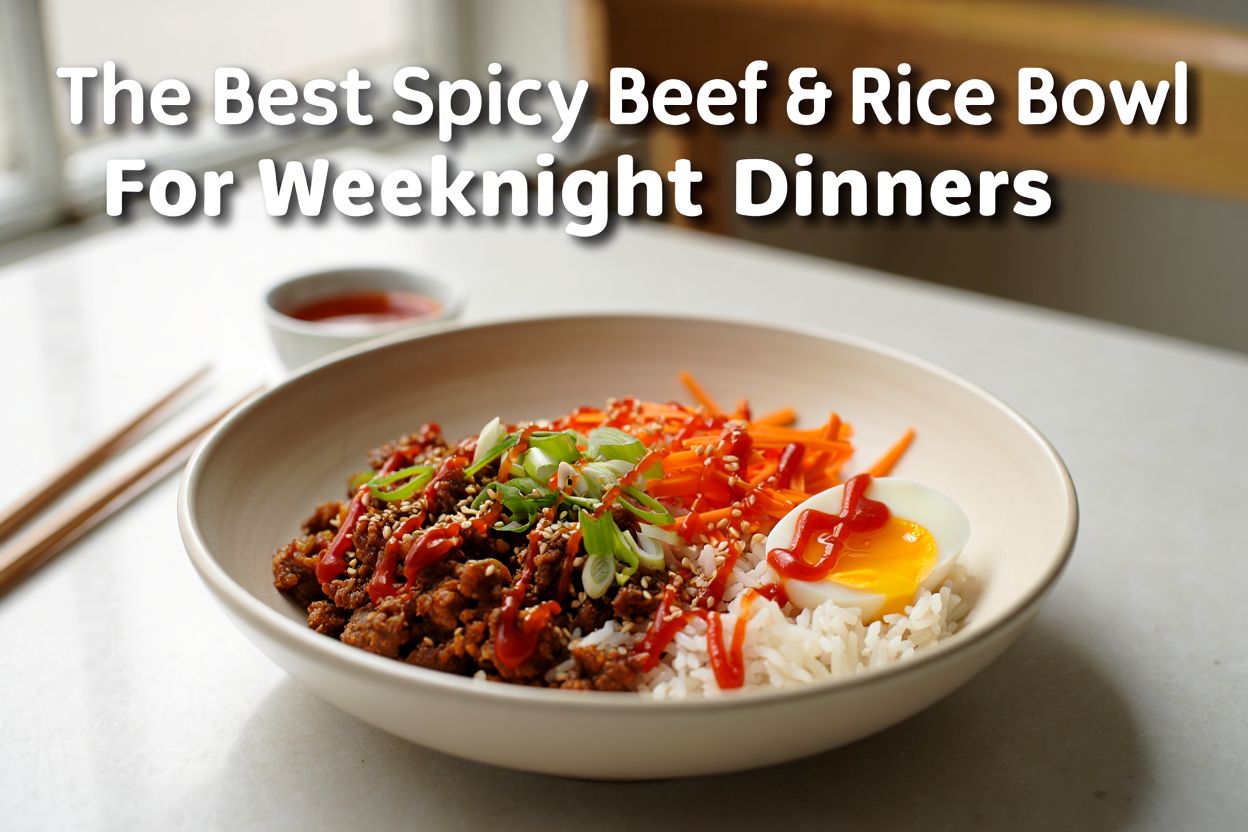
I still remember the first time I made a spicy Beef & Rice Bowl that truly stopped me in my tracks. It was a rainy Tuesday evening, I had ground beef thawed, half a head of cabbage wilting in the crisper, and a serious craving for something with heat. I started tossing things into a skillet garlic, ginger, gochujang, a splash of soy sauce and within twenty minutes, my kitchen smelled like a Korean street market. My husband walked in and said, “What is that? It smells incredible.”
That’s the magic of this recipe. It’s not complicated, it doesn’t require a trip to a specialty store (though I’ll tell you where to find the good stuff), and it delivers layers of savory, spicy, slightly sweet flavor in every single bite. Whether you need a fast weeknight dinner, a meal prep hero, or just a bowl of pure comfort with a kick, this spicy Beef & Rice Bowl is about to become a permanent resident in your recipe rotation.
I’ve tested this at least a dozen times adjusting the heat level, swapping proteins, figuring out exactly how to get that caramelized crust on the beef. What I’m sharing today is the version my family begs for weekly. Let me show you how to build it.
Why You’ll Love This Recipe
- Lightning fast. From cold ingredients to a steaming bowl in under 30 minutes. I’ve timed it while answering emails and helping with homework it works.
- One pan, less cleanup. The beef mixture cooks in a single skillet, so you’re not drowning in dishes.
- Customizable heat. My daughter prefers it mild (I just reduce the gochujang), while my husband adds extra chili crisp at the table. You’re in control.
- Meal prep champion. The spicy beef keeps beautifully for days, and the rice is easy to batch cook. I’ll show you my favorite storage trick below.
- Budget-friendly. Ground beef, rice, and a handful of pantry staples. This spicy Beef & Rice Bowl costs a fraction of takeout and tastes twice as good.
- That texture contrast. Crispy-edged beef, tender rice, crunchy fresh veggies, and a jammy soft-cooked egg on top. Every spoonful hits differently.
Recipe Overview
| Detail | Info |
|---|---|
| Prep time | 10 minutes |
| Cook time | 15 minutes |
| Total time | 25 minutes |
| Servings | 4 bowls |
| Calories per serving | ~540 (without egg) |
| Cuisine type | Korean-inspired / Fusion |
| Diet type | Can be gluten-free, dairy-free |
I usually make this on nights when everyone’s hangry and I have exactly zero energy for a complicated meal. It’s my reset button dinner.
Ingredients
For the spicy beef:
- 1 lb (450g) ground beef (80/20 is ideal for flavor)
- 3 cloves garlic, minced
- 1 tsp fresh ginger, grated (I use a microplane worth it)
- 3 tbsp gochujang (Korean red chili paste)
- 2 tbsp low-sodium soy sauce (or tamari for GF)
- 1 tbsp brown sugar (or coconut sugar)
- 1 tsp sesame oil
- ¼ cup water
- 1 tbsp vegetable or avocado oil for cooking
For the bowl assembly:
- 4 cups cooked white or brown rice (warm)
- 1 cup shredded red cabbage
- 1 large carrot, julienned or shredded
- 4 soft-cooked or fried eggs (optional but highly recommended)
- 2 green onions, sliced diagonally
- 1 tbsp sesame seeds
- Extra chili crisp or sriracha for serving
Substitutions I’ve personally tested:
No gochujang? Mix 2 tbsp sriracha + 1 tbsp tomato paste + 1 tsp sugar. It’s not identical, but it works in a pinch.
Want leaner? Use ground turkey or chicken add an extra tablespoon of oil so it doesn’t dry out.
Low-carb? Swap rice for cauliflower rice or double the cabbage as your base. My mom does this and hasn’t looked back.
Step-by-Step Instructions
1. Start your rice first.
If you don’t have leftover rice, get it cooking now. I use a rice cooker because I’m lazy in the best way, but stovetop works fine. Fluff it with a fork when done and keep covered.
2. Prep your fresh toppings.
While the rice cooks, shred your cabbage, julienne the carrot, and slice the green onions. I learned the hard way that chopping after cooking the beef leads to cold meat. Do this first. The crunch of fresh cabbage against the hot, spicy beef is one of my favorite parts of this spicy Beef & Rice Bowl.
3. Make the spicy sauce mixture.
In a small bowl, whisk together gochujang, soy sauce, brown sugar, sesame oil, and ¼ cup water. The gochujang is thick don’t worry if it looks clumpy at first. Keep stirring until it becomes a smooth, brick-red sauce. The aroma here is deep, funky, and sweet all at once.
4. Brown the beef with garlic and ginger.
Heat a large skillet over medium-high heat. Add the oil, then the ground beef. Break it up with a wooden spoon. Let it sit untouched for 60 seconds this builds a beautiful browned crust. Then stir and continue cooking until no longer pink, about 4–5 minutes. Add the minced garlic and grated ginger in the last minute. Don’t skip that sizzle moment when the garlic hits the hot beef it’s pure kitchen perfume.
5. Add the sauce and simmer.
Pour your spicy sauce mixture over the browned beef. Stir everything together. The sauce will bubble immediately. Reduce heat to medium-low and let it simmer for 3–4 minutes. You’ll see it thicken slightly and turn glossy. Taste it here. Need more heat? Add a pinch of red pepper flakes. Too intense? A teaspoon of honey balances it.
6. Cook your eggs (if using).
In a separate nonstick pan, fry eggs sunny-side up with runny yolks. The yolk acts like a second sauce when you break it over the bowl. I always wait until the beef is almost done so the eggs are hot and fresh. My son insists on crispy-edged eggs, so I use a little extra oil and high heat.
7. Assemble the bowls.
Divide warm rice among four bowls. Spoon the spicy beef generously over the top don’t be shy with the sauce. Pile shredded cabbage and carrot on one side. Place a hot egg in the center. Sprinkle with green onions and sesame seeds.
8. Finish and serve immediately.
Drizzle extra chili crisp or sriracha if you’re like me and want another heat layer. Hand chopsticks or spoons to everyone and watch them dig in. The first bite should give you tender rice, spicy-savory beef, cool crunch, and rich egg yolk all at once.
Pro Tips for Perfect Results
Don’t crowd the pan when browning beef. I used to stir constantly, and my beef would steam instead of sear. Let it sit. Those browned bits (fond) are flavor gold.
Toast your sesame seeds. Raw sesame seeds are fine, but a quick 60 seconds in a dry pan transforms them into nutty, aromatic jewels. I keep a small jar of toasted seeds in my pantry just for bowls like this.
Adjust gochujang gradually. Gochujang varies by brand some are fiery, others mild. Start with 2 tablespoons, taste, then add more. My first batch was almost indelibly hot because I used a super-fermented Korean brand. Lesson learned.
Warm your bowls slightly. This sounds fussy, but if you’re serving on cold plates, the food cools too fast. I microwave my bowls for 20 seconds before assembling. It keeps that just-cooked warmth longer.
Don’t skip the water in the sauce. That ¼ cup seems small, but it helps the sauce coat the beef evenly instead of turning into a sticky paste. Trust me on this.
Variations & Add-Ons
Vegan spicy “Beef” & Rice Bowl: Substitute crumbled tempeh or plant-based ground. Use coconut aminos instead of soy sauce and add a splash of liquid smoke for depth. My vegan friend tried this and said it was “disturbingly beef-like.”
Extra vegetable-packed: Throw in a handful of baby spinach or chopped bok choy in the last minute of simmering the beef. It wilts perfectly and adds vitamins without extra work.
Spicy Beef & Noodle Bowl: Swap the rice for chewy udon or soba noodles. Cook the noodles, toss with a little sesame oil, then top with the beef. This version disappeared fastest at a family potluck I hosted.
Lemony yogurt sauce: Drizzle a quick sauce of Greek yogurt, lemon juice, and minced cilantro over the bowl. The cool creaminess against the spicy beef is incredible. My personal favorite variation for summer.
Crunchy topping bar: Set out crushed peanuts, fried garlic chips, pickled radish, and kimchi. Let everyone build their own bowl. My kids love this because they feel like they’re in charge.
Storage and Meal Prep Tips
Fridge: Store the spicy beef in an airtight container for up to 4 days. Keep rice and fresh veggies separate. I’ve eaten it on day 5 and it was still fine, but the texture starts to suffer.
Freezing: The beef mixture freezes beautifully for up to 3 months. Cool completely, then transfer to a freezer-safe bag. Thaw overnight in the fridge before reheating.
Best reheating method: Reheat the beef in a skillet over medium heat with a splash of water to bring back the saucy consistency. Microwave works, but the skillet preserves the texture. Never reheat the rice more than once it’s a food safety rule I always follow.
My meal prep routine: On Sundays, I make double the beef, cook a big batch of rice, and shred a whole bag of coleslaw mix. Then for lunch all week, I just reheat, assemble, and add a fresh egg. It saves me easily 20 minutes each day.
FAQ Section
Can I make this spicy Beef & Rice Bowl less spicy for kids?
Absolutely. Reduce the gochujang to 1 tablespoon and add an extra tablespoon of soy sauce plus a teaspoon of honey. You can also serve with a dollop of plain yogurt or sour cream on top—the dairy cuts heat significantly.
What’s the best substitute for gochujang?
I’ve successfully used 3 tablespoons of sambal oelek mixed with 1 teaspoon of tomato paste and ½ teaspoon of sugar. It won’t have the same fermented complexity, but the heat and tang are there. You can also order gochujang online if your local store doesn’t stock it.
How do I get that crispy edge on the beef?
High heat, don’t stir for the first full minute, and use a cast-iron or stainless steel skillet (nonstick won’t give you the same browning). Let the beef form a crust before breaking it up completely. That’s the secret my restaurant chef friend taught me.
Can I use leftover rice?
Yes, and I actually prefer it. Day-old rice has less moisture, so it holds up better under the hot beef. Just reheat it in the microwave with a damp paper towel over the bowl to steam it back to fluffiness.
Is this spicy Beef & Rice Bowl gluten-free?
It can be! Use tamari or coconut aminos instead of regular soy sauce, and verify your gochujang is gluten-free (many traditional brands contain wheat). The rest of the ingredients are naturally gluten-free.
Conclusion with Call-to-Action
I truly believe everyone needs a go-to spicy Beef & Rice Bowl recipe in their back pocket something fast, forgiving, and deeply satisfying. This is mine, and after testing it more times than I can count, I’m confident it’ll become yours too.
The first time you hear that sizzle when the sauce hits the hot beef, and you smell the garlic and sesame coming together, you’ll understand why I make this at least twice a month. It’s weeknight magic in a bowl.
So grab your largest skillet, crank the heat, and give this a try tonight. Then come back and tell me: did you go heavier on the gochujang? Add extra veggies? Forget the egg and regret it later? (I’ve done that don’t be like me.)
Drop a comment below, tag me in your photos, or just send a quick note to say how it went. I read every single one. Happy cooking, friends stay spicy. 🌶️