
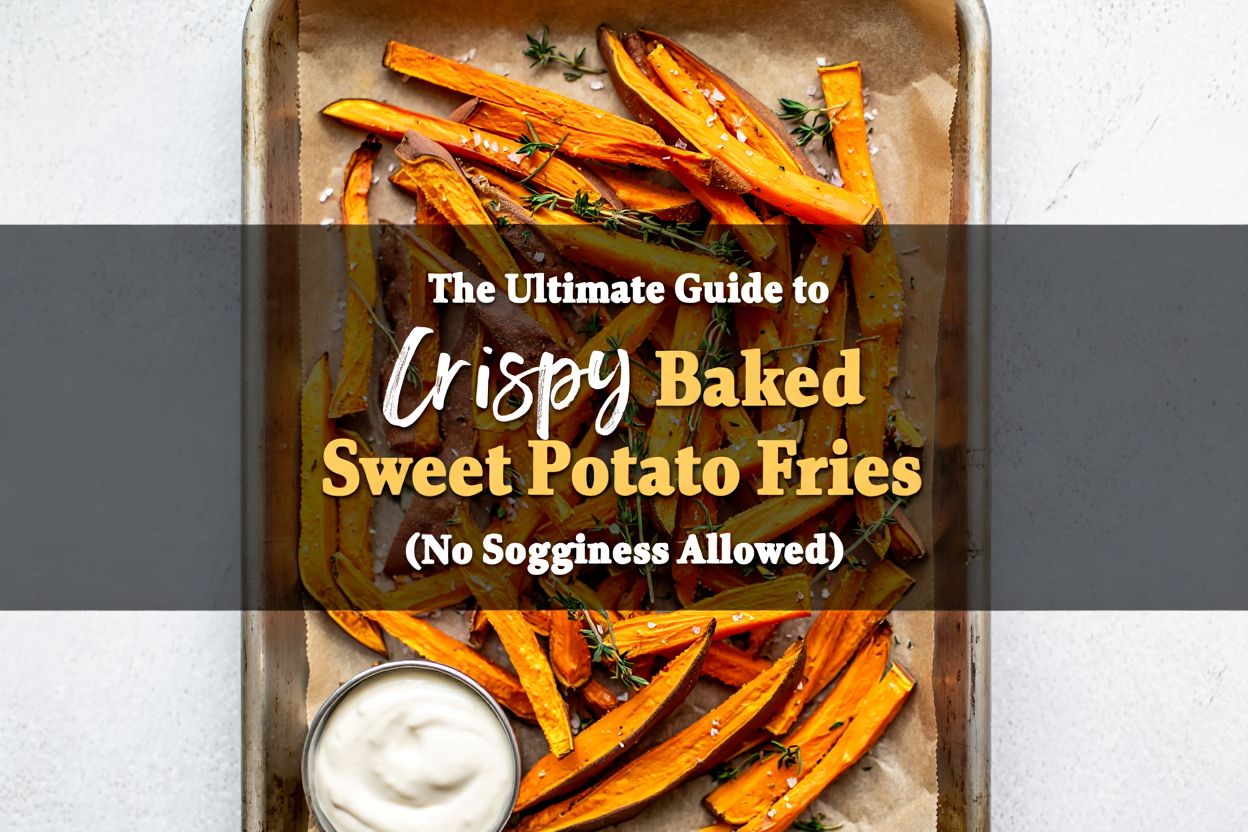
Let’s be honest: sweet potato fries have a reputation. When they’re good, they’re golden, crisp-edged, sweet-savory perfection. When they’re bad? Limp, floppy, stuck to the pan, and somehow both burnt and undercooked at the same time.
I’ve been there more times than I’d like to admit.
This recipe is for anyone who loves the idea of sweet potato fries but has walked away disappointed by soggy results. Whether you’re cooking for kids who need a veggie win, meal-prepping for busy weeknights, or just want something tastier than frozen bagged fries, these baked sweet potato fries deliver crunch without deep frying.
After testing every variable soaking times, temperatures, starches, oils I landed on a method that’s reliable, uses basic ingredients, and actually works in a normal home oven.
Why This Recipe Works
Here’s the simple science: sweet potatoes contain more moisture and sugar than russet potatoes. Sugar caramelizes quickly (which is great for flavor) but also burns before the inside gets tender. Moisture turns to steam, which makes fries limp unless you give it an escape route.
This recipe solves those problems three ways:
- Low-and-slow pre-cook, then high-heat finish. Starting at 325°F (160°C) gently drives out moisture without burning sugars. Cranking to 425°F (220°C) at the end creates a blistered, crisp exterior.
- Cornstarch is the secret weapon. A light dusting absorbs surface moisture and adds a shatter-crisp coating. No cornstarch? Fine but don’t skip it if you want crunch.
- Proper spacing on the pan. Crowding traps steam. With space, hot air circulates and dries the surface before browning begins.
No fancy air fryer required. Just a baking sheet, a hot oven, and a little patience.
Ingredients
| Ingredient | Why It’s Used |
|---|---|
| 2 large sweet potatoes (about 1.5–2 lbs total) | Choose firm, smooth-skinned ones. Orange-fleshed varieties (Beauregard or Garnet) work best. |
| 2 tbsp avocado oil or olive oil | High smoke point needed for the final high-heat blast. Avocado oil is ideal; olive oil works but watch for smoking. |
| 1 tbsp cornstarch | The crunch maker. Creates a dry, starchy coating that crisps up like a thin shell. |
| 1 tsp fine sea salt | Enhances sweetness and balances flavor. Add more at the end. |
| ½ tsp smoked paprika | Adds subtle smokiness. Optional but recommended. |
| ¼ tsp black pepper | Just enough to round things out. |
| Optional: garlic powder, cayenne, or rosemary | See Variations section for flavor twists. |
Equipment
- Sheet pan (rimmed baking sheet), preferably light-colored metal—dark pans brown faster and can burn edges
- Parchment paper or a silicone baking mat (I prefer parchment for easier cleanup)
- Sharp knife and cutting board
- Large mixing bowl
- Paper towels (for patting dry)
- Spatula or tongs for flipping
Step-by-Step Instructions
1. Preheat and prepare (10 minutes active)
Preheat your oven to 325°F (160°C). Line a sheet pan with parchment paper this prevents sticking and makes cleanup effortless.
2. Cut the sweet potatoes into even fries
Peel the sweet potatoes (skins are edible but can get chewy here; peeling gives better texture). Cut off the tapered ends so you have a cylinder to work with.
Slice into ¼-inch to ⅓-inch planks, then cut those into fries. Aim for uniform thickness matchstick size, not steak fries. Uneven cuts = uneven cooking.
Visual cue: Look for rectangles roughly the width of a standard pencil. Thicker than that and they won’t crisp before burning.
3. Soak and dry (optional but helpful)
Place the cut fries in a bowl of cold water for 20–30 minutes. This pulls out surface starch and a touch of sugar, which helps browning.
Skip if you’re short on time, but it’s worth the wait.
After soaking, drain and dump the fries onto a clean kitchen towel or layers of paper towels. Press firmly to remove all surface moisture. Wet fries steam instead of crisp.
Texture cue: The fries should feel dry and slightly tacky to the touch, not wet or slippery.
4. Toss with oil, cornstarch, and spices
In a large bowl, combine the dried fries with oil. Toss with your hands until every fry glistens.
Sprinkle cornstarch over the fries. Toss again. You’ll see a faint white dusting that’s perfect.
Add salt, smoked paprika, pepper, and any other dried spices. Toss one last time.
Why dry spices now? They stick to the cornstarch coating rather than burning on the pan.
5. First bake: low and slow
Arrange fries in a single layer on the prepared pan. Leave at least ¼ inch between each fry no touching if possible.
Bake at 325°F (160°C) for 15 minutes.
What you’ll see: The fries will look softer and slightly wrinkled. Some moisture beads may appear on the surface. That’s steam escaping. Good.
6. Flip and turn up the heat
Remove the pan from the oven. Increase temperature to 425°F (220°C).
Using a spatula or tongs, flip each fry. They’ll be pliable but not falling apart—handle gently.
Once the oven reaches 425°F, return the pan to the oven. Bake for 10–12 minutes more.
Time cue: Check at 8 minutes. When edges turn deep golden-brown and the fries look blistered, they’re ready.
Visual cue: The tips should be dark brown, not black. If you see smoking or burnt bits, pull them immediately—sugar burns fast.
7. Final salt and serve
Let fries rest on the pan for 2 minutes this firms the crust. Transfer to a cooling rack or serve directly from parchment.
Sprinkle with flaky sea salt right before eating.
Texture cue: A good fry should make an audible crack when you bite through the outside, then give way to a fluffy, sweet interior.
Pro Tips
- Cut fries by feel, not perfection. Don’t obsess over identical sizes. Group thicker-cut fries together on one half of the pan and thinner ones on the other. Pull the thinner ones earlier.
- Use two pans for big batches. Never crowd. If you need more fries, rotate pans halfway through the second bake (swap top and bottom racks).
- Skip the nonstick spray. It contains lecithin that can burn and turn bitter. Parchment + oil works better.
- Let the oven fully come to temperature between stages. Opening the door to flip drops the temp. Wait the extra 2–3 minutes for 425°F to stabilize before returning the fries.
- Don’t skip the resting minute. Fries are most fragile straight out of the oven. That short rest on the hot pan sets the crust.
Common Mistakes to Avoid
| Mistake | Why It Happens | Fix |
|---|---|---|
| Soggy fries | Too much moisture + overcrowding | Dry thoroughly before oiling. Use two pans if needed. |
| Burnt exteriors, raw centers | Heat too high from the start | Start low (325°F) to cook through, then blast high. |
| Fries stick to pan | No parchment, or too much sugar released | Always use parchment. Soaking reduces surface sugars. |
| Cornstarch clumps | Added to wet fries | Dry fries completely before cornstarch. Toss vigorously. |
| Flavorless result | Too little salt, or salt added before baking | Salt draws out moisture if added too early. Finish with flaky salt. |
Variations
Spicy Chipotle Version
Add ½ tsp chipotle powder and ¼ tsp cayenne to the spice mix. Serve with lime wedges and a drizzle of vegan chipotle crema (blended cashews, lime, chipotle in adobo).
Garlic & Herb
Skip paprika. Toss fries with 1 tsp garlic powder, 1 tsp dried rosemary (crushed), and ½ tsp dried thyme. Finish with fresh chopped parsley.
Maple-Cinnamon (Dessert Fries)
Reduce salt to ¼ tsp. Add 1 tsp cinnamon and 1 tbsp maple syrup after the low-temp bake (add with the oil before cornstarch yes, it works). Serve with coconut yogurt dip.
High-Protein Savory Bowl
Cut fries into small coins instead of sticks. Roast same method. Toss with 1 can drained chickpeas (roasted alongside for last 10 minutes) and a sprinkle of nutritional yeast.
Air Fryer Adaptation
Same prep, but cook at 375°F (190°C) for 12–15 minutes, shaking basket every 5 minutes. No low-temp stage needed because air fryers circulate air more aggressively.
Storage & Meal Prep
To store leftovers:
Cool completely, then place in an airtight container lined with a paper towel. Refrigerate up to 3 days. Note: They will lose crispness see reheating below.
To reheat (best method):
Skip the microwave entirely (it makes them gummy). Spread cold fries on a parchment-lined pan. Bake at 400°F (200°C) for 5–7 minutes until sizzling. An air fryer at 375°F for 3–4 minutes works even better.
Meal prep tip:
Cut and soak the fries up to 24 hours ahead. Store submerged in cold water in the fridge. When ready to cook, drain, dry thoroughly, and proceed. You can also toss in oil and cornstarch, then freeze on a pan before transferring to a bag. Bake from frozen, adding 5–8 minutes to the first stage.
Nutrition Benefits
Sweet potatoes are naturally rich in beta-carotene (which your body converts to vitamin A), fiber, and vitamin B6. Baking instead of frying keeps added fat moderate about 7–9 grams of oil per serving here. The fiber helps slow sugar absorption, so you don’t get the same blood-sugar spike as white potato fries. No medical claims, just good real-food math: more nutrients per calorie than most fry options.
FAQ
Can I make sweet potato fries without cornstarch?
Yes. Swap cornstarch for arrowroot powder or tapioca starch. In a pinch, skip it you’ll lose some crunch but still get decent results. Don’t substitute flour; it creates a doughy coating.
Why are my sweet potato fries not crispy even after following the steps?
Three usual suspects: (1) You skipped soaking and they were too sugary. (2) Your oven runs cool—buy an oven thermometer. (3) You checked them too often and let steam escape unevenly. Keep the door closed until the minimum time is up.
Can I use this method for regular potato fries?
Yes, with adjustments. Russet or Yukon Gold potatoes don’t need the low-temp start because they have less sugar. Bake at 425°F for 20–25 minutes, flipping once. Still use the cornstarch trick—it works beautifully.
Do I have to peel the sweet potatoes?
You don’t have to, but the skin can get chewy and separate from the fry. For best texture, peel. If you keep the skin, scrub well and cut into thinner fries so the skin crisps.
What dipping sauces go well with these?
Garlic aioli (mayo + minced garlic + lemon), chipotle-lime yogurt, spicy sriracha ketchup, or a simple mix of Greek yogurt, dill, and smoked salt. For sweet versions, try warmed peanut butter thinned with coconut milk.
Conclusion
Good sweet potato fries aren’t about fancy equipment or hard-to-find ingredients. They’re about understanding how moisture, sugar, and heat work together. This method—low-temp bake, cornstarch coating, high-temp finish turns a tricky vegetable into something genuinely crunchy and satisfying.
Make them for burger night, taco Tuesday, or just because you want a snack that feels a little indulgent and a little healthy at the same time. Once you get the rhythm down, you’ll never reach for a frozen bag again.
- Easy Mexican Coleslaw Salad – These fries are the perfect crispy side for a plant-based burger.
- Creamy Roasted Garlic Aioli – A homemade dip that takes these fries to the next level.
- Sheet Pan Lemon Herb Chicken with Veggies – Pair the fries with this easy weeknight dinner for a complete meal.