
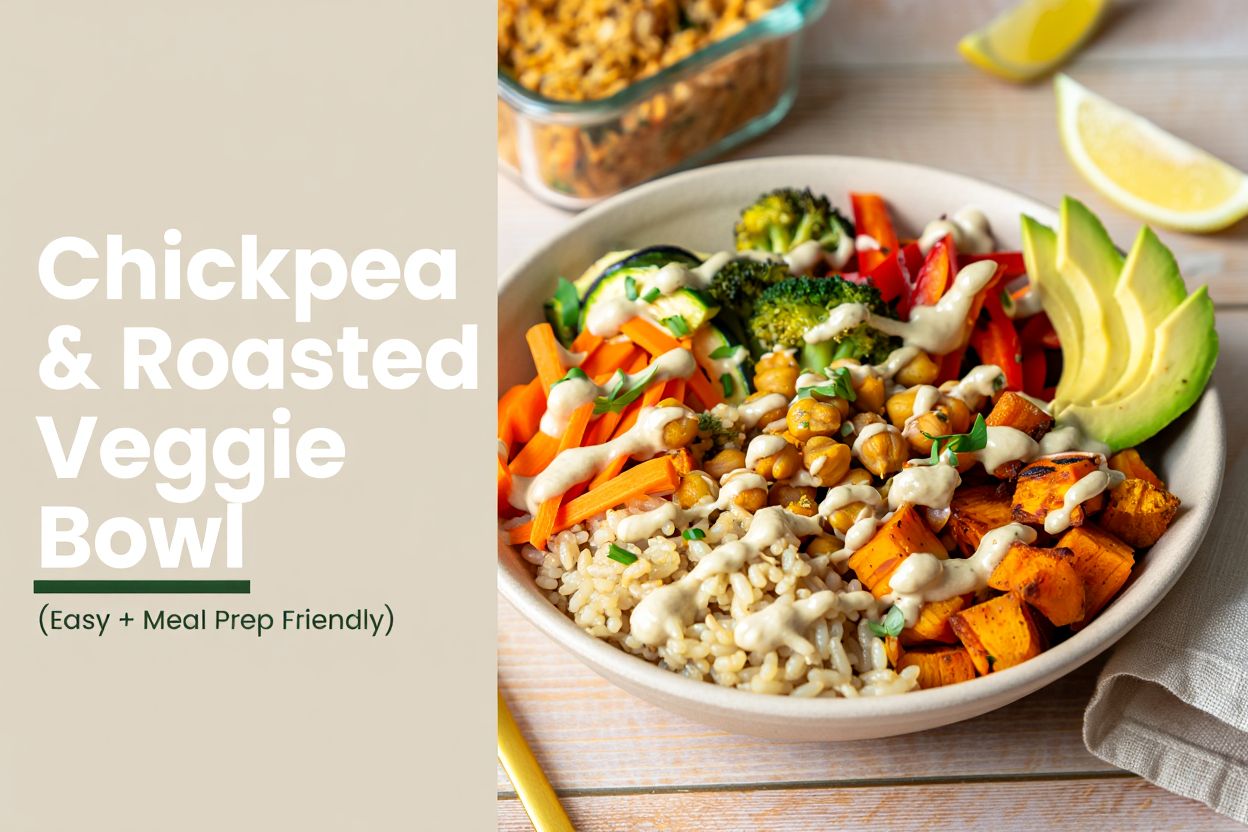
Some days you want a meal that feels wholesome without spending an hour in the kitchen. Other days, you open the fridge, see a random bell pepper, half a zucchini, and a can of chickpeas, and think… I should make something out of this.
That’s exactly where this chickpea & roasted veggie bowl comes in.
This recipe is for anyone who wants a plant-forward, filling meal that doesn’t rely on meat or dairy to feel satisfying. It’s great for busy weeknights, weekend meal prep, or when you just need a reliable “clean out the crisper drawer” dinner.
The idea is simple: toss vegetables and chickpeas with a little oil and seasoning, roast until golden and tender, then serve over a grain (or greens) with a drizzle of something tangy. No complicated techniques, no hard-to-find ingredients.
What you get is a bowl that’s warm, hearty, packed with texture, and actually tastes like you put thought into it even when you didn’t.
Why This Recipe Works
Roasting is the smartest shortcut in home cooking. High heat concentrates natural sugars in vegetables, gives them caramelized edges, and transforms bland chickpeas into crispy little protein nuggets.
Pairing chickpeas with roasted vegetables works for a few reasons:
- Texture contrast – Creamy chickpeas + tender roasted veggies + crunchy toppings (seeds, nuts, or fresh herbs) = a bowl that never gets boring.
- Flavor synergy – Roasted veggies bring sweetness and smokiness. Chickpeas add nuttiness. A bright dressing (lemon or vinegar based) cuts through the richness.
- Efficiency – Everything roasts on one sheet pan. While that’s happening, you cook rice or quinoa or just open a bag of greens.
- Budget friendly – Chickpeas cost under $2 per can. Vegetables can be whatever’s on sale or seasonal.
No fancy chef tricks here. Just heat, timing, and a little seasoning.
Ingredients
For the roasted base:
- 1 can (15 oz) chickpeas, drained and rinsed
- 1 medium sweet potato, peeled and cut into ½‑inch cubes
- 1 red bell pepper, cut into 1‑inch pieces
- 1 small zucchini, cut into half‑moons
- ½ red onion, cut into wedges
- 3 tbsp olive oil (avocado oil works too)
- 1 tsp smoked paprika
- 1 tsp ground cumin
- ½ tsp garlic powder
- Salt and black pepper to taste
For serving:
- 2 cups cooked quinoa, brown rice, or mixed greens
- ¼ cup plain yogurt (dairy or nondairy) or tahini sauce
- Fresh lemon wedges
- Optional toppings: chopped parsley, toasted pumpkin seeds, crumbled feta
Why each ingredient matters:
- Smoked paprika + cumin – These give a warm, earthy backbone. Smoked paprika adds a subtle BBQ‑like note that makes roasted vegetables taste deeper.
- Sweet potato – Holds its shape when roasted, adds natural sweetness that balances the savory spices.
- Chickpeas – Plant protein + fiber. Rinsing the can removes excess sodium and starch for better crisping.
Equipment
- Large rimmed baking sheet (half‑sheet size)
- Parchment paper or silicone baking mat (optional but helps cleanup)
- Mixing bowl
- Chef’s knife and cutting board
- Small bowl for dressing or sauce
Nothing fancy. If you have a toaster oven with a baking pan, that works too just roast in two batches so nothing steams.
Step-by-Step Instructions
1. Preheat and prep
Set your oven to 425°F (220°C). This high heat is key for crispy edges, not steamed veggies.
Line your baking sheet with parchment paper (optional but highly recommended for easy cleanup).
2. Chop vegetables evenly
Cut sweet potato, bell pepper, zucchini, and red onion into roughly the same size about ½‑inch pieces. This matters because smaller pieces burn before larger ones cook through.
Visual cue: All pieces should look like they could roast in the same amount of time. If sweet potato cubes are larger than the rest, they’ll stay hard.
3. Season everything together
In a large bowl, combine chickpeas and all chopped vegetables. Drizzle with olive oil. Sprinkle smoked paprika, cumin, garlic powder, salt, and pepper.
Hands-on tip: Use your hands to toss. It’s the only way to coat every chickpea and veggie piece evenly. Spoons leave dry spots.
4. Spread in a single layer
Pour everything onto the baking sheet. Spread into one even layer. Overcrowding = steaming, not roasting. If the sheet looks packed, use a second pan.
Texture cue: Each piece should have at least a little space around it. Crowded vegetables release water and turn mushy.
5. Roast, but don’t walk away too long
Roast for 20 minutes. Then pull the pan out and stir everything with a spatula. Flip chickpeas and vegetables so the other sides brown.
Roast for another 10–15 minutes. You’re done when:
- Sweet potatoes are easily pierced with a fork
- Chickpeas look slightly shriveled and golden brown
- Onion edges are charred in spots
- Zucchini releases liquid that has mostly evaporated
Smell cue: Your kitchen will smell like smoky, earthy roasted vegetables. That’s the paprika and cumin blooming in the heat.
6. Assemble the bowl
Start with a base of warm quinoa or rice (or cold greens if you prefer a salad vibe). Scoop the roasted chickpeas and vegetables on top.
Drizzle with yogurt or tahini sauce. Squeeze fresh lemon over everything. Add parsley, seeds, or feta if you want.
Pro Tips
- Dry chickpeas after rinsing. Pat them with a paper towel or kitchen cloth. Wet chickpeas steam instead of crisp. This one step is the difference between soft and crunchy.
- Roast vegetables on the top rack for better browning. The middle rack is fine, but top rack (6 inches from the heating element) gives you darker caramelization.
- Double the batch on purpose. Roasted chickpeas and veggies keep well for 4 days. You can also eat the leftover roasted mixture cold over greens the next day like a roasted veggie salad.
- Add a crunch topping right before eating. Toasted pumpkin seeds, sliced almonds, or even crushed pita chips make the bowl feel restaurant‑quality.
- Don’t skip the acid. Lemon juice or a splash of red wine vinegar wakes up all the roasted flavors. Without it, the bowl tastes flat and heavy.
Common Mistakes to Avoid
Mistake #1: Overcrowding the pan
Veggies release steam as they cook. If they’re piled on top of each other, that steam has nowhere to go, and you’ll end up with soft, pale vegetables. Use two pans if needed.
Mistake #2: Not seasoning enough
Roasted vegetables need more salt than you think. Taste a chickpea before roasting—it should taste seasoned, not bland. Chickpeas absorb salt differently than raw veggies.
Mistake #3: Cutting vegetables unevenly
A 1‑inch sweet potato cube and a thin zucchini slice won’t finish cooking together. The zucchini will turn to mush before the sweet potato softens. Match sizes.
Mistake #4: Skipping the stir halfway
Halfway stir = even cooking. No stir = one side burnt, one side underdone. Set a timer so you don’t forget.
Variations
High‑protein version
Add ½ block of cubed, pressed tofu or 4 ounces of shredded rotisserie chicken to the baking sheet. Toss with the same spices. Increase roasting time by 5–7 minutes.
Mediterranean twist
Swap sweet potato for eggplant. Use oregano and za’atar instead of cumin/paprika. Top with crumbled feta, kalamata olives, and a dollop of hummus instead of yogurt.
Spicy harissa bowl
Replace the spice mix with 2 tablespoons of harissa paste (mixed with the oil). Add a drizzle of maple syrup to balance heat. Top with fresh mint and a spoonful of coconut yogurt.
Low‑carb / keto friendly
Skip the sweet potato and quinoa. Use cauliflower florets and broccoli instead. Serve over a bed of massaged kale or spinach. The chickpeas are still higher carb, so portion accordingly.
Storage & Meal Prep
Fridge: Store roasted chickpeas and vegetables in an airtight container for up to 4 days. Keep grains and greens separate until serving so nothing gets soggy.
Reheat: Best in a 350°F oven or air fryer for 5–7 minutes. Microwave works but softens the crispy edges. If using a microwave, only reheat the roasted mixture—add fresh toppings afterward.
Meal prep strategy:
- Sunday: Roast a double batch. Cook a large pot of quinoa or rice. Make a quick lemon‑tahini sauce (tahini + lemon juice + water + garlic).
- Each morning: Portion grains + roasted mixture into containers. Keep sauce and crunchy toppings separate.
- At lunch: Reheat (or eat cold) and add fresh lemon.
Freezer note: Roasted vegetables (especially zucchini and bell peppers) get mushy when thawed. I don’t recommend freezing this bowl assembled. But you can freeze plain cooked chickpeas and sweet potatoes separately.
Nutrition Benefits
No medical claims, just general nutrition facts.
- Chickpeas provide plant‑based protein (about 15g per cup) and fiber (12g per cup). That fiber helps with steady energy and fullness.
- Sweet potatoes are rich in beta‑carotene (turns into vitamin A) and vitamin C.
- Olive oil offers monounsaturated fats, which support heart health when used in place of saturated fats.
- Bell peppers and zucchini add vitamin C, potassium, and low‑calorie volume to help you feel full without overeating.
- Spices like cumin and smoked paprika contain antioxidants and add flavor without salt or sugar.
This bowl is naturally gluten‑free and dairy‑free if you skip the feta and use a plant‑based yogurt.
FAQ
Can I use dried chickpeas instead of canned?
Yes. Use ¾ cup dried chickpeas. Soak overnight, then boil for 60–90 minutes until tender. Drain and pat very dry before roasting. Canned is fine the convenience trade‑off is minimal here because roasting adds plenty of flavor.
What if I don’t have smoked paprika?
Use regular paprika + a pinch of cayenne for heat. Or skip it and use cumin + coriander. The bowl will taste different but still good. Smoked paprika adds a BBQ note; without it, just add a little extra salt and garlic.
How do I get chickpeas truly crispy?
Three things: pat them bone‑dry, use enough oil (don’t skimp), and don’t stir too often. Let them sit undisturbed for the first 20 minutes. If they’re still soft after roasting, spread them on the pan and put them back in for 5 more minutes alone (without veggies).
Can I make this without an oven?
Yes. Use an air fryer at 400°F for 12–15 minutes, shaking halfway. Or cook everything in a large skillet over medium‑high heat, but you’ll need to work in batches. A skillet gives you less caramelization unless you use a cast‑iron pan.
Is this bowl good for kids?
Most kids like the sweet potato and mild chickpeas. Reduce or skip the smoked paprika (it’s slightly smoky/sharp). Serve with yogurt on the side as a dip. My kids eat this deconstructed chickpeas separate, veggies separate, then they dip.
Conclusion
This chickpea & roasted veggie bowl isn’t fancy, and that’s the point. It’s a reliable, budget‑friendly meal that turns basic pantry staples into something you actually want to eat. The oven does most of the work. You just chop, toss, and wait.
Whether you roast a batch on Sunday for busy lunches or throw it together on a Tuesday night with whatever vegetables are left in your fridge, this bowl delivers. It’s filling, flexible, and forgiving.
Try it once with the sweet potato and smoked paprika. Then start swapping vegetables based on what looks good at the market. That’s when it becomes your recipe.
If you’re building out a library of easy plant‑forward meals on your blog, consider linking to these related recipes:
- Fermented Foods & Bold Tangy Flavors – A natural pairing for this bowl. Readers can make it from scratch while the vegetables roast.
- Mediterranean Chickpea Salad Bowl– Another sheet pan meal with similar timing and technique.
- Simple Quinoa Salad with Cucumber & Herbs – A lighter, no‑cook side or alternative base for the same toppings.