
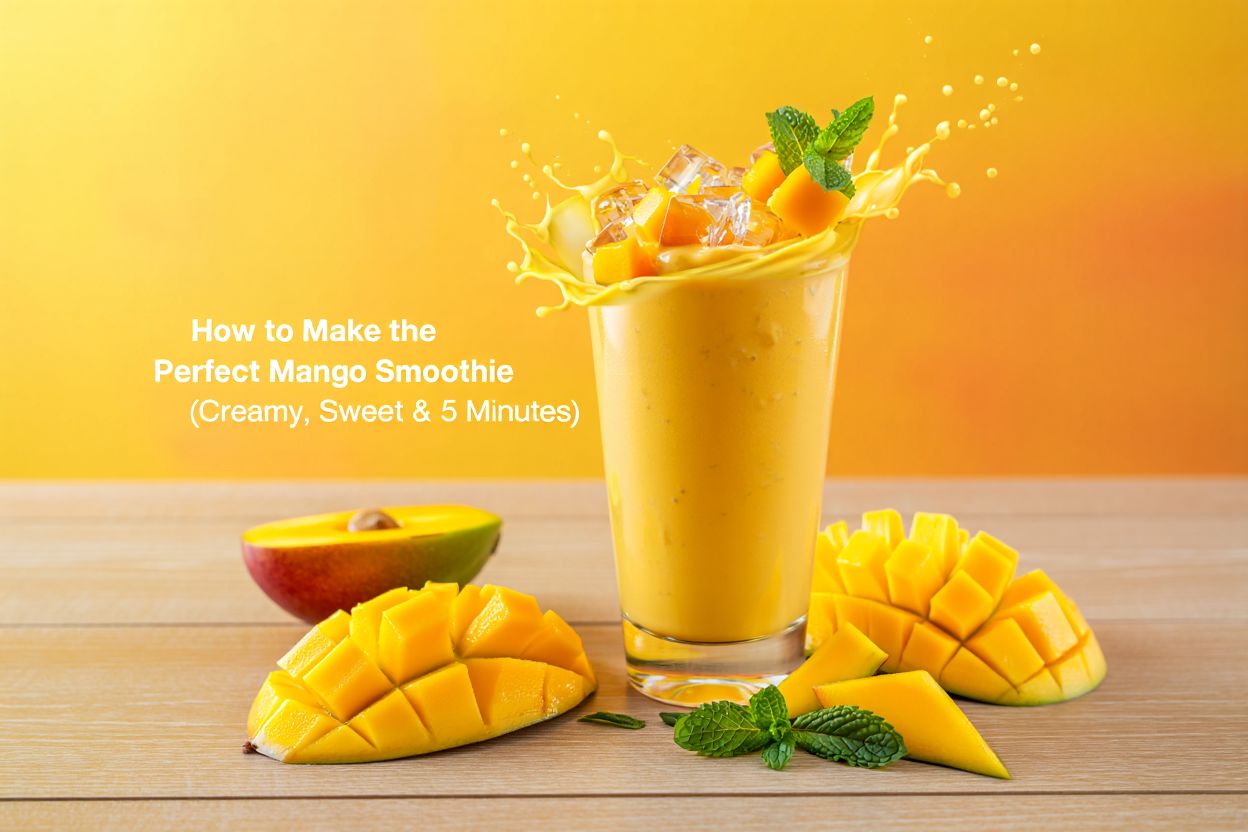
There are smoothies, and then there are mango smoothies the kind that taste like sunshine in a glass. If you’ve ever bitten into a perfectly ripe mango and thought, “I wish I could drink this,” you’re in the right place.
This recipe is for anyone who wants a quick breakfast, a post-workout refuel, or an afternoon snack that actually feels like a treat. No chalky protein powders. No weird aftertaste. Just real fruit, creamy texture, and that natural sweet-tangy flavor mangoes are famous for.
I started making mango smoothies years ago when I realized my mornings needed something faster than oatmeal but more satisfying than a granola bar. After testing dozens of ratios (too watery, too icy, too thick to suck through a straw), I landed on a formula that works every single time.
Let’s make one.
Why This Recipe Works
Mango smoothies seem simple, but little things matter. Here’s why this version delivers:
Frozen mango is actually better than fresh. Fresh mango is lovely, but frozen fruit gives you that thick, milkshake-like texture without needing ice. Ice dilutes flavor. Frozen mango concentrates it.
Banana adds creaminess without dairy. One small banana transforms the mouthfeel from “juicy” to “smoothie bowl thick.” It also balances mango’s acidity.
Yogurt (or a dairy-free swap) provides body. Yogurt adds a subtle tang that makes the mango taste even fruitier. It also helps the smoothie stay emulsified—no separation after five minutes.
Lime juice is the secret. A tiny squeeze of lime doesn’t make the smoothie taste like citrus. It brightens the mango flavor and prevents that cloying sweetness some mangoes have.
No added sugar needed. Ripe mangoes and banana are naturally sweet. If you’re using frozen mango chunks labeled “sweetened,” skip them. Stick to unsweetened frozen fruit.
Ingredients
Here’s what you’ll need for 2 small servings (or 1 large breakfast portion):
- 2 cups frozen mango chunks – The backbone of the recipe. Look for unsweetened frozen mango in the freezer aisle. Fresh mango works too, but you’ll need to add a handful of ice and the result will be thinner.
- 1 small ripe banana (previously frozen optional) – Adds creaminess and sweetness. If your banana has brown spots, even better. That’s peak sweetness.
- ½ cup plain yogurt (Greek or regular) – Use full-fat for richness, low-fat for a lighter drink, or dairy-free coconut yogurt for a vegan version.
- ¼ cup milk (dairy or plant-based) – Helps everything blend. Start with ¼ cup, add more if your blender struggles. Oat milk adds creaminess; almond milk keeps it light; coconut milk makes it tropical.
- 1 tablespoon lime juice (about half a lime) – Fresh lime only. Bottled juice has a flat, bitter note.
- Optional add-ins – A small handful of spinach (you won’t taste it), 1 tablespoon honey if your mangoes are tart, or ½ teaspoon fresh grated ginger for warmth.
Equipment
No fancy machines required. You’ll need:
- A blender – High-speed blenders (Vitamix, Blendtec) make it silky in 30 seconds. Regular blenders work too—just blend longer and scrape down the sides.
- Measuring cups and spoons
- A spatula (for scraping)
- Two glasses – Chilled glasses keep the smoothie cold longer. Pop them in the freezer while you prep.
Step-by-Step Instructions
Step 1: Prep your ingredients (1 minute)
Take the frozen mango out of the freezer. If you’re using a fresh banana, peel it and break it into a few chunks. Juice your lime.
Visual cue: Frozen mango should be loose, not clumped into a solid block. If it’s one icy mass, let it sit on the counter for 5 minutes.
Step 2: Layer ingredients in the blender (1 minute)
Add liquids first (milk and yogurt). This helps the blender blades move freely. Then add the banana chunks, lime juice, and finally the frozen mango on top.
Why this order: Liquid at the bottom creates a vortex that pulls frozen fruit down. Mango on top prevents the blades from getting stuck.
Step 3: Blend (1–2 minutes)
Start on low speed to break up the mango, then increase to high. Blend until completely smooth. You’ll hear the sound change from “chugging and clunking” to a steady, quiet whirl.
Time cue: 45–60 seconds in a high-speed blender. 90–120 seconds in a standard blender.
Texture cue: When the smoothie looks like soft-serve ice cream and a spoon can stand up in it (just barely), it’s done. If it’s too thick to pour, add milk 1 tablespoon at a time until it flows.
Step 4: Taste and adjust (30 seconds)
Taste the smoothie. Too tart? Add a tiny drizzle of honey or half a date. Too sweet? Add another splash of lime juice. Too thin? Add a few more frozen mango chunks and blend again.
Step 5: Pour and serve (30 seconds)
Pour into your chilled glasses. Drink immediately. Mango smoothies oxidize quickly and lose that bright orange color after 15 minutes (still safe, just less pretty).
Visual cue: The surface should look glossy and thick, with no visible fruit chunks. If you see brown specks, that’s just banana fiber totally fine.
Pro Tips (From Someone Who’s Made Hundreds)
1. Freeze your bananas too. Peel ripe bananas, break them into thirds, and freeze them in a bag. Using frozen banana instead of fresh doubles the creaminess. No more watery smoothies.
2. Use mango cheeks if buying fresh. To cut a fresh mango: slice off the two wide “cheeks” on either side of the flat pit. Score the flesh in a crosshatch pattern, then scoop it out with a spoon. Avoid the fibrous area near the pit.
3. Blend in batches for thick smoothies. If your blender stalls, stop and stir the mixture with a long spoon. Don’t just keep running it that burns out the motor. Add 2 more tablespoons of liquid and try again.
4. Make it a smoothie bowl. Use only 2 tablespoons of milk instead of ¼ cup. The result will be spoonable. Top with granola, shredded coconut, chia seeds, or sliced mango.
5. Save your leftover lime halves. Don’t toss that squeezed lime. Drop it into your water pitcher for lime-infused water, or rub it on your blender to remove odors before washing.
Common Mistakes to Avoid
Mistake #1: Using unripe mangoes. Unripe mangoes are hard, sour, and stringy. They don’t break down well in a blender. If your frozen mango bag says “slightly green” or if fresh mango doesn’t give slightly when pressed, don’t use it.
Mistake #2: Adding too much liquid. It’s tempting to pour extra milk “to help it blend.” But too much liquid gives you a mango-flavored beverage, not a smoothie. Start with ¼ cup milk. You can always add more.
Mistake #3: Not scraping the blender sides. Frozen fruit sticks to the walls. Stop the blender halfway through, scrape down the sides with a spatula, then resume blending. Otherwise you’ll get chunks.
Mistake #4: Using warm fruit. If your frozen mango has thawed and refrozen, it turns into a solid ice block that can damage blender blades. Keep frozen fruit frozen until the last second.
Mistake #5: Letting it sit. A mango smoothie left on the counter for 20 minutes separates and turns brown (oxidation). Drink it fresh, or store it immediately (see Storage section below).
Variations
High-Protein Mango Smoothie
Add 1 scoop unflavored or vanilla protein powder (whey or plant-based). Add an extra 2 tablespoons milk to keep it drinkable. Greek yogurt already adds protein this version packs 25–30 grams.
Vegan Mango Lassi (Indian-Inspired)
Swap yogurt for full-fat coconut yogurt. Add ¼ teaspoon cardamom powder and a pinch of saffron (optional but amazing). This tastes like a famous Indian drink but dairy-free. Use maple syrup instead of honey if needed.
Green Mango Smoothie (Hidden Veggies)
Add 1 big handful of fresh spinach (about 1 cup packed). You won’t taste it mango completely masks the flavor. The smoothie turns a weird brownish-green color, but trust the process. Also works with frozen kale, but blend kale longer (it’s tougher).
Turmeric Ginger Mango Smoothie
Add ½ teaspoon fresh grated turmeric (or ¼ teaspoon dried) and ½ teaspoon fresh grated ginger. This version is anti-inflammatory and has a warm, earthy kick that pairs beautifully with mango.
No-Banana Mango Smoothie
Banana allergy or just hate the taste? Swap the banana for ½ an avocado or ¼ cup coconut cream. Both add creaminess without banana flavor. The avocado version will be slightly less sweet add 1 soaked date or 1 tablespoon maple syrup.
Storage & Meal Prep
Best case: Drink immediately. Mango smoothies don’t hold well overnight. The texture separates, the color dulls, and the flavor fades.
If you must store it: Pour into an airtight jar (leave 1 inch of space for expansion) and refrigerate for up to 8 hours. When you’re ready to drink, shake vigorously or re-blend with a few ice cubes. The texture won’t be perfect, but it’ll taste fine.
Freezing for later: Pour the smoothie into ice cube trays. Once frozen solid, pop the cubes into a freezer bag. When you want a smoothie, blend 6–8 cubes with ¼ cup milk. This works shockingly well and saves you from weekday morning chaos.
Meal prep hack: On Sunday, portion frozen mango, banana chunks, and any add-ins into freezer-safe zip bags. Label each bag “Mango Smoothie Kit.” In the morning, dump one bag into the blender with yogurt, milk, and lime. Done in 90 seconds.
Nutrition Benefits
These are general benefits based on whole food ingredients not medical advice.
Mangoes are rich in vitamin C (one cup provides about 60% of your daily needs) and vitamin A, which supports eye health and immune function. They also contain fiber, about 3 grams per cup.
Bananas add potassium, which helps with muscle function and fluid balance. They’re also a quick-digesting carbohydrate ideal before or after exercise.
Yogurt provides probiotics (live beneficial bacteria) if you use a brand with active cultures, plus calcium for bone health. Greek yogurt doubles the protein.
Lime juice adds a small dose of vitamin C and helps your body absorb iron from other foods you eat that day.
No added sugar means this smoothie relies entirely on fruit’s natural fructose. Unlike fruit juice, whole fruit (even blended) retains its fiber, which slows sugar absorption and keeps you full longer.
FAQ
Can I use fresh mango instead of frozen?
Yes, but add ½ cup ice and expect a thinner consistency. Fresh mango also needs to be very ripe—it should smell fragrant and yield slightly to pressure. To thicken a fresh-mango smoothie, add frozen banana or ice.
Why is my mango smoothie bitter?
Two likely reasons: the mango wasn’t ripe (green mangoes taste sour-bitter), or you used lime zest instead of juice. Lime zest is intensely bitter when blended. Stick to juice only.
Can I make this without a blender?
Technically no. A blender is essential for breaking down frozen fruit. The closest substitute is mashing very ripe mango and banana with a fork, but the result will be chunky and not drinkable.
How do I make it thicker?
Use less milk (start with 2 tablespoons). Add more frozen mango. Or add ¼ cup rolled oats before blending—oats absorb liquid and create a thicker, more filling smoothie.
Is this smoothie good for weight loss?
It depends on your goals. This recipe is about 250–350 calories per serving (using low-fat yogurt and almond milk). It’s nutrient-dense and filling due to fiber. But smoothies are easier to over-drink than whole fruit. If weight loss is your goal, consider eating a whole mango instead, or drinking this as a meal replacement, not an addition to a full meal.
Can I add spinach without tasting it?
Absolutely. Use 1 cup of fresh spinach (not frozen frozen spinach has a stronger flavor). Blend it with the liquid first, then add the fruit. You’ll see green specks but taste nothing but mango.
Conclusion
A great mango smoothie doesn’t need a dozen ingredients or a fancy blender. It needs good fruit, a little yogurt for creaminess, a squeeze of lime for brightness, and the confidence to adjust as you go.
This recipe is a starting point. Once you’ve made it a few times, you’ll know exactly how thick you like it, whether you want it tangier or sweeter, and if you’re someone who can handle spinach in the morning (you can—you really can’t taste it).
Keep a bag of frozen mango in your freezer at all times. On tired mornings, on hot afternoons, on days when you want something that tastes like a treat but fuels you like a meal you’ll be glad it’s there.
Now go blend something orange.
If you’re building out a recipe collection on your blog, these related posts make natural next steps for readers:
- Our Green Tropical Smoothie Recipe (no yogurt, vegan-friendly, great for breakfast meal prep)
- Tropical Pineapple Coconut Smoothie (similar texture, different flavor profile)
- Trie our Healthy Green Smoothie (for readers who want to sneak in more veggies)