
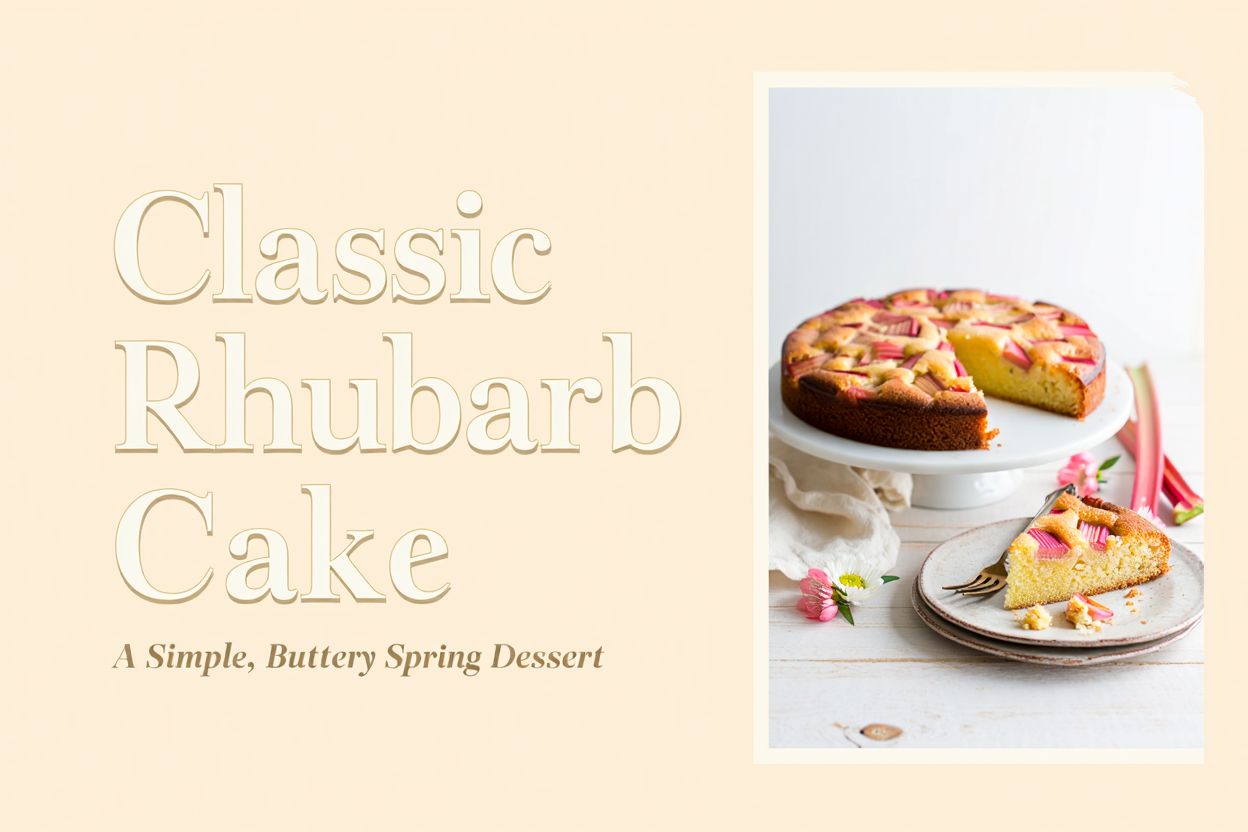
There’s something about the first rhubarb harvest of the season that feels like a quiet celebration. The stalks bright pink, streaked with green are too tart to eat raw but absolutely magical when baked into something tender and sweet. This classic rhubarb cake is the recipe I turn to again and again.
If you’ve ever looked at a bundle of rhubarb at the market and wondered what to do with it, this cake is your answer. It’s not fussy. You don’t need a stand mixer or any fancy technique. It’s the kind of dessert that works just as well for a casual coffee break as it does for a simple spring birthday.
This recipe is for home bakers who want something dependable, delicious, and forgiving. The rhubarb stays softly tart, the cake stays moist for days, and the whole thing comes together in about 15 minutes of active work.
Why This Recipe Works
Let’s talk about rhubarb for a second. On its own, it’s sour almost aggressively so. That’s why so many recipes bury it under piles of sugar or pair it with strawberries. But this cake takes a different approach.
The batter is a classic sour cream cake. Sour cream adds fat and acidity, which does two things: it keeps the crumb incredibly tender, and it mellows the rhubarb’s sharpness without needing a mountain of sugar. The sugar here is balanced enough to sweeten, not enough to mask the rhubarb’s character.
Butter provides richness and flavor. Eggs give structure. And a touch of vanilla rounds everything out. When the cake bakes, the rhubarb releases just enough juice to keep the crumb moist, but not so much that it becomes soggy. You end up with pockets of jammy, tangy fruit in every bite.
No strawberries needed. No complicated steps. Just good baking logic.
Ingredients
Here’s what you’ll need, plus why each ingredient matters.
For the cake:
- 2 cups (250g) all-purpose flour – Provides structure. Don’t substitute with whole wheat here or the cake will be dense.
- 1 teaspoon baking powder – Leavening for a light crumb.
- ½ teaspoon baking soda – Works with the sour cream to help the cake rise.
- ¼ teaspoon salt – Balances sweetness and enhances flavor.
- ½ cup (113g) unsalted butter, softened – Room temperature butter creams better with sugar. Don’t use melted.
- 1 cup (200g) granulated sugar – Sweetens and helps create a tender crust.
- 2 large eggs, room temperature – Bind the batter and add richness. Cold eggs can cause curdling.
- 1 teaspoon vanilla extract – Use real vanilla if you have it.
- 1 cup (240g) sour cream – The secret to a moist, fine crumb. Full-fat works best.
- 2 cups (about 240g) fresh or frozen rhubarb, cut into ½-inch pieces – If using frozen, don’t thaw first. Thawed rhubarb turns mushy.
For the topping (optional but lovely):
- 2 tablespoons turbinado sugar – Adds a light crunch on top. Regular sugar works too.
Equipment
- 9-inch springform pan or round cake pan (if using a regular pan, line the bottom with parchment paper)
- Mixing bowls (one medium, one large)
- Electric hand mixer or stand mixer (a whisk and strong arm work too)
- Spatula
- Measuring cups and spoons
- Cooling rack
Step-by-Step Instructions
1. Preheat and prepare your pan
Preheat your oven to 350°F (175°C). Grease your 9-inch pan with butter or nonstick spray. If using a regular cake pan, cut a circle of parchment paper for the bottom. This guarantees the cake won’t stick.
2. Mix the dry ingredients
In a medium bowl, whisk together the flour, baking powder, baking soda, and salt. Set aside.
3. Cream the butter and sugar
In a large bowl, beat the softened butter and sugar together until light and fluffy. This takes about 2–3 minutes with an electric mixer. You’ll know it’s ready when the mixture looks pale and feels gritty but smooth between your fingers. Don’t rush this step proper creaming builds the cake’s structure.
4. Add eggs and vanilla
Add the eggs one at a time, beating well after each addition. Then mix in the vanilla. If the batter looks curdled or separated, don’t panic. It will come together when you add the flour and sour cream.
5. Alternate dry and wet ingredients
Add about one-third of the flour mixture to the butter mixture and mix on low speed until just combined. Then add half the sour cream and mix again. Repeat: flour, sour cream, then the last of the flour. Stop as soon as you no longer see dry flour. Overmixing at this stage makes the cake tough.
6. Fold in the rhubarb
Gently fold the rhubarb pieces into the batter with a spatula. The batter is thick, so take your time. If the rhubarb is fresh and firm, it will hold its shape. If using frozen, the pieces might bleed a little pink into the batter that’s fine and actually pretty.
7. Bake
Scrape the batter into your prepared pan and smooth the top. Sprinkle with turbinado sugar if using. Bake for 45–55 minutes. Here’s what to look for:
- At 35 minutes: The edges should look set and golden. The center will still be slightly jiggly.
- At 45 minutes: A toothpick inserted in the center should come out with a few moist crumbs, not wet batter. The top should be deep golden brown.
- At 55 minutes: If the toothpick still looks wet, check every 3 minutes. Every oven is different.
Let the cake cool in the pan for 15 minutes. Then remove the sides if using a springform pan, or carefully invert and flip back onto a cooling rack. Cool completely before slicing—warm cake is delicious but crumbly.
Pro Tips
1. Don’t peel the rhubarb
Unless the stalks are super fibrous and tough, there’s no need to peel rhubarb. The skin is thin and softens during baking. Plus, those pink streaks look beautiful in the finished cake.
2. Test your baking powder
Old baking powder is a common reason cakes don’t rise. Drop a teaspoon into hot water if it fizzes vigorously, it’s good. If not, buy a fresh can.
3. Use a kitchen scale if you have one
Rhubarb can vary a lot in water content. Weighing your flour (250g for 2 cups) gives you consistent results every time. Scooping flour with a cup can pack in up to 20% more than you need.
4. Room temperature matters
Cold butter won’t cream properly. Cold eggs can make the batter curdle. Set everything on the counter an hour before you start baking.
Common Mistakes to Avoid
Overmixing the batter
Once you add the flour, mix just until you can’t see dry streaks. Overmixing develops gluten, and gluten makes cakes tough and rubbery instead of tender.
Using too much rhubarb
I know it’s tempting to pile it in, but more than 2 cups will release too much liquid. The cake will sink in the middle and have a gummy layer at the bottom. Trust the ratio.
Slicing too soon
Warm cake is fragile. If you cut into it straight from the oven, it will fall apart and the rhubarb pieces will pull out. Wait at least 30 minutes for clean slices.
Forgetting to grease the pan properly
Rhubarb cakes have a tendency to stick because of the fruit’s acidity. Grease every inch, and use parchment paper unless you’re using a well-seasoned springform pan.
Variations
Ginger-Rhubarb Cake
Add 1 tablespoon of finely grated fresh ginger and ½ teaspoon of ground ginger to the batter. Ginger and rhubarb are a classic pairing the spice cuts through the tartness beautifully.
Lemon-Rhubarb Cake
Add the zest of 1 large lemon to the sugar before creaming with the butter. Rub the zest into the sugar with your fingers to release the oils. You can also add 2 tablespoons of fresh lemon juice, but reduce the sour cream by 2 tablespoons to keep the batter balanced.
Almond Rhubarb Cake
Replace ½ cup of the all-purpose flour with ½ cup of finely ground almond flour. Add ½ teaspoon of almond extract along with the vanilla. Sprinkle flaked almonds on top before baking for extra crunch.
Dairy-Free Version
Replace the butter with vegan butter (melted and cooled slightly it won’t cream the same way, so beat it with sugar for 3–4 minutes anyway). Replace the sour cream with full-fat coconut yogurt or a vegan sour cream. The texture will be slightly denser, but still delicious.
Storage & Meal Prep
Room temperature: Store the cake in an airtight container for up to 3 days. The cake actually tastes better on day two the flavors meld and the rhubarb gets even more jammy.
Refrigerator: Rhubarb cake can dry out in the fridge, but if your kitchen is warm or humid, it’s fine to refrigerate for up to 5 days. Wrap it tightly in plastic wrap first.
Freezer: This cake freezes beautifully. Wrap individual slices or the whole cake in plastic wrap, then foil. Freeze for up to 3 months. Thaw at room temperature for a few hours or overnight in the fridge.
Reheat: For that fresh-from-the-oven feel, warm slices in a 300°F oven for 5–7 minutes or microwave for 15 seconds. The topping re-crisps slightly in the oven.
Make ahead: You can chop the rhubarb up to 2 days ahead and store it in a sealed bag in the fridge. The batter is best baked immediately the rhubarb will release liquid if it sits in the batter too long before baking.
Nutrition Benefits
Let’s be clear: this is cake. It’s not health food. But rhubarb does bring some good things to the table. It’s a non-starchy vegetable (yes, it’s technically a vegetable, not a fruit) that’s high in vitamin K, vitamin C, and fiber. The sour cream adds a bit of protein and calcium. Compared to a frosted layer cake, this one has less sugar and no heavy icing.
One slice (1/8 of the cake) has roughly:
- 340 calories
- 14g fat (8g saturated)
- 48g carbohydrates
- 5g protein
- 2g fiber
For a dessert, that’s reasonable. The fiber from the rhubarb and the protein from the eggs and sour cream help slow down sugar absorption.
FAQ
Can I use frozen rhubarb?
Yes, and you don’t need to thaw it first. Add it straight from the freezer to the batter. Frozen rhubarb will release a bit more liquid, so your bake time might increase by 5–8 minutes. Don’t thaw it first—thawed rhubarb turns into mush.
Why is my cake sinking in the middle?
The most common reasons: the oven wasn’t fully preheated, you opened the oven door too early (first 30 minutes), or you overmixed the batter. Also check that your baking powder is fresh.
Can I make this in a loaf pan?
Absolutely. Use a 9×5-inch loaf pan and bake for 50–60 minutes. Check with a toothpick. A loaf pan will give you a taller cake with a slightly denser crumb. It’s lovely for slicing and toasting.
Can I reduce the sugar?
You can cut the sugar down to ¾ cup (150g) without ruining the cake, but the rhubarb will taste noticeably tart. If you prefer less sweet desserts, try it with ¾ cup. I wouldn’t go lower than that—sugar here isn’t just for sweetness; it also helps with texture and moisture.
Can I add strawberries?
Yes, but reduce the rhubarb to 1½ cups and add ½ cup of diced strawberries. Strawberries have more water than rhubarb, so any more than that will make the batter soggy. Toss the berries in a little flour before folding them in to help absorb excess moisture.
Conclusion
This classic rhubarb cake is one of those recipes that feels like a secret worth sharing. It’s simple enough for a Tuesday afternoon, special enough for a spring gathering, and forgiving enough for anyone still learning their way around the kitchen. The tart pop of rhubarb against the tender, buttery cake that’s the kind of dessert that makes people ask for the recipe.
If you have rhubarb growing in your garden or sitting on your counter, now you know what to do with it. And if you don’t have rhubarb yet? Keep an eye out at the farmers’ market. It’s worth hunting down.
Please try our recipes authentics :
- Rhubarb Strawberry Jam Recipe – A warm, buttery oat topping over the same classic fruit pairing.
- Homemade Rhubarb Crisp – The same tender crumb and simple technique, but with a cinnamon-walnut swirl.
- Easy Apple Cake – For when rhubarb isn’t in season; uses the same base batter with fall flavors.