
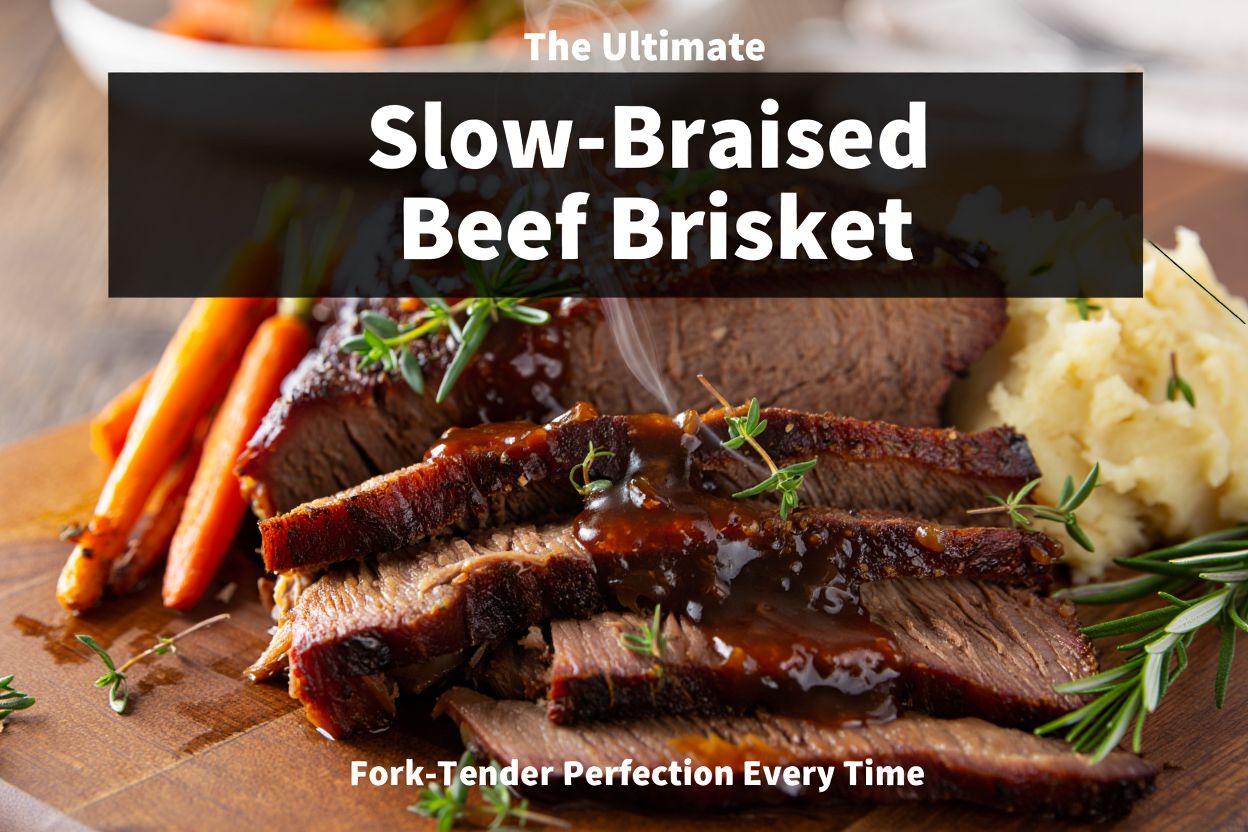
There are some Sunday dinners that just feel like a hug on a plate, and this slow-braised beef brisket is exactly that. I still remember the first time I made it I was impatient, cranked the heat too high, and ended up with something closer to shoe leather than the melt-in-your-mouth magic I’d dreamed of. Lesson learned the hard way.
After dozens of tests (and a few more chewy disappointments), I finally cracked the code. The secret? Low, gentle heat, a good sear, and letting time do the heavy lifting. This slow-braised beef brisket fills your kitchen with a rich, savory aroma that’ll have everyone hovering near the oven. My husband now requests it for his birthday every single year, and my mom who’s notoriously picky about beef says it’s “better than her mother’s.” That’s high praise in my family.
What I love most is how hands-off it is. You do about 20 minutes of active work, then let the oven work its magic while you go about your day. Perfect for feeding a crowd, meal prepping, or just treating yourself to something deeply satisfying.
Why You’ll Love This Recipe
- Incredibly forgiving – Even if you go over by 30 minutes, this brisket only gets more tender. No stress, no perfectionism needed.
- One pot, minimal cleanup – Everything happens in a single Dutch oven. My lazy side is very happy about this.
- That “wow” factor – The first time you cut into it and see the smoke ring, you’ll feel like a barbecue pitmaster. My kids actually cheered.
- Better the next day – Like a fine stew, the flavors deepen overnight. I often make it two days before serving.
- Budget-friendly comfort – Brisket is still one of the more affordable cuts, and it stretches beautifully over potatoes, noodles, or rice.
- Freezer hero – I always double the recipe and freeze half for those “I can’t even” weeknights.
Recipe Overview
| Category | Details |
|---|---|
| Prep time | 20 minutes |
| Cook time | 3.5 – 4 hours |
| Total time | ~4 hours |
| Servings | 6–8 people |
| Calories per serving | ~480 calories |
| Cuisine type | American / Jewish Deli-style |
| Diet type | Gluten-free, Dairy-free optional |
I usually make this on a lazy Sunday when I know Monday needs a hero. Leftovers = instant weekday dinner win.
Ingredients
For the Brisket:
- 3–4 lb beef brisket (flat cut or point cut – I prefer point cut for extra marbling)
- 2 tbsp neutral oil (avocado or canola)
- 2 tsp kosher salt
- 1 tsp black pepper
- 1 tsp smoked paprika
For the Braising Liquid & Aromatics:
- 2 large yellow onions, sliced into half-moons
- 4 garlic cloves, smashed (not minced – trust me)
- 2 cups low-sodium beef broth
- 1 cup dry red wine (or more broth if you avoid alcohol)
- 2 tbsp tomato paste
- 3 sprigs fresh thyme
- 2 sprigs fresh rosemary
- 2 bay leaves
Thickening (optional):
- 2 tbsp cornstarch mixed with 2 tbsp cold water (for gravy)
Substitutions I’ve personally tested: No wine? Use 1 cup beef broth + 1 tbsp balsamic vinegar. Need it dairy-free? You’re already good here. I’ve also swapped thyme for oregano in a pinch—different but still delicious. And if you don’t have fresh herbs, use 1 tsp dried each, but add them in the last hour so they don’t turn bitter.
Step-by-Step Instructions
1. Bring the brisket to room temperature.
Take your brisket out of the fridge 30–45 minutes before cooking. I learned this after cracking a cold brisket into a hot pan and watching it seize up. Pat it completely dry with paper towels moisture is the enemy of a good sear.
2. Preheat your oven to 300°F (150°C).
Yes, only 300°. Low and slow is non-negotiable here. Position a rack in the lower third of the oven.
3. Season aggressively.
Mix salt, pepper, and smoked paprika in a small bowl. Rub it all over the brisket every nook and cranny. Don’t be shy. The amount looks like a lot, but remember this is a thick piece of meat.
4. Sear the brisket.
Heat oil in a large Dutch oven over medium-high heat until it shimmers. Carefully place the brisket in (fat side down first if it has a fat cap). Listen for that beautiful sizzle. Sear undisturbed for 4–5 minutes until deeply browned—like dark caramel, not burnt. Flip and repeat on the other side. The smell at this stage? Pure umami heaven.
5. Sauté the aromatics.
Remove the brisket to a plate. Lower heat to medium. Add onions and cook for 5–7 minutes, scraping up the browned bits (fond) with a wooden spoon. Those bits are liquid gold. When the onions are soft and golden, add smashed garlic and tomato paste. Cook 1 minute more until the paste darkens slightly.
6. Deglaze the pot.
Pour in the red wine, stirring constantly. Let it bubble for 2 minutes, scraping the bottom until the fond has dissolved completely. The kitchen will smell like a cozy French bistro at this point. Add beef broth, thyme, rosemary, and bay leaves.
7. Braise low and slow.
Return the brisket to the pot, nestled into the liquid. It should come about halfway up the meat not fully submerged. Bring to a gentle simmer on the stovetop, then cover with a tight-fitting lid and transfer to the oven.
8. Wait. (The hardest part.)
Braise for 3 to 3.5 hours. Resist the urge to peek every 20 minutes every time you open the oven, heat escapes. After 2 hours, you can flip the brisket once. You’ll know it’s done when a fork slides in with almost no resistance and the meat jiggles slightly when you shake the pot.
9. Rest before slicing.
Carefully transfer the brisket to a cutting board. Tent loosely with foil and let it rest for 15–20 minutes. This step is non-negotiable—it lets the juices redistribute. I once skipped this and watched all the precious liquid run out like my hopes and dreams.
10. Slice against the grain and serve.
Look closely at the brisket you’ll see lines running in one direction. Slice perpendicular to those lines. This is the difference between tender and tough. Serve with the braising liquid spooned over top (or thicken it into gravy using the cornstarch slurry over medium heat).
Pro Tips for Perfect Results
Don’t rush the sear. That deep brown crust isn’t just for looks it creates the complex, savory backbone of the whole dish. If your brisket sticks to the pan, it’s not ready to flip. Wait another minute.
Let the meat rest before slicing. I cannot stress this enough. My first few briskets were delicious but dry because I sliced immediately. Now I set a timer for 20 minutes and walk away.
Slice against the grain, not with it. Brisket has two different grain directions if you’re using a whole packer cut. Pay attention and change your slicing angle halfway through if needed.
Add a little sugar if your onions won’t brown. Some onions are more watery than others. A tiny pinch of sugar (1/4 tsp) helps them caramelize faster. I learned this trick from a chef friend after a particularly sad, pale batch of onions.
Make it a day ahead. Brisket is one of those rare dishes that actually improves overnight. The connective tissue breaks down further, and the flavors meld beautifully. Just reheat gently in a covered pot at 300°F for 20–30 minutes.
Mistake I made so you don’t have to: I once used a cheap, thin brisket that was mostly fat. Spend the extra few dollars on a well-marbled piece from a butcher you trust. The texture difference is night and day.
Variations & Add-Ons
Smoky BBQ Twist – Swap the thyme and rosemary for 1 tsp chipotle powder and 1 tbsp brown sugar. Replace beef broth with smoked beef stock if you can find it. My brother-in-law requests this version every time he visits.
Asian-Inspired Braise – Use 1 cup beef broth + 1/2 cup soy sauce + 1/4 cup mirin instead of red wine. Add star anise, ginger slices, and a cinnamon stick. Serve over rice noodles with fresh cilantro. This is my personal favorite variation the anise and soy create this incredibly complex, savory-sweet flavor.
Low-Carb / Keto – Skip the wine and use all beef broth. Add a splash of apple cider vinegar for acidity. Thicken the gravy with xanthan gum instead of cornstarch. Serve over cauliflower mash or roasted radishes.
Extra Veggies – Add carrots and celery chunks during the last hour of braising. They soak up the beefy juices and become these sweet, tender gems. My kids actually fight over the carrots.
Spicy Kick – Add 2 dried chiles de árbol or 1 tsp red pepper flakes with the garlic. For more heat, finish with a drizzle of chili oil when serving.
Storage and Meal Prep Tips
Fridge storage: Keeps well for up to 4 days in an airtight container. Store the brisket in its braising liquid—it acts like a protective blanket and keeps the meat moist.
Freezing instructions: Cool completely, then slice (or leave whole) and submerge in the braising liquid. Freeze in a freezer-safe container for up to 3 months. I like to portion it into 1-pound bags for easy weeknight meals.
Best reheating method: Thaw overnight in the fridge if frozen. Reheat gently in a covered pot on the stovetop over low heat, or in a 300°F oven for 20–30 minutes. Never microwave it turns the meat rubbery. Ask me how I know.
My practical tip: When I meal prep this, I slice the whole brisket after it rests, then portion it into containers with a little gravy. Then I can just grab and reheat for lunches all week. It’s been a game-changer for busy workdays.
FAQ Section
Why is my slow-braised beef brisket tough?
Most likely one of two things: you didn’t cook it long enough, or you sliced with the grain instead of against it. Brisket needs time for collagen to break down at least 3 hours for a 3-pound piece. And always, always slice against those muscle fibers.
Can I make this in a slow cooker instead of the oven?
Absolutely. Sear the brisket and sauté the aromatics on the stovetop first (don’t skip this!), then transfer everything to a slow cooker. Cook on LOW for 8–10 hours. The texture will be slightly softer but still wonderful.
Do I have to use red wine?
Nope. Replace it with an equal amount of beef broth plus 1 tablespoon of balsamic vinegar or red wine vinegar. The vinegar adds that same brightness and depth. I’ve done this many times when I didn’t have wine open.
How do I know when the brisket is done without a thermometer?
Stick a fork into the thickest part. If it slides in like warm butter with no resistance, it’s ready. If you feel any tugging or the meat resists, give it another 30 minutes. Trust your fork more than the clock.
Can I use a different cut of beef?
Chuck roast works beautifully with the same method, though it’s a bit leaner. Round or sirloin will dry out they don’t have enough marbling for long braising. Stick with brisket or chuck for best results.
Conclusion (Let’s Eat!)
This slow-braised beef brisket has become my go-to for holidays, lazy Sundays, and any time I need to feed people something that feels special without spending all day in the kitchen. The first time you pull that fork out and the meat just gives, you’ll understand exactly why I kept testing until I got it right.
I’d love to hear how yours turns out. Did you try one of the variations? Did your family fight over the leftovers like mine does? Drop a comment below or tag me in your photos I genuinely read every single one.
Now go preheat that oven. Your Sunday dinner (and your future self) will thank you. ❤️
Happy braising, friends!
duarecipes.com