
Few kitchen disappointments are as frustrating as spending good money on a beautiful piece of fish only to end up with a dry, chalky fillet or one that is still translucent in the center. I have experienced both extremes countless times while testing recipes over the past 15 years, and I quickly learned that successful fish cookery has far less to do with luck than with understanding how heat changes delicate muscle proteins. Unlike beef or chicken, fish gives you a much smaller margin for error. Just a couple of extra minutes can transform a moist, flaky fillet into something tough and disappointing.
Through years of experimenting with salmon, cod, halibut, trout, snapper, tuna, and dozens of other species, I have found that mastering fish comes down to three variables: temperature, texture, and timing. Each influences the others, and even small adjustments produce dramatically different results. Once you understand what is happening inside the fish as it cooks, you stop relying on guesswork and start making consistent decisions based on science.
By the end of this guide, you will understand exactly why fish behaves the way it does, how different species respond to heat, how to recognize perfect doneness without cutting into every fillet, and how to troubleshoot common cooking problems before they ruin dinner.
The Underlying Science: Why Fish Cooks So Quickly
Fish is fundamentally different from red meat because its muscle structure evolved for swimming rather than supporting body weight. The muscle fibers are shorter, separated by thin layers of connective tissue called myocommata, and contain significantly less collagen than beef or pork. Collagen is the structural protein that becomes gelatin during long cooking. Since fish contains very little collagen, it softens rapidly instead of requiring hours of slow cooking.
The proteins inside fish begin changing shape—a process known as denaturation—at surprisingly low temperatures. Denaturation simply means that the tightly folded protein molecules unfold when exposed to heat. As they unfold, they squeeze out moisture and become firmer. This process starts around 104°F (40°C), becomes noticeable around 120°F (49°C), and accelerates rapidly beyond 130°F (54°C).
This narrow temperature window explains why fish can move from silky and tender to dry within only a few minutes. Beef often tolerates a wider range of internal temperatures because its connective tissues and fat provide a larger safety margin. Fish lacks those protective characteristics.
Fat content also plays a major role. Oily fish such as salmon, mackerel, sardines, and Arctic char contain abundant healthy fats dispersed throughout the muscle. These fats lubricate the fibers during cooking, allowing them to remain juicy even if slightly overcooked. Lean fish like cod, haddock, pollock, sole, and tilapia contain very little internal fat, so moisture escapes much faster. They demand greater precision.
Water makes up roughly 70 to 80 percent of most fish. As proteins tighten, they force this water toward the surface. If the cooking temperature is too aggressive, moisture escapes faster than the proteins can stabilize, resulting in dry flesh that flakes excessively. Gentle cooking slows this moisture loss, preserving tenderness.
Residual cooking, often called carryover cooking, deserves equal attention. Even after removing fish from the pan or oven, internal heat continues moving toward the center. Thick salmon fillets may rise another 5°F before stabilizing. I routinely remove fish just before reaching my target temperature because carryover heat finishes the job naturally.
Skin behaves differently than flesh because it contains more collagen and connective tissue. High heat renders fat beneath the skin while dehydrating its surface, creating the crisp texture many cooks seek. If heat is too low, the skin steams instead of browning and becomes rubbery.
Understanding these biological changes transforms cooking from following arbitrary cooking times into making informed decisions based on temperature and structure.
Step-by-Step Technique Guide
The first decision I make is selecting fish with the proper thickness. Thickness influences cooking time far more than weight. A six-ounce fillet that measures one inch thick requires considerably longer than another six-ounce portion spread thinly. Uniform thickness also promotes even cooking, preventing one end from drying while the other remains underdone.
I always let refrigerated fish rest at room temperature for 15 to 20 minutes before cooking. Starting with extremely cold fish increases the temperature difference between the surface and center. The exterior may overcook before heat penetrates the middle.
Moisture on the surface is another overlooked variable. Before seasoning, I thoroughly pat every fillet dry with paper towels. Surface moisture must evaporate before browning begins, wasting valuable cooking time and preventing proper crust formation. Dry fish develops better color, crisper skin, and richer flavor through the Maillard reaction—the series of chemical reactions responsible for browned foods.
Seasoning should remain relatively simple. Salt enhances natural flavor while drawing a small amount of moisture to the surface, where it dissolves and then reabsorbs into the flesh. This creates more even seasoning throughout the fillet. Fresh herbs, citrus zest, black pepper, and mild spices complement rather than overpower delicate seafood.
For pan-searing, I preheat a heavy stainless steel or cast-iron skillet until hot but not smoking excessively. A thin layer of high-smoke-point oil provides efficient heat transfer. Skin-on fish enters the pan skin-side down first because that side benefits from prolonged direct contact. I gently press the fillet for the first 20 seconds to prevent curling.
Most fillets should cook approximately 70 percent of the total time on the first side and finish briefly after flipping. This allows the heat to penetrate gradually while preserving moisture.
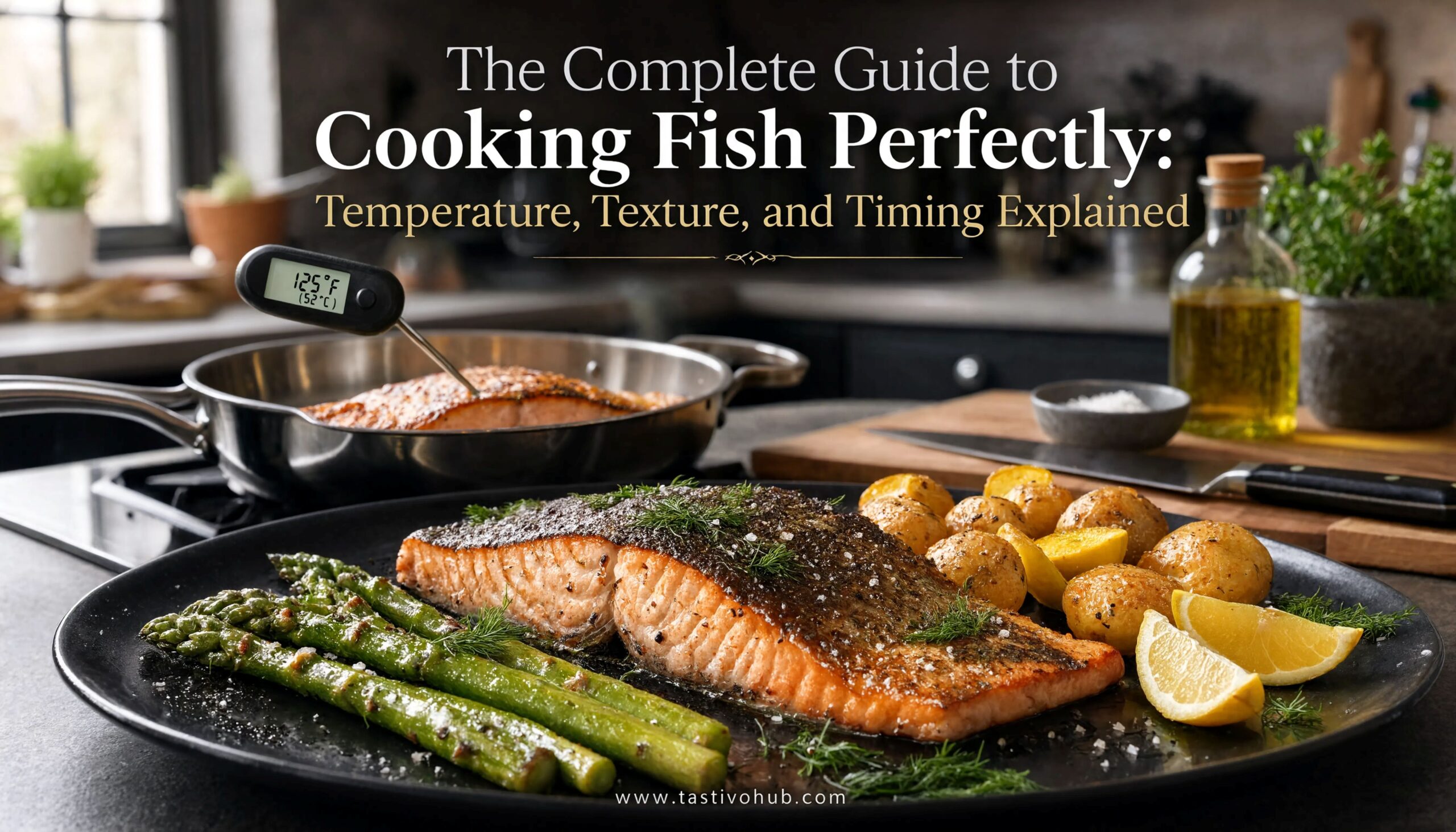
An instant-read thermometer remains my most trusted tool. Internal temperature removes uncertainty regardless of fish variety.
General temperature targets include:
| Fish Type | Ideal Internal Temperature |
|---|---|
| Salmon | 120–125°F (49–52°C) for medium, 130°F (54°C) for fully cooked |
| Tuna | 115–120°F (46–49°C) for rare |
| Cod | 130–135°F (54–57°C) |
| Halibut | 130–135°F (54–57°C) |
| Tilapia | 135°F (57°C) |
| Trout | 125–130°F (52–54°C) |
Oven roasting works best between 375°F and 400°F. Lower temperatures produce gentler cooking while reducing moisture loss. Broiling delivers exceptional browning but requires close monitoring because radiant heat cooks extremely quickly.
Visual cues support thermometer readings. Perfectly cooked fish changes from translucent to opaque while maintaining a slight sheen. The flakes should separate easily under gentle pressure without appearing dry or crumbly.
Resting for three to five minutes before serving allows internal moisture to redistribute rather than spilling onto the plate.
Comprehensive Troubleshooting Guide
Dry fish almost always results from excessive internal temperature rather than cooking time alone. Once proteins tighten beyond their ideal range, they expel moisture permanently. If you notice the fish becoming dry before serving, immediately add a warm sauce, beurre blanc, herb butter, olive oil, or citrus vinaigrette. These cannot replace lost moisture inside the muscle fibers, but they greatly improve the eating experience by adding lubrication.
Fish sticking to the pan frustrates many home cooks. The problem is usually insufficient preheating, inadequate drying, or moving the fish too early. Proteins naturally bond to metal before a crust develops. Once browning occurs, the fillet usually releases on its own. Patience often solves the issue better than force.
Rubbery texture indicates excessive protein contraction. This frequently occurs when cooking lean fish over very high heat. Reducing burner intensity while extending cooking slightly creates gentler protein coagulation and a noticeably softer texture.
Undercooked centers are common with thick fillets. Rather than increasing stove heat, finish cooking in a moderate oven. This provides more even heat distribution without burning the exterior. If you discover the center is underdone after plating, return the fish to low heat for one or two minutes rather than blasting it with high temperatures.
Broken fillets usually stem from excessive flipping or using thin spatulas that fail to support the fish. I prefer a wide, flexible fish spatula because it slides underneath the entire fillet with minimal damage.
Fish with pale, soggy skin often entered the pan too wet or at insufficient temperature. Drying thoroughly and beginning with a properly heated skillet dramatically improves crispness.
Strong fishy aromas rarely indicate cooking failure. Instead, they often signal declining freshness before cooking. Fresh fish should smell clean, mildly briny, and ocean-like rather than intensely fishy.
Frequently Asked Questions
Why does fish continue cooking after I remove it from the heat?
Residual heat continues moving from the hotter exterior toward the cooler center. Thick fillets may increase by 3 to 5°F after leaving the pan. I intentionally remove fish slightly before reaching my target temperature because this carryover cooking finishes the interior gently without drying it out.
Is it better to judge doneness by cooking time or temperature?
Temperature is considerably more reliable. Cooking times vary according to thickness, species, pan material, starting temperature, and cooking method. A digital instant-read thermometer eliminates nearly all guesswork and consistently produces better results. Visual cues should support thermometer readings rather than replace them.
Why does salmon sometimes release white liquid while cooking?
That white substance is albumin, a naturally occurring protein dissolved in the muscle. As salmon heats, albumin coagulates and squeezes to the surface. Large amounts usually indicate cooking temperatures that are too high or cooking times that are too long. Lower, gentler heat significantly reduces albumin formation while preserving moisture.
Should I cook fish straight from the refrigerator?
I recommend allowing fish to rest for about 15 to 20 minutes before cooking. This short rest promotes more even heat penetration, reducing the chance that the exterior becomes overcooked before the center reaches the ideal temperature. Avoid leaving fish unrefrigerated for extended periods, but a brief tempering period provides noticeably better results, especially with thick fillets.
for more authentic articles duarecipes.com