
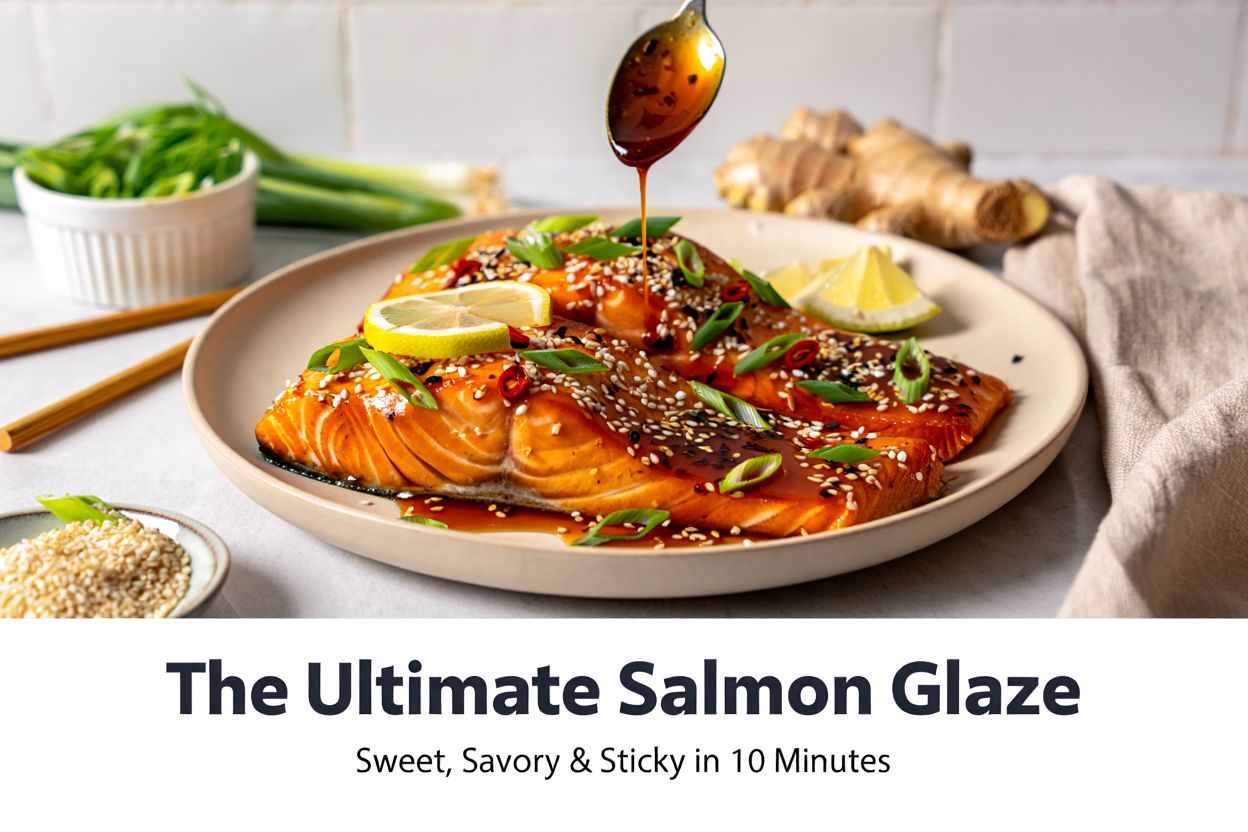
Let me paint you a picture: It’s a Tuesday evening. You want something impressive for dinner, but you’ve got maybe 20 minutes before hangry sets in. You open the fridge, and there’s a beautiful piece of salmon staring back at you. The only question is how do you make it exciting without turning your kitchen into a science lab?
Enter the salmon glaze.
Not a marinade that requires hours of waiting. Not a complicated sauce with 17 ingredients. Just a simple, sticky, glossy glaze that transforms a plain fillet into something you’d happily pay $28 for at a restaurant.
This recipe is for anyone who loves big flavor without big effort. Whether you’re a busy parent, a college student learning to cook, or someone who simply wants to eat well on a weeknight this glaze delivers. It’s sweet, savory, garlicky, and caramelizes beautifully on the fish. Plus, you probably already have most of the ingredients in your pantry.
Let’s make your salmon unforgettable.
Why This Recipe Works
Cooking is chemistry, but you don’t need a lab coat to understand why this glaze works so well.
The sugar + heat magic. Brown sugar or honey (depending on your version) does two things: it balances the salty soy sauce, and it caramelizes under high heat. That caramelization creates that deep, golden-brown crust and a sticky texture that clings to every flake of salmon.
The umami punch. Soy sauce (or tamari/coconut aminos) brings savory depth. It’s the backbone of the glaze without it, you’d just have sweet syrup on fish. The salt in the soy also helps season the salmon evenly.
Acid to cut through richness. A splash of rice vinegar or lemon juice brightens everything. Salmon is naturally fatty (in the best way), and acid prevents the dish from feeling heavy. It’s the same reason you squeeze lemon over fried fish balance.
Garlic and ginger add warmth. These aromatics don’t just sit on top they infuse the glaze as it simmers, giving every bite a gentle kick. No raw garlic burn here, just mellow, savory sweetness.
Cornstarch for the perfect cling. Without a thickener, the glaze would be thin and runny. A tiny amount of cornstarch (or arrowroot powder) transforms it into a syrupy coating that stays on the fish instead of pooling on your plate.
The result? A salmon fillet that’s crispy on the edges, tender and flaky inside, and wrapped in a glossy, finger-licking glaze. Ready in under 20 minutes.
Ingredients
For the Salmon:
- 4 salmon fillets (about 6 oz each) – Skin-on or skin-off. Skin-on gives you extra crispy edges, but either works.
- 1 tablespoon neutral oil – Avocado, canola, or vegetable oil. High smoke point is key here.
- Salt and black pepper – Light salting because the glaze already has soy sauce.
The Glaze:
- ¼ cup low-sodium soy sauce (or tamari/coconut aminos) – Regular soy sauce works too, but the glaze will be saltier. I prefer low-sodium so I control the balance.
- ¼ cup honey or brown sugar – Honey gives a floral sweetness and thinner glaze. Brown sugar creates a deeper, molasses-like richness. Both are delicious.
- 2 tablespoons rice vinegar (or apple cider vinegar) – Mild acidity that doesn’t overpower.
- 2 cloves garlic, minced – Fresh is non-negotiable here. Jarred garlic has less punch.
- 1 teaspoon fresh ginger, grated – Use a microplane if you have one. No need to peel if it’s organic.
- 1 tablespoon water
- 1 teaspoon cornstarch – This creates the sticky texture. Don’t skip it.
- Optional: 1 teaspoon sesame oil – Adds nutty depth. Add at the very end off heat.
Garnish:
- Sesame seeds – Toasted white or black.
- Sliced green onions – Freshness and color.
- Lime or lemon wedges – Extra brightness at the table.
Equipment
- Large nonstick or cast-iron skillet
- Small mixing bowl
- Whisk or fork
- Spatula (fish spatula is ideal but not required)
- Measuring spoons
- Microplane or fine grater (for ginger)
- Tongs
That’s it. No blender, no food processor, no special gadgets.
Step-by-Step Instructions
1. Prep the salmon (2 minutes)
Pat the salmon fillets completely dry with paper towels. This is critical. Wet skin or flesh won’t sear it’ll steam. Season both sides lightly with salt and pepper. Set aside.
2. Make the glaze mixture (2 minutes)
In a small bowl, whisk together the soy sauce, honey (or brown sugar), rice vinegar, minced garlic, and grated ginger. In a separate tiny bowl, mix the water and cornstarch until smooth. Keep them separate for now. This is your “slurry.”
3. Sear the salmon (6–8 minutes)
Heat the neutral oil in a large skillet over medium-high heat. When the oil shimmers (you’ll see thin wavy lines), carefully place the salmon fillets skin-side down if using skin-on.
Visual cue: The edges should start turning opaque within 30 seconds.
Cook without moving for 4–6 minutes, depending on thickness. You’ll know it’s ready to flip when the bottom is deeply golden brown and releases easily from the pan. Don’t force it if it sticks, wait another minute.
Flip gently using a spatula. Cook for another 2–3 minutes on the second side. The salmon should feel slightly firm but still give a little when pressed. Remove from the pan and set aside on a plate.
4. Make the glaze in the same pan (2 minutes)
Pour out any excess oil but leave the brown bits stuck to the pan those are flavor gold. Reduce heat to medium-low. Pour in the glaze mixture (the soy sauce blend, not the cornstarch slurry yet).
Texture cue: The liquid will bubble immediately. Let it simmer for about 30 seconds to cook off the raw garlic and ginger smell. You should smell sweet, savory, aromatic steam.
5. Thicken the glaze (30 seconds)
Give the cornstarch slurry a quick stir (it settles fast). While whisking the simmering glaze, slowly pour in the slurry. Within 10–15 seconds, you’ll see the liquid transform from watery to syrupy and glossy.
Visual cue: It should coat the back of a spoon. If it’s too thick, add a tablespoon of water. Too thin? Simmer another 20 seconds.
6. Glaze the salmon (1 minute)
Return the salmon fillets to the pan. Spoon the glaze over each fillet for about 30 seconds, turning once to coat both sides. The glaze should cling to the fish like a shiny jacket.
Remove from heat. If using sesame oil, drizzle it over now (heat destroys its delicate flavor).
7. Garnish and serve
Transfer to plates. Sprinkle with sesame seeds and sliced green onions. Serve immediately with lime wedges on the side.
Pro Tips (From Real Kitchen Experience)
- Start with room-temperature salmon. Take it out of the fridge 15–20 minutes before cooking. Cold protein sears unevenly and tends to stick.
- Dry brine for extra crisp skin. Pat the salmon dry, sprinkle lightly with salt, and leave uncovered in the fridge for 30 minutes before cooking. This dries the surface even more. Restaurant trick.
- Double the glaze if you love sauce. This recipe makes just enough to coat the fish. If you want extra for rice or vegetables, make 1.5x. Keep leftovers in a jar in the fridge for up to a week.
- Don’t walk away during the thickening step. Cornstarch goes from perfect to glue in about 10 seconds. Stay at the stove and watch.
- Use the leftover glaze pan bits for vegetables. After removing the salmon, toss green beans, broccoli, or bok choy into the still-warm pan. They’ll pick up every bit of flavor.
Common Mistakes to Avoid
Mistake #1: Overcrowding the pan
If you cook four large fillets in a small skillet, they’ll steam instead of sear. Cook in two batches, or use a larger pan. Crowding = gray, soggy salmon.
Mistake #2: Adding the cornstarch slurry to cold liquid
Cornstarch needs heat to activate. Whisk it into simmering glaze, not cold sauce. Otherwise, you’ll get a cloudy, lumpy mess.
Mistake #3: Burning the garlic and ginger
If your pan is screaming hot when you add the glaze, the garlic will blacken in seconds and turn bitter. Lower the heat to medium-low before adding liquid.
Mistake #4: Cooking the glaze too long after thickening
Once it’s syrupy, remove from heat. Prolonged cooking breaks down the cornstarch, and the glaze will thin out again.
Mistake #5: Skipping the drying step
Wet salmon = steamed salmon. Steamed salmon = no crispy edges. Patting dry takes 10 seconds and makes all the difference.
Variations
1. Spicy Miso Glaze
Replace soy sauce with 3 tablespoons white miso paste + 2 tablespoons water (whisk until smooth). Add 1 teaspoon sriracha or gochujang. Reduce honey to 2 tablespoons (miso is sweet). Garnish with chili flakes.
2. Low-Sugar / Keto-Friendly
Replace honey with 2 tablespoons allulose or monk fruit sweetener. Add 1 tablespoon extra water. The glaze will be slightly less sticky but still delicious. Serve over cauliflower rice.
3. Orange Ginger Glaze (Citrus Twist)
Replace rice vinegar with fresh orange juice. Add 1 teaspoon orange zest. Reduce honey to 2 tablespoons. The orange brightens everything and pairs beautifully with salmon’s richness.
4. Vegan Tofu Version
Press and cube extra-firm tofu. Toss in cornstarch, pan-fry until crispy on all sides. Make the glaze as written (honey is debated among vegans use maple syrup or brown sugar instead). Toss tofu in the glaze. Serve with rice and steamed broccoli.
5. Maple Bourbon Glaze (Date Night Upgrade)
Replace honey with pure maple syrup. Add 1 tablespoon bourbon. Simmer for an extra minute to cook off the alcohol. The smoky maple flavor is incredible with salmon.
Storage & Meal Prep
Refrigerator: Store leftover glazed salmon in an airtight container for up to 3 days. Keep glaze separate if possible it absorbs into the fish over time.
Freezer: Not recommended. The texture of thawed, glazed salmon becomes mushy. Freeze unglazed, cooked salmon instead, then make fresh glaze when reheating.
Reheating method that works: Low and slow. Place salmon in a nonstick skillet over low heat with a splash of water. Cover and warm for 3–4 minutes. Microwave will turn it rubbery. If you must microwave, use 50% power in 20-second bursts.
Meal prep idea: Make a double batch of glaze on Sunday. Store in a jar in the fridge. Cook fresh salmon on Tuesday and Thursday just reheat the glaze in a small pan (add 1 tablespoon water to thin it) and brush onto seared fish.
Nutrition Benefits
(General guidance, not medical advice)
Salmon is one of the most nutrient-dense proteins you can eat. It’s naturally rich in omega-3 fatty acids (EPA and DHA), which support heart and brain health. A standard 6-ounce serving provides about 34 grams of protein that’s over half the daily recommendation for many adults.
This glaze keeps things reasonable. By using low-sodium soy sauce, you reduce the salt load. Honey or brown sugar adds about 4–6 grams of sugar per serving, far less than bottled teriyaki sauces (which often have 12+ grams per tablespoon). Garlic and ginger offer anti-inflammatory compounds without any downsides.
Pair this salmon with roasted vegetables or a crisp cucumber salad for a balanced, satisfying meal.
FAQ
Can I bake the salmon instead of pan-searing it?
Yes. Bake at 400°F (200°C) for 12–15 minutes, then brush with glaze and broil for 1–2 minutes until sticky. You won’t get the same crispy edges, but it’s still delicious.
Why is my glaze not getting thick?
Three possibilities: (1) You forgot the cornstarch. (2) The heat is too lowcornstarch needs a simmer. (3) You added the slurry to cold glaze. Start over with fresh glaze, or whisk in an additional ½ teaspoon cornstarch mixed with 1 tablespoon water.
Can I use this glaze on chicken or shrimp?
Absolutely. For chicken thighs, sear first then glaze the same way. For shrimp, cook until pink (2 minutes per side) then toss in warm glaze off heat shrimp cooks too fast to simmer in the sauce.
Is this gluten-free?
Use tamari or coconut aminos instead of soy sauce. Both are gluten-free. Double-check your cornstarch brand (most are, but some contain wheat starch).
How do I know when salmon is fully cooked?
The best test: insert a fork into the thickest part and twist gently. If the flesh flakes easily and looks opaque all the way through (no translucent dark orange center), it’s done. Internal temperature should reach 125–130°F for medium, 140°F for well-done.
Conclusion
A great salmon glaze shouldn’t require a culinary degree or a trip to a specialty grocery store. This recipe proves that simple ingredients soy sauce, honey, garlic, and ginger can create something genuinely special. The first time you watch that glossy syrup cling to a perfectly seared fillet, you’ll wonder why you ever bought bottled marinades.
Make it on a busy Tuesday, it for a quiet dinner for two, and it again next week with the orange ginger variation. Once you know how to build a glaze, you can adapt it to any protein or vegetable.
Now go grab that salmon. Dinner’s 20 minutes away.
- “the Best Salmon and Orzo Casserole” – A foundational recipe teaching the basic technique without any glaze, so readers can master the sear first.
- “15-Minute Garlic Butter Rice” – The ideal starchy side to soak up extra glaze. Simple, fast, and crowd-pleasing.
- “Honey Mustard Salmon” – A 10-minute vegetable side that complements the sweet-savory glaze without competing.
- “Healthy Slow Cooker Teriyaki Chicken” – A slightly different sauce using sake and mirin, perfect for readers who want to explore more Japanese-inspired glazes.