
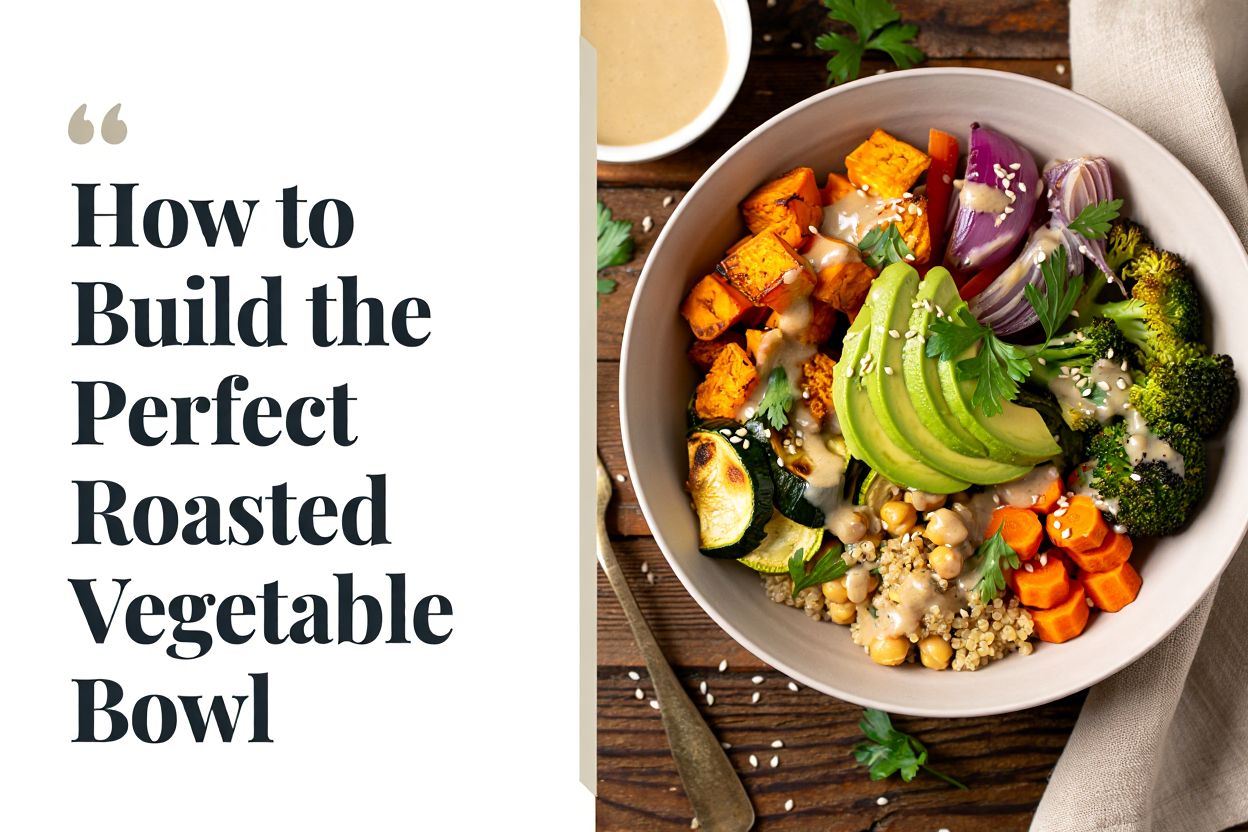
Let’s be honest most weeknights end with staring into the fridge, hoping something exciting appears. That’s where roasted vegetable bowls come in. They’re not a rigid recipe. They’re more of a reliable framework: toss whatever vegetables you have in olive oil, roast until caramelised, then pile them into a bowl with a grain, a protein, and a good sauce.
This recipe is for anyone who wants to eat more vegetables without feeling like they’re “being healthy.” It’s for the busy cook who hates washing multiple pans (one baking sheet does almost all the work). And it’s for the meal-prepper who wants lunch to taste just as good on Thursday as it did on Sunday.
I’ve made these bowls easily a hundred times, and the version below is my most forgiving, flavour-packed combination. No hard-to-find ingredients. No chef tricks. Just vegetables treated right.
Why This Recipe Works
Roasting transforms vegetables in a way steaming or boiling never can. High heat (around 200°C / 400°F) caramelises their natural sugars, giving you sweet, crispy edges and tender, creamy insides. The contrast between the charred outside and soft inside is what makes you want another bite.
The other smart move here is seasoning at two stages: salt and pepper before roasting, then a splash of acid (lemon juice or vinegar) at the end. Acid cuts through the richness of roasted vegetables and wakes up every flavour. Without it, the bowl tastes flat.
Pairing roasted veg with a sturdy grain (like farro or brown rice) gives you chew and substance. A quick yoghurt sauce adds creaminess and tang. And optional toppings toasted seeds, fresh herbs, crumbled feta provide little bursts of texture and salt.
Everything plays together. Nothing fights for attention.
Ingredients
– the roasted vegetables (serves 4):
- 1 medium sweet potato (peeled and cut into 2cm cubes) – Sweet potato holds its shape well and brings natural sweetness that intensifies in the oven.
- 1 red bell pepper (cut into 2cm pieces) – Adds moisture and a subtle smoky sweetness after roasting.
- 1 red onion (cut into 2cm wedges) – Becomes jammy and mild; don’t skip it.
- 1 medium zucchini (cut into 2cm half-moons) – Gives a soft, buttery contrast to the crispier veg.
- 2 cups broccoli florets (from about 1 head) – The florets’ tips go crispy and almost nutty; stems roast tender.
- 3 tbsp olive oil – Helps browning and carries flavour. Don’t skimp.
- 1 tsp smoked paprika – Adds a gentle, earthy smokiness. Sweet paprika works too.
- ½ tsp garlic powder – Evenly coats the veg without burning like fresh garlic would.
- Salt and black pepper – Generous amounts. Season like you mean it.
– the bowls:
- 2 cups cooked farro (or brown rice, quinoa, or millet) – Farro stays chewy and doesn’t get mushy when reheated.
- Optional protein: 2 grilled chicken breasts (sliced), 1 can chickpeas (roasted with the veg), or 4 soft-boiled eggs.
– the quick lemon-yoghurt sauce:
- ½ cup plain Greek yoghurt
- 2 tbsp lemon juice (about ½ lemon)
- 1 small garlic clove (minced or grated)
- 2 tbsp water (to thin)
- Salt to taste
Optional toppings:
- ¼ cup toasted pumpkin seeds or sunflower seeds
- ¼ cup crumbled feta or goat cheese
- Handful of fresh parsley or coriander (roughly chopped)
Equipment
- Large baking sheet (heavy-gauge metal works best thin ones warp)
- Parchment paper (optional but helps with cleanup).
- Large mixing bowl
- Small bowl for the sauce
- Chef’s knife and cutting board
- Fine grater (for garlic in the sauce)
Step-by-Step Instructions
1. Preheat and prep (10 minutes)
Preheat your oven to 200°C (400°F) with a rack in the middle position. A properly heated oven is crucial if you put vegetables in before it’s ready, they’ll steam instead of roast.
Wash and chop all vegetables into roughly equal-sized pieces (about 2cm). Uniformity matters: small pieces burn, large pieces stay raw inside.
2. Season the vegetables (5 minutes)
In a large bowl, combine the sweet potato, bell pepper, onion, zucchini, and broccoli. Drizzle with olive oil. Sprinkle smoked paprika, garlic powder, 1 teaspoon of salt, and ½ teaspoon of black pepper.
Use your hands to toss everything until every piece glistens. You want full coverage dry spots won’t brown.
3. Roast (25–30 minutes)
Spread the vegetables in a single layer on the baking sheet. Crowding creates steam, and steam ruins crispiness. If your baking sheet is small, use two sheets and rotate them halfway through.
Roast for 15 minutes, then stir or flip the vegetables with a spatula. Return to the oven for another 10–15 minutes. Visual cue: You’re looking for dark brown edges on the broccoli and sweet potato, and the onion should look translucent with charred tips. Texture cue: A fork slides into a sweet potato cube with almost no resistance, and the outside feels dry, not mushy.
4. Make the sauce (3 minutes while veg roasts)
In a small bowl, whisk yoghurt, lemon juice, garlic, and water. Add a pinch of salt. Taste. It should be tangy and creamy, not bland. If it’s too thick, add another teaspoon of water. Set aside.
5. Assemble the bowls (5 minutes)
Divide the cooked farro among four bowls. Top with the hot roasted vegetables. Add your protein if using. Drizzle generously with the yoghurt sauce. Sprinkle with seeds, cheese, and fresh herbs.
Serve immediately while the vegetables are still hot and the sauce is cool and bright.
Pro Tips
- Don’t crowd the pan. This is the single biggest mistake. Vegetables need breathing room. If they overlap, they steam and turn rubbery. Use two pans if needed.
- Reserve some raw herbs for the end. Adding fresh parsley or coriander right before serving gives a pop of colour and a grassy contrast to the deep, caramelised flavours. Dried herbs go in before roasting; fresh herbs go on at the table.
- Make extra sauce. The yoghurt sauce keeps for five days and works on everything—sandwiches, grilled meat, even as a dip for raw veg. I usually double it.
Common Mistakes to Avoid
Mistake #1: Using vegetables with different densities without adjusting cuts. Sweet potato and broccoli cook at different rates. Cut sweet potato into smaller pieces (1.5cm) and broccoli into larger florets (2.5cm). They’ll finish together.
Mistake #2: Adding the sauce too early. If you drizzle sauce over the vegetables while they’re still on the baking sheet, the heat wilts the yoghurt and makes it watery. Always sauce the bowl at the end.
Mistake #3: Skipping the acid. Without lemon juice or vinegar in the sauce (or sprinkled directly on the veg), the bowl tastes heavy and one-dimensional. Acid is not optional.
Mistake #4: Using wet vegetables without patting dry. Mushrooms or zucchini release water as they cook. If you wash them and don’t dry thoroughly, that extra moisture prevents browning. Pat everything dry with a clean tea towel before oiling.
Variations
High-Protein Bowl: Add 150g of cubed firm tofu tossed in soy sauce and cornstarch. Roast on a separate pan for 20 minutes until crispy. Or top the finished bowl with two soft-boiled eggs (6 minutes boiling, then ice bath) and a sprinkle of furikake.
Mediterranean Twist: Swap smoked paprika for dried oregano. Replace farro with couscous. Add roasted chickpeas (drained, dried, tossed with olive oil and salt, roasted for 15 minutes). Top with crumbled feta, kalamata olives, and a dollop of hummus instead of the yoghurt sauce.
Budget-Friendly Bowl: Use whatever veg is on sale—carrots, cauliflower, frozen broccoli (thaw and pat dry first). Replace farro with bulk-bin brown rice. Skip the cheese. The sauce and seeds still make it feel special.
Storage & Meal Prep
Storage: Roasted vegetables keep in an airtight container in the fridge for up to 4 days. Keep the sauce separate, and store grains and vegetables together if you’re lazy (but sauce always separate).
Reheating: The microwave works but softens the veg. For crispy edges again, reheat vegetables in a dry skillet over medium heat for 3–4 minutes, stirring once. Or throw them back on a baking sheet at 180°C (350°F) for 5 minutes.
Meal prep plan for the week: Sunday night, roast double the vegetables. Cook a big batch of farro. Make the sauce. Store everything in separate containers. On Monday, assemble cold for a room-temperature lunch. On Tuesday, reheat the veg and grains, then add fresh sauce. By Wednesday, add a different protein (tinned tuna works great). You won’t feel like you’re eating leftovers.
Nutrition Benefits
Roasted vegetable bowls pack a wide range of fibre from both the vegetables and whole grains, which supports steady energy and digestion. Sweet potatoes provide beta-carotene (the pigment that turns into vitamin A), while broccoli and bell peppers deliver vitamin C which actually increases slightly with roasting. The olive oil helps your body absorb fat-soluble nutrients from the vegetables. Greek yoghurt adds protein and probiotics. This is not a “diet” meal; it’s genuinely filling food that happens to be nutrient-dense.
FAQ
Can I use frozen vegetables?
Yes, but don’t thaw them first. Spread frozen broccoli, cauliflower, or peppers directly on the baking sheet, add oil and seasoning, and roast for 5–10 minutes longer than fresh. They won’t get as crispy, but they’re fine for meal prep. Avoid frozen zucchini or mushrooms—they release too much water.
What’s the best grain for these bowls?
Farro has the best texture (chewy, nutty, stays separate). Brown rice is second best. Quinoa works if you’re gluten-free or want faster cooking. Avoid white rice it’s too soft and doesn’t hold up against the chunky vegetables.
How do I get really crispy broccoli without burning it?
Two tricks: cut florets so they have flat sides (those flat sides contact the pan and char). And don’t move them for the first 15 minutes of roasting let them sit and develop a crust. Stir only once, halfway through.
Is this recipe gluten-free?
Yes, if you use certified gluten-free grains like quinoa, brown rice, or millet. Farro contains gluten. The vegetables and sauce are naturally gluten-free.
Can I make this in an air fryer?
Absolutely. Set your air fryer to 200°C (400°F). Work in batches so you don’t overcrowd. Roast for 12–15 minutes, shaking the basket halfway through. Air fryer results are often crispier than oven.
Conclusion
Roasted vegetable bowls aren’t a restaurant secret or a complicated formula. They’re just a reliable way to turn whatever produce you have into something you actually look forward to eating. The magic comes from high heat, good salt, and a tangy sauce at the end. Once you make this version, you’ll start improvising adding leftover chicken, swapping grains, experimenting with spice blends. That’s the point. This recipe gives you a foundation, but the bowl in front of you is always yours.
- Lemon-Tahini Dressing – This creamy, dairy-free sauce works beautifully as a swap for the yoghurt sauce in these bowls.
- Breakfast Bowl – If you loved the crispy tofu variation, this full recipe shows you exactly how to get tofu golden and crunchy.
- Chickpea Salad Bowl – A lighter, warm-weather companion to these bowls; uses similar vegetables but serves them cold with a bright vinaigrette.