
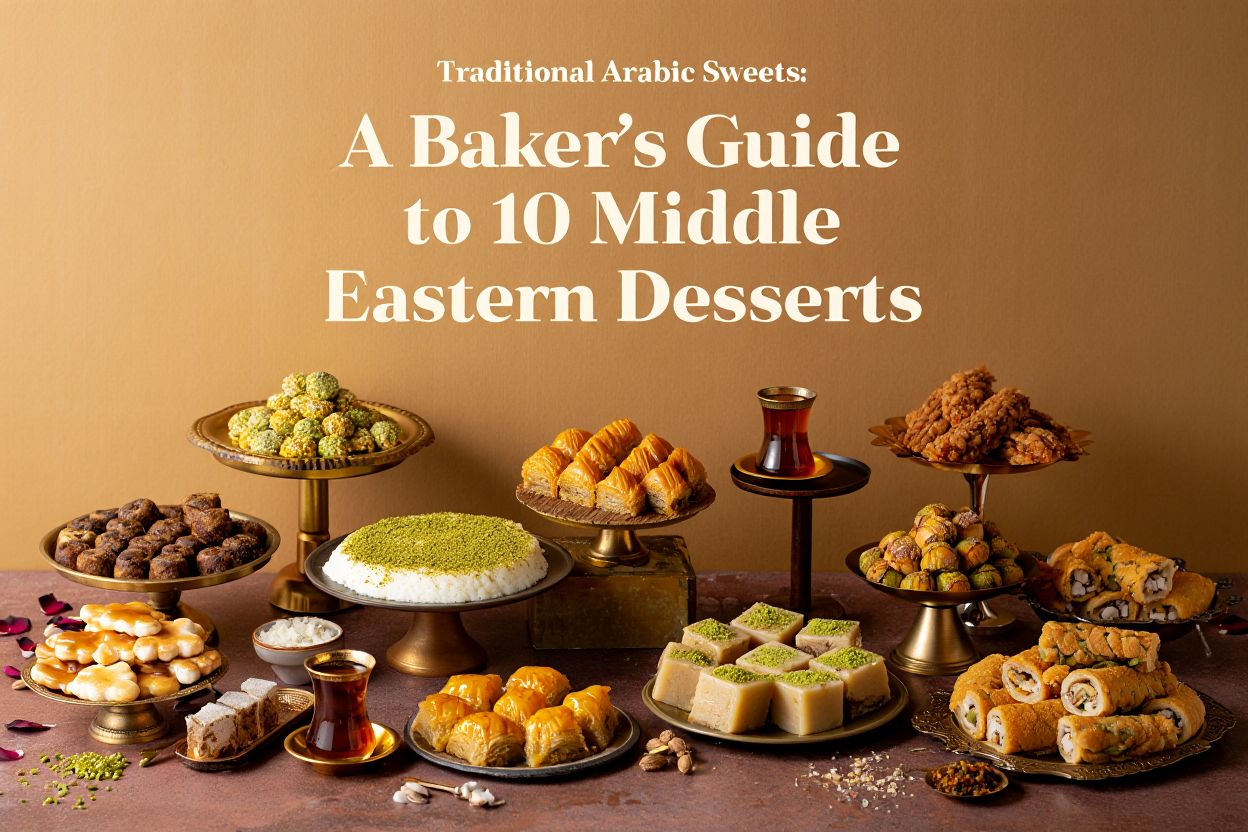
If you’ve ever walked past a Middle Eastern bakery and been stopped by the smell of warm syrup, toasted semolina, and melted butter you know exactly why I’m writing this today.
Traditional Arabic sweets are nothing like standard Western desserts. They’re less about rich chocolate and more about texture: the gentle squeak of cheese under shredded pastry, the crumble of buttery semolina against your teeth, the floral whisper of rose water behind honey-thick syrup.
This guide walks you through ten classic recipes, from the familiar Baklava to the lesser-known Aish El Saraya. Whether you’re a home cook wanting to impress guests or just someone who fell in love with Knafeh on a trip abroad, these recipes are tested, practical, and written for real kitchens.
No fake chef stories. Just what actually works.
Why This Recipe Works
Arabic sweets rely on a few smart principles that might feel strange at first but once you understand them, everything clicks.
Semolina is your friend. Unlike flour, semolina stays tender but structured when soaked in syrup. It doesn’t turn gummy. That’s why Basbousa and Halawet El Jibn work so well.
Syrup goes on after baking. This is non-negotiable. Cold syrup hitting hot pastry is what creates that glossy, soaked-but-not-soggy texture. If you pour syrup before baking, you’ll end up with a gluey mess.
Rose water and orange blossom water are powerful. A little goes a long way. Too much and your dessert tastes like perfume. The recipes here use conservative amounts you can always add, but you can’t take away.
Cheese matters. For Knafeh and Znoud El Sit, use unsalted Akkawi or mozzarella (if Akkawi isn’t available). Salted cheese ruins the balance. Soak salty cheese in water overnight before using.
Ingredients
Below are the core ingredients across these ten sweets. I’ve grouped them by category so you can shop efficiently.
Dry Goods & Grains
- Semolina (fine or medium) – The backbone of Basbousa, Maamoul, and Halawet El Jibn. Fine semolina gives a tender crumb.
- Kataifi dough – Shredded phyllo for Knafeh. Sold frozen. Thaw in the fridge overnight.
- Phyllo pastry (thin sheets) – For Baklava and Znoud El Sit. Keep covered with a damp towel while working.
- Pancake mix or all-purpose flour – For Qatayef batter. Self-rising flour works too.
- Bread (stale or lightly toasted) – For Aish El Saraya. Day-old baguette or brioche is ideal.
Sweeteners
- White sugar – For basic syrup (ater). 2 parts sugar to 1 part water.
- Powdered sugar – For dusting Maamoul.
- Honey – Optional in Baklava syrup. Adds depth but can overpower.
Dairy & Cheese
- Unsalted Akkawi cheese – For Knafeh and Halawet El Jibn. Substitute: whole-milk mozzarella + a pinch of salt.
- Ashta (or clotted cream) – For Znoud El Sit and Aish El Saraya. Make your own: heat milk + cornstarch + rose water until thick.
- Ghee – Clarified butter. Essential for Maamoul and Knafeh. Don’t use regular butter; it burns.
- Yogurt (full-fat) – For Basbousa. Adds moisture and a slight tang.
- Chhena (Indian cottage cheese) – For Rasgulla. Make by curdling whole milk with lemon juice.
Nuts & Fillings
- Walnuts (chopped coarse) – For Maamoul and Baklava.
- Pistachios (crushed or slivered) – For garnish on almost everything.
- Dates (pitted, mashed) – For Maamoul filling. Medjool are best.
- Coconut (unsweetened, shredded) – For Basbousa.
Flavorings
- Rose water – Food-grade, not skincare.
- Orange blossom water – More delicate than rose. Often used together.
- Cinnamon – For Qatayef and dusting.
- Cardamom (ground) – For Rasgulla syrup.
Equipment
- Medium saucepan (for syrup)
- 9×13 baking dish (for Basbousa, Knafeh, Baklava)
- Food processor (for grinding nuts)
- Pastry brush
- Digital scale (preferred) or measuring cups
- Cheesecloth (for Rasgulla)
- Rolling pin (for phyllo)
- Small ice cream scoop (for Qatayef filling)
- Candy thermometer (helpful for Rasgulla, not essential)
Step-by-Step Instructions
I’ll give you the method for three of the most popular from the list: Basbousa (easiest), Knafeh (most impressive), and Qatayef (fun to make with kids).
Basbousa (Semolina Coconut Cake)
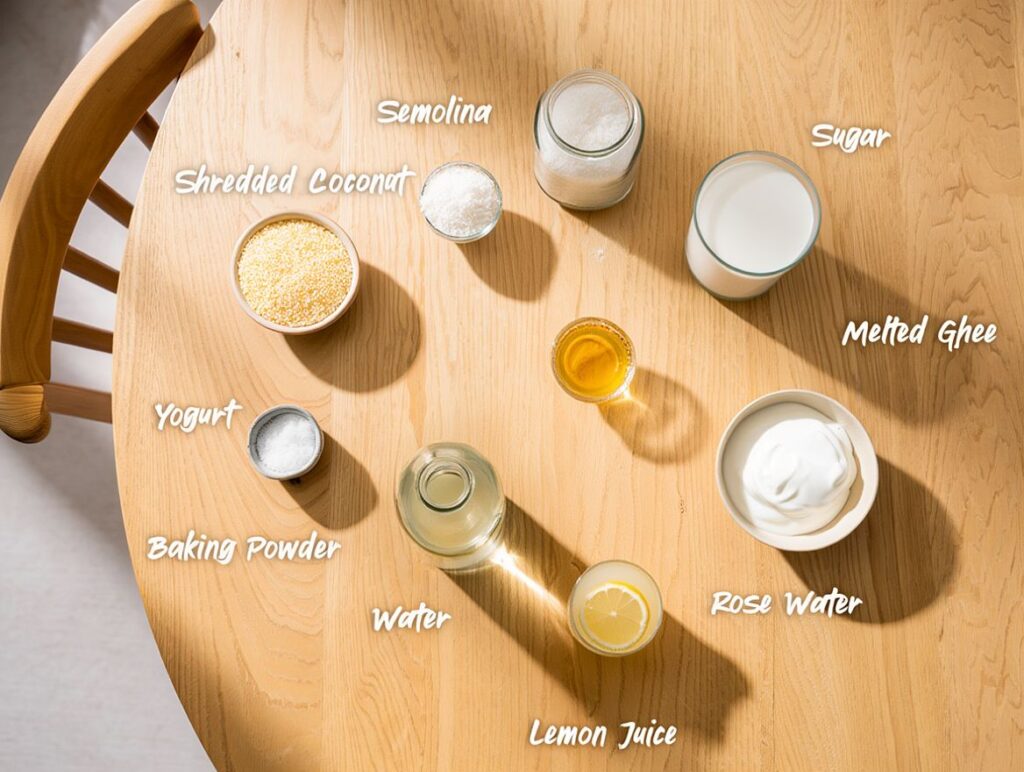
- Preheat oven to 180°C (350°F). Grease a 9×9 pan with ghee.
- Mix dry: 2 cups semolina, 1 cup shredded coconut, 1 tsp baking powder.
- Mix wet: 1 cup yogurt, ½ cup sugar, ½ cup melted ghee, 1 tbsp rose water.
- Combine until just mixed. Batter should be thick but pourable.
- Spread evenly in pan. Score diamond shapes with a knife (so syrup soaks in).
- Bake 25–30 minutes until golden brown and edges pull away from pan.
- Make syrup while it bakes: 1 cup sugar, ½ cup water, 1 tsp lemon juice. Boil 10 min until slightly thick. Add 1 tsp rose water at the end.
- Pour cold syrup over hot Basbousa immediately after removing from oven.
- Let rest 2 hours before cutting. (Hardest step. Worth it.)
Visual cue: Top should be amber-brown. Inserted toothpick comes out clean.
Knafeh (Cheese + Shredded Phyllo)
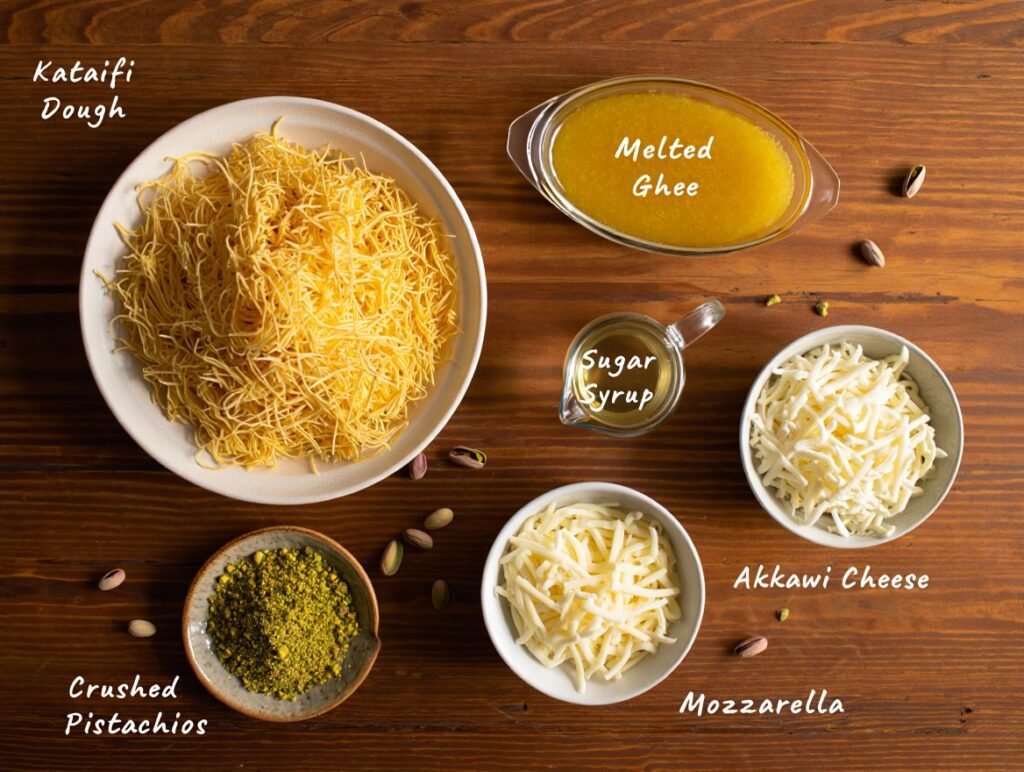
- Thaw kataifi dough overnight in fridge. Shred finer with your hands.
- Mix shredded kataifi with 1 cup melted ghee. Every strand should glisten.
- Press half into a well-greased round pan (10–12 inch). Use a second pan to press flat.
- Layer cheese: 2 cups shredded Akkawi or mozzarella. Don’t overpack.
- Top with remaining kataifi. Press again.
- Bake at 200°C (400°F) for 25–30 minutes until deep gold and crisp.
- Flip onto a serving platter while hot. The bottom should be dark orange.
- Pour cooled syrup over top. Garnish with crushed pistachios.
Texture cue: The cheese should be melted and slightly stringy, not rubbery.
Qatayef (Stuffed Pancakes)
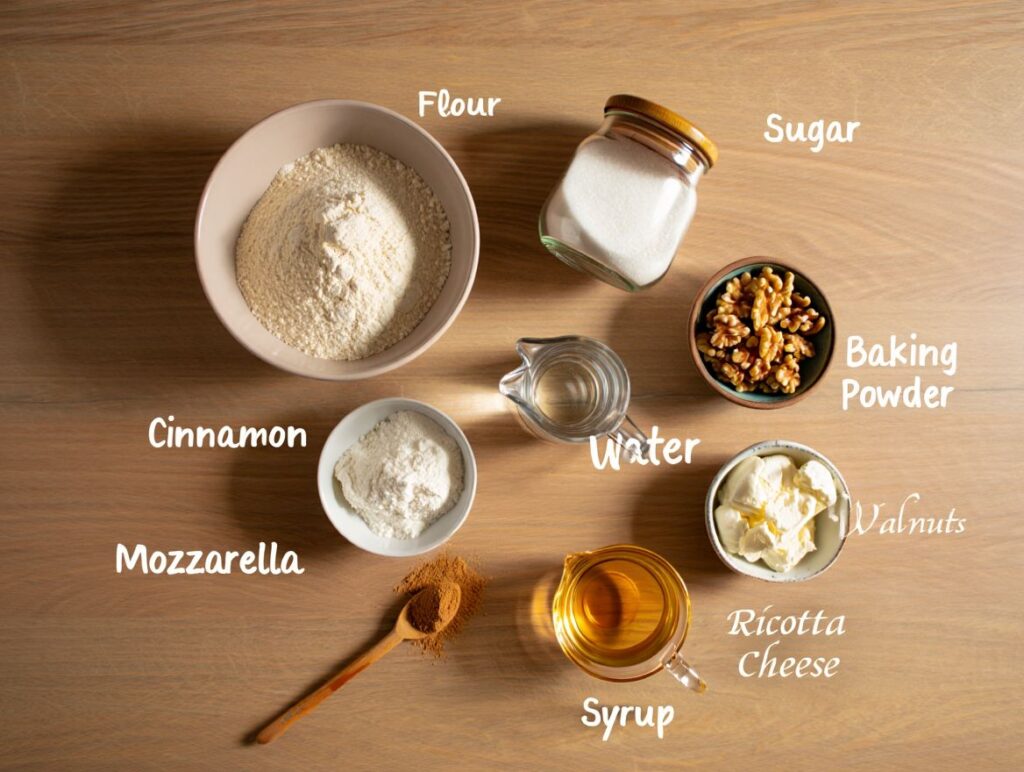
This is a two-step process (make batter → fill → fry or bake).
Batter:
- Mix 2 cups flour, 1 tbsp sugar, 1 tsp baking powder, ½ tsp cinnamon.
- Add 1¾ cups water gradually. Whisk until smooth (like crepe batter).
- Rest 30 minutes.
Cooking:
- Heat a non-stick pan over medium heat. No oil.
- Pour 2 tbsp batter. Cook until bubbles form on top and edges look dry.
- Do not flip. Remove and let cool. The uncooked side stays soft (that’s where filling goes).
Nut filling:
- 1 cup chopped walnuts + 1 tbsp sugar + ½ tsp cinnamon.
Cheese filling (optional):
- Sweetened ricotta or fresh mozzarella + 1 tbsp sugar.
Assembly:
- Put 1 tbsp filling on soft side. Fold in half like a calzone. Pinch edges.
- Fry in oil until golden (2 minutes per side) OR bake at 180°C for 15 min.
- Dip in cold syrup for 10 seconds, then serve.
Pro Tips
- Double the syrup. Every beginner underestimates how much syrup these desserts absorb. Make 1.5x what you think you need. Leftover syrup keeps for weeks in the fridge.
- Ghee > butter. Regular butter has milk solids that burn at high heat (especially in Knafeh and Maamoul). Ghee is clarified higher smoke point, nuttier flavor. Make your own by simmering unsalted butter and skimming foam.
- Rest the dough. For Maamoul and Qatayef, resting the dough for 30–60 minutes hydrates the semolina or flour fully. Without this rest, your cookies crack or pancakes tear.
- Test a single Qatayef first. Batter consistency changes with humidity. If the first pancake tears, add 1 tbsp water. If it won’t spread, add 1 tbsp flour.
- Warm syrup for pouring, cold syrup for dipping. For Knafeh and Basbousa, pour syrup warm (not boiling hot). For Qatayef and Baklava, let syrup cool completely before dipping otherwise the pastry gets limp.
Common Mistakes to Avoid
Mistake #1: Soaking the dessert overnight.
Result: Mushy, shapeless sweet. Syrup absorption happens in the first 2 hours. After that, store without extra syrup.
Mistake #2: Using salted cheese in Knafeh.
Result: Bitter, metallic aftertaste. If you only have salted Akkawi, soak shredded cheese in cold water for 4 hours, changing water twice.
Mistake #3: Overworking semolina dough (Maamoul).
Result: Tough, dense cookies. Mix just until combined. The ghee should feel sandy, not pasty.
Mistake #4: Flipping Qatayef in the pan.
Result: Ruined shape. Qatayef cooks only on one side. The top sets from steam. Trust the bubbles.
Mistake #5: Skipping the lemon juice in syrup.
Result: Syrup crystallizes after a day. 1 tsp lemon juice prevents crystallization and adds brightness.
Variations
High-Protein Knafeh: Replace half the cheese with Greek yogurt labneh. Bake as usual. The protein content nearly doubles, and you get a tangy contrast to the syrup.
Vegan Basbousa: Use coconut oil instead of ghee, almond yogurt instead of dairy yogurt. Syrup stays same. Coconut milk in place of cream for any ashta-based dessert.
Lower-Sugar Baklava: Use date syrup (thinned with water) instead of sugar syrup. Cut sugar in nut filling by half. Add extra cinnamon and cardamom for perceived sweetness.
Gluten-Free Maamoul: Substitute fine rice flour for semolina. Add ¼ tsp xanthan gum. Texture is slightly more delicate but works.
Rasgulla with Saffron: Add 5–6 saffron threads to the sugar syrup while boiling. Let steep 1 hour before adding cheese balls. Gives a golden color and floral warmth.
Storage & Meal Prep
Syrup: Store in a sealed jar in the fridge for up to 3 weeks. Reheat gently before using.
Unfilled Qatayef shells: Cook the pancakes, cool completely, layer with parchment, freeze in a zipper bag. Fill and fry straight from frozen (add 1 minute cook time).
Baked Knafeh (unsyruped): Wrap tightly in foil. Freeze up to 2 months. Reheat in 180°C oven for 15 minutes, then add syrup.
Basbousa: Stays moist at room temperature for 3 days (covered). Do not refrigerate it hardens the semolina.
Maamoul: Best after 24 hours. The flavors mellow. Store in an airtight tin for 2 weeks.
To reheat any syrup-soaked dessert: Microwave 10–15 seconds. Never bake again (syrup burns).
Nutrition Benefits
These are desserts, not health foods, but they’re not empty calories either.
- Semolina provides complex carbs and more protein and fiber than white flour. It digests slower.
- Nuts (walnuts, pistachios, almonds) add healthy fats, vitamin E, and magnesium.
- Cheese in Knafeh and Halawet El Jibn gives protein and calcium. Using part-skim mozzarella reduces saturated fat.
- Dates (in Maamoul) are fiber-rich and lower on the glycemic index than refined sugar. They also add iron and potassium.
- Rose water has been studied for mild anti-inflammatory effects (though you’re using too little to matter medicinally).
If you want to lighten any recipe: cut syrup by 25% (most are too sweet by Western standards anyway), and use half ghee, half neutral oil like avocado.
FAQ
Can I make these desserts less sweet?
Yes. Reduce syrup sugar to a 1:1 ratio (1 cup sugar: 1 cup water) instead of 2:1. Add a pinch of salt to the syrup salt reduces perceived sweetness without changing texture.
Why did my Knafeh turn out white and soggy?
Two likely causes: not enough ghee (kataifi needs to be thoroughly coated), or oven temperature too low. Kataifi browns at 200°C+ (400°F). Below that, it steams instead of crisping.
Where do I find rose water and orange blossom water?
Middle Eastern grocery stores, Amazon, or the international aisle of large supermarkets (Cortas brand is reliable). Avoid “rose flavor” extracts they’re synthetic and harsh.
Can I use pre-shredded mozzarella for Knafeh?
Yes, but drain it first. Pat dry with paper towels. Wet cheese releases water during baking and makes the kataifi soggy. Add ¼ tsp salt to the cheese to mimic Akkawi flavor.
What’s the difference between Ashta and clotted cream?
Ashta is a Middle Eastern cream thickened with cornstarch or rice flour (lighter, more stable). Clotted cream is British baked cream with a crust (richer, fattier). In Znoud El Sit, use ashta; clotted cream is too heavy.
Conclusion
These ten sweets aren’t just recipes they’re small rituals. The sound of syrup sizzling against hot semolina. The smell of rose water blooming in a warm kitchen. The way a piece of Knafeh stretches cheese between your plate and your mouth on the first pull.
Start with Basbousa if you’re nervous. It forgives small mistakes. Move to Qatayef when you want to involve kids or friends. Save Knafeh for a weekend when you have time to really enjoy the process.
And remember: the syrup always goes on last. That’s not a rule it’s the entire secret.
If you try any of these, let me know which one made you close your eyes on the first bite. For me, it was Knafeh specifically the edge piece, where the shredded pastry goes dark and crunchy.
For more authentic recipes daurecipes.com