
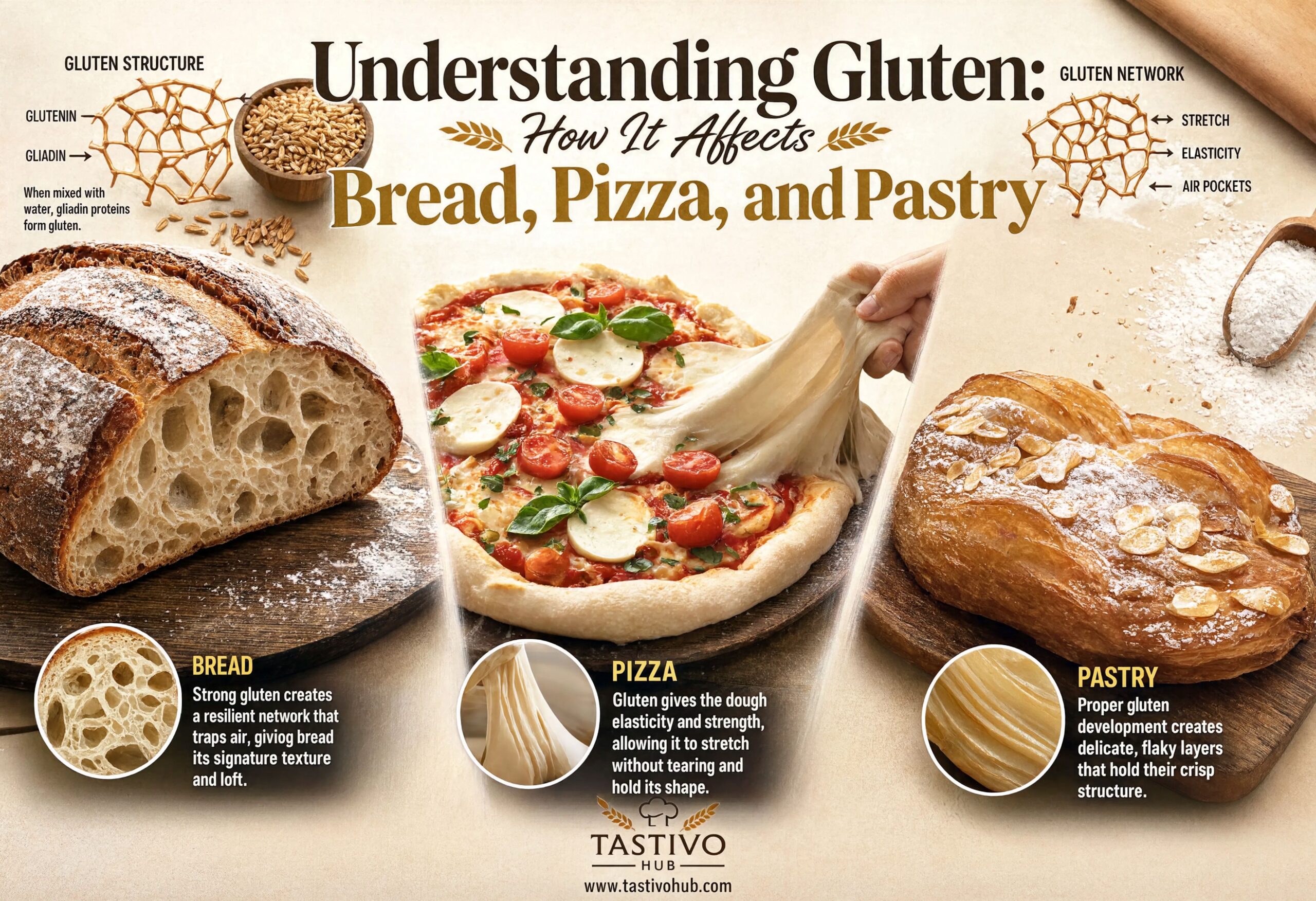
Few kitchen frustrations are as disappointing as pulling a loaf of bread from the oven only to discover a dense, heavy crumb, or stretching pizza dough that tears apart just when it seems ready. On the opposite end of the spectrum, many bakers have experienced pastries that turn out tough and chewy when they should be delicate and flaky. After more than 15 years of baking bread, crafting pizza dough, and developing pastry recipes, I have found that one ingredient sits at the center of all these successes and failures: gluten.
Gluten is often misunderstood. Some bakers view it as a magical force that creates airy bread, while others see it as something to avoid entirely. The reality is far more interesting. Gluten is a complex protein network that determines how dough behaves during mixing, fermentation, shaping, and baking. Understanding how it forms and how to control it can dramatically improve your results, whether you are making artisan sourdough, Neapolitan-style pizza, croissants, pie crusts, or dinner rolls.
In this guide, I will explain the science behind gluten formation, how it influences different baked goods, the techniques professionals use to control it, and the most common mistakes that cause disappointing results. By the end, you will understand exactly why bread, pizza, and pastry require different approaches and how to manipulate gluten to achieve the texture you want every time.
The Underlying Science
Gluten is formed when two naturally occurring proteins in wheat flour, glutenin and gliadin, combine with water and mechanical action. Glutenin contributes strength and elasticity, allowing dough to spring back after stretching. Gliadin contributes extensibility, which allows dough to stretch without immediately tearing. When flour is hydrated and mixed, these proteins bond together to form a three-dimensional network known as gluten.
The amount of gluten that develops depends on several factors. Protein content is one of the most important. Bread flour typically contains 12–14% protein, creating a strong gluten network capable of trapping gas during fermentation. All-purpose flour contains slightly less protein, while pastry flour often contains only 8–9%, limiting gluten formation and producing a more tender texture.
Mechanical mixing plays a major role in strengthening gluten. Every fold, knead, or stretch aligns protein strands and encourages new bonds. This is why bread dough becomes smoother and more elastic as it is worked. In my kitchen, I often compare gluten development to weaving a net. The more organized the structure becomes, the better it can capture carbon dioxide produced by yeast.
Water is equally important because proteins cannot interact effectively without hydration. Doughs with higher hydration levels often develop a more open crumb structure because the gluten network has greater flexibility. Temperature also influences development. Warmer doughs encourage enzymatic activity and fermentation, while cooler temperatures slow these processes and allow flavors to develop gradually.
The reason gluten matters so much becomes clear when comparing different baked goods. Bread depends on a strong gluten network to hold gas and create volume. Pizza requires enough gluten strength to stretch thin without tearing while remaining tender enough to chew comfortably. Pastries often aim for the opposite effect. Pie crusts, biscuits, and certain pastries intentionally limit gluten development to maintain tenderness and flakiness. Excessive gluten in pastry creates toughness because the protein network becomes too organized and resilient.
Heat transforms this network during baking. As internal temperatures rise, proteins coagulate, meaning they permanently set into their final structure. At the same time, starch granules absorb moisture and gelatinize, helping stabilize the crumb. The final texture of any baked product is the result of how these protein and starch systems interact throughout the baking process.
Step-by-Step Technique Guide
The first step in controlling gluten is selecting the correct flour. Bread flour should be your primary choice when making artisan loaves, bagels, or pizza doughs that require significant structure. For pastries and pie crusts, lower-protein flour is often preferable because it naturally limits gluten formation. Choosing the appropriate flour gives you a major advantage before mixing even begins.
Hydration deserves careful attention. When making bread or pizza dough, I always ensure flour is fully hydrated before intensive mixing. Many professional bakers use an autolyse, which involves combining flour and water and allowing the mixture to rest for 20–30 minutes before adding salt and yeast. This resting period allows proteins to absorb water and begin forming gluten naturally, reducing the amount of kneading required later.
Mixing should be adjusted according to the desired outcome. Bread dough benefits from sufficient kneading to create a strong, elastic structure. This can be achieved by hand or with a stand mixer. The dough should eventually pass the windowpane test, where a small piece stretches thin enough to allow light through without tearing. Pizza dough requires moderate to strong development, depending on style. Neapolitan pizza typically relies on moderate mixing combined with long fermentation, while New York-style dough often benefits from stronger gluten development.
Fermentation is where much of the magic occurs. During this phase, yeast produces carbon dioxide that expands the gluten network. Longer fermentation periods also allow enzymes to modify proteins and starches, improving flavor and dough handling. In my experience, cold fermentation in the refrigerator for 24–72 hours often produces superior pizza dough because it balances strength, extensibility, and flavor.
For pastry applications, the strategy changes completely. Instead of encouraging gluten formation, the goal is to limit it. Cold ingredients are essential because they slow protein hydration and help preserve fat layers. Mixing should stop as soon as ingredients come together. Overworking pastry dough allows gluten to develop excessively, resulting in a tough finished product.
Shaping techniques should also reflect gluten development. Well-developed bread dough can withstand firm shaping that creates surface tension. Pizza dough should be stretched gently to preserve trapped gas. Pastry dough should be handled minimally to avoid strengthening the protein network.
Comprehensive Troubleshooting Section
One of the most common bread problems is a dense, compact crumb. This usually indicates insufficient gluten development, inadequate fermentation, or both. If the dough tears easily during shaping and fails to hold its structure, the gluten network is likely underdeveloped. Additional kneading or stretch-and-fold sessions can often correct the issue before baking.
Pizza dough that constantly shrinks back after stretching typically contains overly tight gluten. This often happens when dough has been mixed aggressively or has not rested long enough. Allowing the dough to rest for 15–20 minutes can relax the gluten network and make shaping significantly easier. If the dough tears during stretching, it may need additional fermentation or stronger gluten development.
Bread that spreads outward instead of rising upward often suffers from weakened gluten structure. Excessive hydration, over-fermentation, or inadequate shaping can contribute to this problem. When caught early, additional folds during bulk fermentation can strengthen the dough and improve oven spring.
Tough pie crusts and pastries almost always result from excessive gluten development. Overmixing, excessive water, or warm ingredients are common causes. If pastry dough begins feeling elastic rather than crumbly, refrigerating it immediately can help prevent further gluten formation. Although fully developed gluten cannot be reversed, chilling can make the dough easier to handle and reduce shrinkage during baking.
A gummy bread interior can also be linked to gluten-related issues. Underbaking prevents proteins and starches from fully setting. Even perfectly developed dough requires sufficient baking time to stabilize its internal structure. Allowing bread to cool completely before slicing is equally important because residual heat continues setting the crumb.
Frequently Asked Questions
Why does bread flour create better bread than all-purpose flour?
Bread flour contains more protein, which allows a stronger gluten network to develop. This stronger structure traps more fermentation gases, resulting in better volume, improved chewiness, and a more open crumb. All-purpose flour can still make excellent bread, but the final structure is usually less robust.
Can you develop too much gluten?
Yes. Overdeveloped gluten can make dough difficult to shape and produce an excessively chewy texture. In bread baking, this is relatively uncommon when mixing by hand, but stand mixers can strengthen gluten very quickly. In pastry making, even moderate overmixing can significantly toughen the final product.
Why is resting dough so important?
Resting allows gluten strands to relax after mixing and shaping. During rest periods, proteins redistribute moisture and become more extensible. This makes dough easier to stretch, reduces tearing, and often improves final texture. Pizza dough particularly benefits from adequate resting because it becomes much easier to shape without shrinking back.
Does gluten continue developing during fermentation?
Absolutely. Fermentation is not just about gas production. Enzymatic activity and continued hydration gradually improve gluten structure and dough extensibility. Long fermentations often produce doughs that are stronger, easier to handle, and more flavorful than doughs made with rapid-rise methods.
For authentic recipes : duarecipes.com