
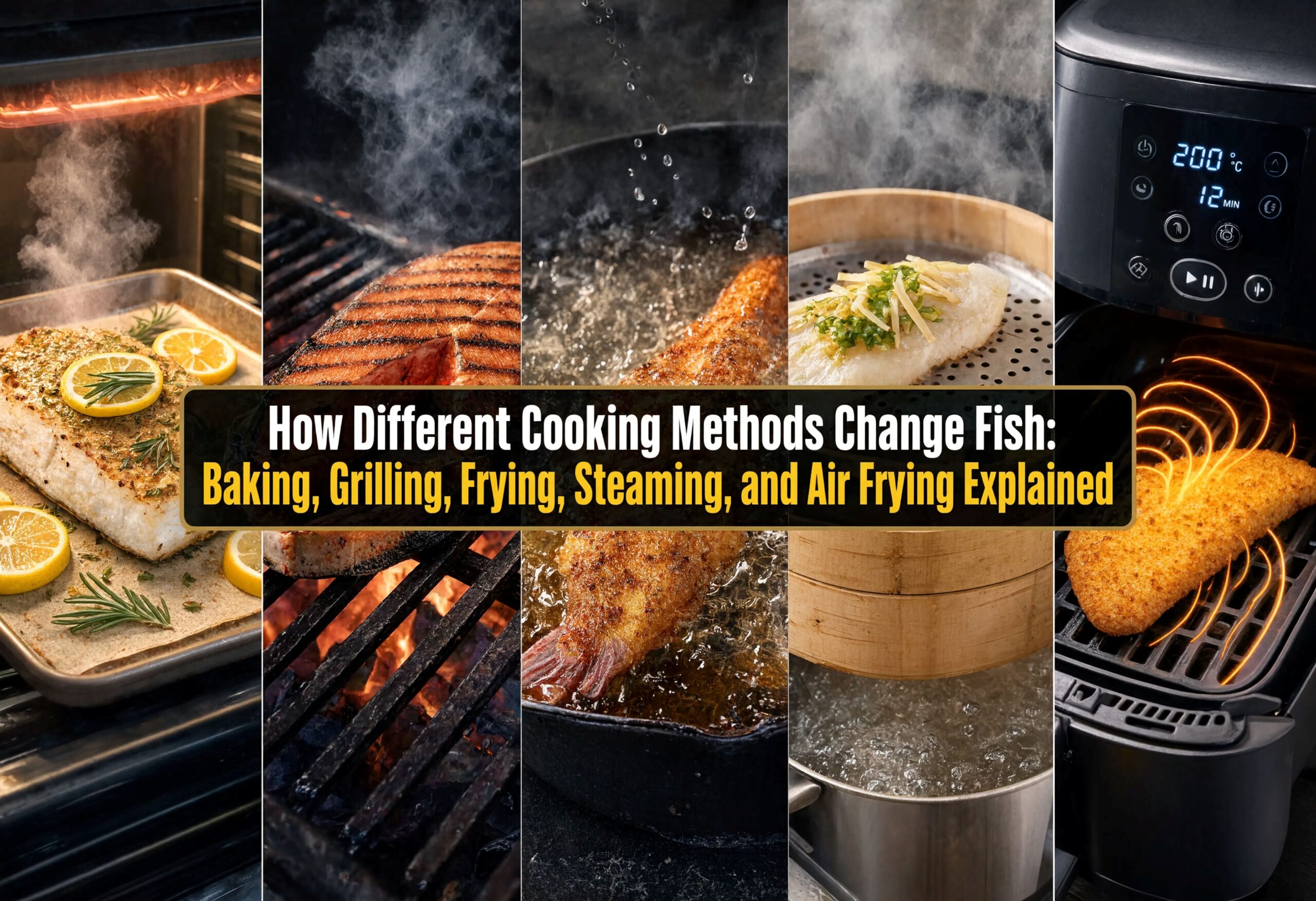
Fish is one of the most versatile proteins in the kitchen, yet it is also one of the easiest to overcook. Many home cooks have experienced the frustration of serving salmon that turned dry, cod that fell apart on the grill, or fried fish that absorbed too much oil and lost its delicate flavor. Over the past 15 years of cooking and testing countless varieties of fish, I have learned that these problems rarely come down to the quality of the fish alone. More often, the result depends on understanding how different cooking methods transfer heat and how fish proteins react during cooking.
Unlike beef or poultry, fish contains shorter muscle fibers, less connective tissue, and a higher percentage of water. These characteristics make fish quick to cook but also sensitive to temperature changes. A difference of only a few minutes can transform a moist fillet into a dry one. The cooking method you choose (whether baking, grilling, frying, steaming, or air frying)affects texture, flavor, moisture retention, and even nutritional value.
In this guide, I will explain the culinary science behind fish cookery and show how each method changes the final result. By understanding how heat works, you can choose the best cooking technique for every species of fish and consistently achieve tender, flavorful results.
The Science of Cooking Fish
To understand why cooking methods produce such different outcomes, it helps to know a little about the structure of fish. Fish muscle is made up of proteins, water, fat, and a small amount of collagen, which is the connective tissue that holds muscle fibers together. Compared to red meat, fish has much less collagen, which is why it cooks quickly and flakes apart so easily.
The most important process during cooking is protein denaturation. This simply means that proteins change shape when heated. At around 40–50°C (104–122°F), fish proteins begin to firm. Between 52–60°C (126–140°F), the flesh turns opaque and develops the tender, flaky texture most people enjoy. Once temperatures climb much higher, moisture begins leaving the muscle fibers rapidly. At temperatures above 70°C (158°F), fish often becomes dry and firm because the proteins tighten and squeeze out water.
Fat content also plays a major role. Fatty fish such as salmon, trout, mackerel, and sardines contain natural oils that protect the flesh during cooking. Lean fish like cod, haddock, tilapia, and pollock contain less fat and can dry out more quickly. This is why salmon performs beautifully on a hot grill, while delicate cod often benefits from gentler methods such as baking or steaming.
Another important concept is the Maillard reaction, which is the browning process that creates complex roasted flavors. This reaction begins at higher surface temperatures, usually above 140°C (285°F). Grilling, frying, and air frying create strong Maillard browning, producing crispy textures and savory aromas. Steaming, on the other hand, uses moist heat and preserves the pure, delicate flavor of the fish because browning does not occur.
Heat transfer is what ultimately separates cooking methods. Hot air in an oven cooks slowly and evenly, direct flame creates intense heat, steam delivers gentle moisture, and hot oil transfers heat rapidly. Understanding these differences is the key to choosing the best technique.
Baking Fish: Gentle and Reliable
Baking is one of the most forgiving methods for cooking fish. In my kitchen, I often recommend it to beginners because the surrounding hot air cooks fish evenly and reduces the risk of burning.
Most fish bake well at temperatures between 190°C and 205°C (375–400°F). Lean fish such as cod, halibut, and snapper benefit from slightly lower temperatures, while salmon can handle hotter conditions because of its higher fat content.
Baking preserves moisture, especially when fish is cooked with herbs, lemon slices, vegetables, or a small amount of olive oil. Covering the dish with parchment paper or foil can further reduce moisture loss.
The texture produced by baking is soft, tender, and uniform. Because browning is limited, baked fish highlights natural flavor rather than roasted notes. This makes baking ideal for delicate white fish.
One common mistake is overcooking thin fillets. A digital thermometer is extremely helpful. I aim for an internal temperature of around 54–60°C (130–140°F), depending on the type of fish and personal preference.
Grilling Fish: Maximum Flavor
Grilling creates some of the most exciting flavors because it combines intense heat, smoke, and browning. The direct radiant heat rapidly cooks the surface while smoke compounds add complexity.
Fatty fish such as salmon, tuna, swordfish, and trout perform exceptionally well on the grill. Their natural oils help prevent drying and support the development of rich flavor.
Preparation is essential. Fish should be patted dry before grilling because excess moisture interferes with browning. The grill grates must also be very hot and lightly oiled to prevent sticking.
Skin-on fish often grills better because the skin protects the flesh and creates a barrier against direct heat. I usually cook fish skin-side down first and flip only once.
Delicate fish can break apart on the grill because heat weakens connective tissue quickly. Grill baskets or cedar planks can help support fragile fillets.
Grilled fish develops smoky aromas and caramelized notes that cannot be achieved through steaming or baking. This makes grilling ideal for robust species that benefit from bold flavors.
Frying Fish: Crisp Texture and Rich Flavor
Frying transforms fish through rapid heat transfer. Oil conducts heat much more efficiently than air, which is why frying creates crisp surfaces while keeping the inside moist.
The ideal frying temperature is usually between 175–190°C (350–375°F). Oil that is too cool allows excessive absorption, leading to greasy fish. Oil that is too hot can burn the coating before the fish cooks through.
The crisp crust forms because water rapidly evaporates from the surface while proteins and starches brown. Batters and breadings add texture and create a protective layer that slows moisture loss.
Cod, haddock, pollock, and similar white fish are classic choices because their mild flavor pairs well with crispy coatings.
For the best results, fish should be dried thoroughly before coating. Moisture is often the reason breading falls off or becomes soggy.
Steaming Fish: Pure Flavor and Moisture
Steaming is one of the gentlest cooking methods. Steam condenses on the fish and transfers heat without drying the surface.
This method preserves moisture exceptionally well and highlights the natural taste of the fish. Sea bass, snapper, tilapia, and delicate white fish work beautifully when steamed.
Steaming is common in many Asian cuisines because it pairs well with aromatics such as ginger, scallions, garlic, and herbs.
One advantage is nutritional preservation. Since little or no added fat is required, steaming can be an excellent option for those seeking lighter meals.
The biggest risk is overcooking. Because fish cooks quickly, even a few extra minutes can affect texture.
Air Frying Fish: Modern Speed and Crispness
Air fryers use rapid hot-air circulation in a compact chamber, creating a crisp exterior similar to frying but with much less oil.
Salmon, cod, breaded fillets, and fish portions perform particularly well in air fryers. Wet batters, however, usually do not work because they drip before setting.
Air frying combines some advantages of baking and frying. It promotes browning while maintaining moisture inside the fish.
The compact cooking space also shortens cooking time. Many fillets cook in less than 10 minutes, making air frying convenient for busy weeknights.
Troubleshooting Common Fish Cooking Problems
If fish turns dry, it has usually exceeded the ideal temperature range. The best solution is to reduce cooking time and rely on internal temperature rather than appearance alone.
If fish sticks to the grill, the surface may not have been hot enough. Proper preheating and lightly oiled grates solve this issue.
Fish that falls apart is often too delicate for intense handling. Wider spatulas, grill baskets, or cooking skin-side down first can help.
Greasy fried fish is typically caused by oil that is too cool. Maintaining stable frying temperatures produces a lighter result.
Watery fish often comes from insufficient drying before cooking. Patting fish dry improves browning and texture.
Frequently Asked Questions
Which cooking method keeps fish the moistest?
Steaming generally preserves the most moisture because it uses gentle heat and prevents excessive water loss. Baking with parchment or foil is also very effective.
Why does grilled fish taste different?
Grilling creates browning and smoky compounds that add deeper flavors. The Maillard reaction produces savory notes that steaming cannot create.
Does air frying dry out fish?
Air frying can dry fish if temperatures are too high or cooking times are too long. Monitoring thickness and avoiding overcooking keeps fish moist.
Which fish is best for beginners?
Salmon is often the easiest because its natural fat content makes it more forgiving than lean fish such as cod or tilapia.
Understanding how heat changes fish is one of the most valuable skills a cook can develop. Once you learn how proteins, moisture, fat, and browning interact, choosing the right method becomes much simpler. Rather than relying on a single technique, I always let the type of fish guide the cooking method, and that approach consistently produces fish that is flaky, juicy, and full of flavor.
For more authentic article duarecipes.com