
Introduction
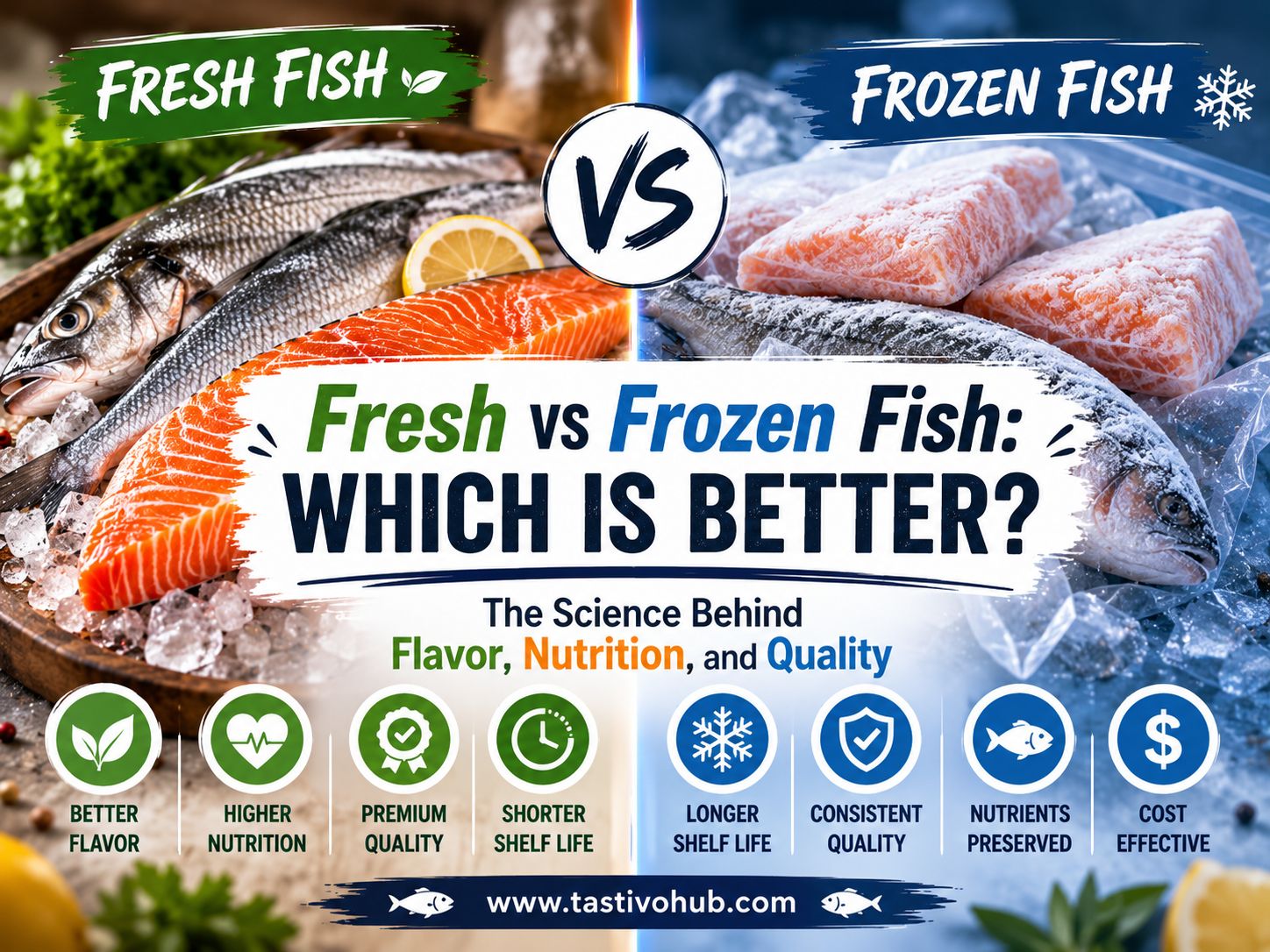
I have lost count of how many times I have heard someone say, “Fresh fish always tastes better than frozen.” After more than 15 years of cooking seafood in home kitchens and professional environments, I can confidently say that this belief is only partly true. I have served perfectly cooked frozen cod that outperformed expensive “fresh” fish from a supermarket display, and I have seen premium fresh salmon lose its delicate texture simply because it sat on ice for too many days before cooking.
One of the biggest frustrations for home cooks is spending extra money on fish labeled as fresh, only to discover that it smells stronger than expected, cooks unevenly, or flakes apart into dry pieces. The confusion comes from misunderstanding what “fresh” actually means. In many cases, fish sold as fresh has already been frozen once during transportation or for food safety before being thawed for display.
Understanding the science behind fish quality completely changes how you shop and cook. By the end of this guide, you will understand how freezing affects proteins, moisture, fats, flavor compounds, and nutrients. You will also learn when frozen fish is actually the superior choice, how to recognize genuinely high-quality fresh seafood, and how to cook either option for the best possible flavor and texture.
The Underlying Science: What Really Happens to Fish After It’s Caught
Fish begins changing the moment it leaves the water. Unlike beef, which benefits from aging, seafood has a relatively short window before quality starts declining. Enzymes naturally present in the muscle continue breaking down proteins after harvest, while bacteria begin multiplying on the surface. Even when fish is kept on ice, these biological processes never completely stop. Cold temperatures only slow them down. This is why freshness depends far more on time and handling than on whether a fish has ever been frozen.
The proteins inside fish muscles behave differently from those found in red meat. Fish contains shorter muscle fibers and less connective tissue, which explains why it cooks quickly and flakes apart so easily. These proteins also hold water inside microscopic structures. If the fish is frozen slowly, large ice crystals form between the fibers. Those crystals puncture cell walls, allowing moisture to escape during thawing. The result is fish that appears watery, cooks dry, and sometimes feels mushy.
Modern commercial freezing techniques have changed this picture dramatically. High-quality seafood producers often use flash freezing, a process that lowers the fish’s temperature extremely rapidly, often within hours of harvest. Because freezing happens so quickly, only tiny ice crystals develop. Small crystals create minimal damage to muscle cells, preserving both texture and moisture. When thawed correctly, flash-frozen fish can taste almost identical to fish that has never been frozen.
Fat content also plays an important role. Lean species such as cod, haddock, pollock, and tilapia generally freeze exceptionally well because they contain less oil that can oxidize over time. Fatty fish like salmon, mackerel, sardines, and trout contain abundant omega-3 fatty acids. These healthy fats are sensitive to oxygen and light. Improper storage allows oxidation—a chemical reaction that slowly turns fresh oils rancid—to occur, creating stale or “fishy” flavors. Proper vacuum sealing dramatically slows this process by limiting oxygen exposure.
Nutrition is another area surrounded by myths. Many people assume fresh fish always contains more vitamins and minerals, but this is rarely true. Protein remains remarkably stable during freezing. Minerals such as selenium, iodine, phosphorus, and potassium are essentially unchanged. Omega-3 fats remain highly stable when seafood is frozen properly and stored continuously below freezing. In some situations, frozen seafood actually preserves nutrients better because deterioration stops shortly after harvest instead of continuing for several days during transportation and retail display.
Flavor is influenced more by freshness than by freezing itself. Fresh fish should smell clean, slightly sweet, or faintly ocean-like. Strong fishy odors develop when bacteria convert naturally occurring compounds into trimethylamine, a chemical responsible for the familiar “fishy” smell. Freezing essentially pauses this bacterial activity, locking the fish into the condition it was in when frozen.
Step-by-Step Technique Guide: Choosing, Thawing, and Cooking Fish for Maximum Quality
Success begins before you even enter the kitchen. When buying fresh fish, I first examine the appearance rather than relying on labels. Whole fish should have bright, clear eyes, shiny skin, tightly attached scales, and vivid red gills. Fillets should look moist but never slimy. The flesh should appear firm, with no gaps between muscle fibers, and should spring back immediately when pressed gently.
Frozen fish requires a different inspection. I avoid packages containing excessive frost, thick layers of ice, or torn vacuum seals. These signs often indicate temperature fluctuations during storage. White patches known as freezer burn develop when moisture escapes from the surface, leading to dry, tough sections after cooking. A properly vacuum-sealed package with minimal visible ice usually indicates excellent storage conditions.
Thawing is one of the most overlooked steps. I never thaw fish on the kitchen counter because the outer surface enters the bacterial danger zone while the center remains frozen. Instead, I place the sealed package on a plate in the refrigerator for 12 to 24 hours, depending on thickness. Slow refrigeration thawing allows moisture to redistribute gradually throughout the muscle fibers. If time is limited, I immerse the sealed package in cold water, changing the water every 30 minutes. This method is much faster while still maintaining food safety.
Before cooking, I pat every fillet thoroughly dry with paper towels. Surface moisture must evaporate before browning can begin. If water remains on the fish, valuable cooking energy is spent producing steam rather than developing the flavorful golden crust created by the Maillard reaction. This series of chemical reactions between proteins and natural sugars creates hundreds of aromatic compounds responsible for roasted flavor.
Temperature control determines whether fish becomes silky or dry. Most fish proteins begin coagulating around 120°F (49°C), while complete cooking usually occurs between 130°F and 140°F (54–60°C), depending on the species. Exceeding these temperatures forces moisture from the muscle fibers, producing dry, chalky fish. I rely on an instant-read thermometer rather than cooking solely by time because fillet thickness varies dramatically.
Pan selection also matters. Heavy stainless steel or cast-iron pans provide stable heat that encourages even browning. Nonstick pans work well for delicate fillets but often generate less surface caramelization. I always preheat the pan before adding oil, then wait until the oil shimmers before laying the fish away from me to minimize splashing.
After cooking, I allow thicker fillets to rest for several minutes before serving. During this brief period, internal heat equalizes, reducing moisture loss when the fish is cut.
Comprehensive Troubleshooting Guide
One common complaint is watery fish that refuses to brown. This almost always results from excess surface moisture after thawing. Frozen fish naturally releases some liquid during defrosting. If this moisture is not removed, steam forms between the pan and the fish, preventing browning. Patting the fillets dry repeatedly and allowing them to air-dry briefly in the refrigerator solves this problem.
Another issue is fish that flakes apart before it develops a crust. Delicate species such as cod or sole are especially vulnerable. Moving the fish too early is usually the cause. Proteins naturally stick to the pan until a crust forms. Once browning develops, the fish releases more easily. If you force it prematurely, pieces tear away and remain attached to the pan.
Dry fish often results from overcooking rather than poor quality. Many home cooks wait until fish appears completely opaque throughout, but carryover cooking continues after removal from heat. I remove fish when the center is just beginning to lose its translucent appearance. Residual heat finishes the cooking gently without squeezing out excess moisture.
Occasionally, thawed fish develops a soft or mushy texture. This generally indicates either slow freezing that produced large ice crystals or improper thawing. Fish should never sit in warm water, which accelerates protein breakdown while encouraging bacterial growth. Purchasing individually quick frozen seafood from reputable suppliers greatly reduces this risk.
Strong fishy odors after cooking usually indicate age rather than freezing. Fresh seafood should smell mild both before and after cooking. If the odor is overwhelmingly pungent before preparation, no amount of seasoning, lemon juice, or herbs will restore quality. Starting with properly handled fish remains the single most important factor in producing excellent seafood.
Frequently Asked Questions
Is frozen fish healthier than fresh fish?
In many situations, yes. Fish frozen shortly after harvest often retains its protein, omega-3 fats, vitamins, and minerals better than fish that spends several days traveling through the supply chain before reaching the store. The nutritional differences are usually minimal, making handling and storage more important than whether the fish was frozen.
Why does some frozen fish release so much water while cooking?
This usually happens because of slow freezing, poor storage, or added water during processing. Large ice crystals damage muscle cells, allowing moisture to escape during thawing. Some commercially processed fish is also treated with protective glazes or moisture-retaining solutions, which increase water loss during cooking. Thorough drying before cooking helps minimize this issue.
Can I refreeze fish after thawing?
Yes, provided the fish was thawed safely in the refrigerator and has remained cold throughout the process. Refreezing is safe, although each freeze-thaw cycle slightly reduces texture because additional ice crystals form. For the best eating quality, I recommend cooking thawed fish before freezing it again.
How can I tell whether supermarket “fresh” fish was previously frozen?
The labeling laws vary by region, but many retailers identify thawed seafood with wording such as “previously frozen” or “refreshed.” Asking the seafood counter directly is often the best approach. I frequently choose high-quality flash-frozen fish over thawed display fish because I know freezing preserved its condition shortly after harvest.
The best fish is not automatically the freshest-looking or the most expensive. It is the fish that has been harvested responsibly, handled carefully, stored correctly, and cooked with precise temperature control. Once you understand the science behind proteins, moisture retention, freezing, and oxidation, choosing between fresh and frozen becomes a matter of quality rather than marketing.
For more authentic article duarecipes.com