
Introduction
Few kitchen disappointments are as frustrating as biting into fried chicken that looks beautifully golden on the outside, only to discover a soggy coating that separates from the meat. I have spent more than 15 years testing frying techniques in both professional and home kitchens, and I can confidently say that crispy fried chicken is not a matter of luck. It is the result of carefully controlling several scientific processes that happen simultaneously during frying.
Many cooks assume that crispiness comes simply from hot oil, but the reality is much more complex. Moisture migration, starch gelatinization, protein coagulation, surface dehydration, and heat transfer all influence the final texture. A small mistake in any one of these areas can transform a promising batch of chicken into a greasy, soft, or unevenly cooked disappointment.
Understanding the science behind crispy fried chicken allows you to move beyond recipes and develop true mastery. Once you know why coatings become crunchy, why some batters stay crisp longer than others, and how moisture behaves during frying, you can consistently produce restaurant-quality results.
By the end of this guide, you will understand exactly how moisture, starch, and heat interact to create the perfect crunch and how to troubleshoot common problems before they ruin your fried chicken.
The Underlying Science
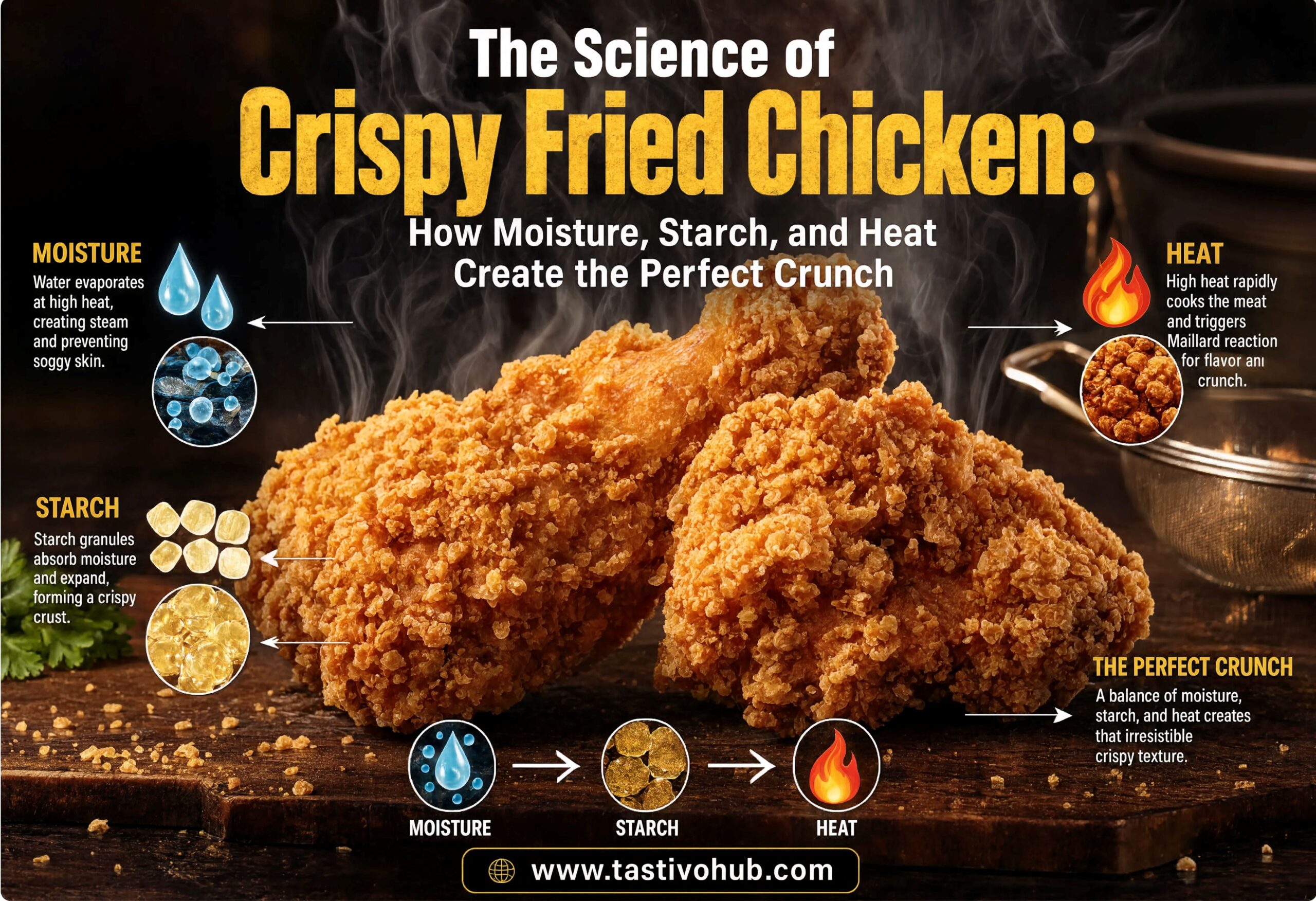
At its core, frying is a controlled battle between water and heat. Chicken contains a significant amount of water, often exceeding 65 percent of its total weight. When chicken enters hot oil, temperatures around the surface rapidly exceed the boiling point of water. This causes moisture near the exterior to convert into steam.
That steam plays an important role. During the early stages of frying, escaping steam actually helps prevent oil from penetrating deeply into the coating. As long as moisture is actively escaping, it creates outward pressure that pushes oil away. Once moisture loss slows down, oil absorption can increase significantly.
Starch is the second major factor behind crispiness. Flour contains starch granules that absorb moisture and swell when heated. This process, known as gelatinization, creates structure within the coating. Cornstarch and potato starch are particularly effective because they contain lower protein levels than wheat flour and create a lighter, more brittle crust. This brittleness is what our brains perceive as crunch.
Proteins also contribute to texture development. Proteins in flour, buttermilk, and the chicken itself undergo coagulation, meaning they unfold and form stronger networks as temperatures rise. These networks reinforce the crust and help it adhere to the meat.
Heat transfer is equally important. Oil acts as an extremely efficient medium for transferring thermal energy. Unlike air in an oven, oil surrounds the entire surface of the chicken, delivering consistent heat. This accelerates moisture evaporation and promotes the Maillard reaction, a series of chemical reactions between amino acids and sugars that create the deep golden-brown color and rich fried flavor.
The ideal fried chicken crust contains thousands of microscopic air pockets formed as water escapes during frying. These tiny voids create a rigid structure that fractures easily when bitten, producing the signature crunch associated with exceptional fried chicken.
Step-by-Step Technique Guide
Achieving maximum crispiness begins long before the chicken reaches the fryer. I always start by thoroughly drying the chicken after brining or marinating. Excess surface moisture can dilute the coating and interfere with crust formation. Patting the chicken dry with paper towels creates a more stable foundation for breading.
For the coating, I prefer combining all-purpose flour with cornstarch. A ratio of roughly three parts flour to one part cornstarch provides an excellent balance between adhesion and crispness. The flour contributes structure while the cornstarch enhances brittleness and crunch. Seasonings should be mixed directly into the dry coating to ensure even flavor distribution.
The next stage involves creating a rough, textured surface. Rather than pressing the coating flat, I gently squeeze portions of the flour mixture onto the chicken. These irregular clumps create additional surface area. More surface area means more moisture evaporation and more crunchy ridges after frying.
Oil temperature management is where many cooks struggle. I maintain frying temperatures between 325°F and 350°F (163°C to 177°C). Temperatures below this range allow excessive oil absorption before the crust sets. Temperatures above this range can burn the coating before the interior cooks properly.
Batch size matters just as much as temperature. Overcrowding causes dramatic temperature drops because cold chicken absorbs heat from the oil. I fry in smaller batches, allowing oil temperatures to recover quickly between additions.
After frying, I place chicken on a wire rack rather than paper towels. While paper towels absorb surface oil, they also trap steam beneath the chicken. That trapped steam softens the crust within minutes. A wire rack allows air circulation around the entire piece, preserving crispness.
For exceptionally thick pieces, a double-fry method can produce remarkable results. The first fry cooks the chicken and develops the crust structure. After a short resting period, a second fry at a slightly higher temperature removes additional moisture and intensifies crunch. Many professional kitchens rely on this technique because moisture reduction is one of the most effective ways to improve crispiness.
Comprehensive Troubleshooting Section
One of the most common problems is a coating that falls off during frying. This usually occurs when the chicken surface is too wet or when the breading is not given enough time to adhere. Allowing breaded chicken to rest for 15 to 30 minutes before frying helps the coating hydrate and bond to the surface.
Greasy fried chicken often indicates insufficient frying temperature. When oil is too cool, moisture escapes slowly and the crust takes longer to set. During this extended cooking period, oil can penetrate the coating more easily. If the chicken appears oily immediately after frying, increasing oil temperature slightly often solves the problem.
A crust that turns soft after several minutes typically results from residual moisture. Even after frying, moisture from the interior continues migrating outward. If too much moisture remains inside the crust, crispness gradually disappears. Using a wire rack, avoiding covered containers, and employing a double-fry method can dramatically reduce this issue.
Uneven browning frequently points to inconsistent oil temperature or overcrowding. Pieces placed too close together create localized cooling zones. Rotating pieces gently during frying and maintaining adequate spacing promotes more uniform color development.
If the exterior becomes dark before the interior reaches a safe temperature, the oil is likely too hot. Lowering the temperature by 15 to 25 degrees Fahrenheit usually restores balance between crust formation and internal cooking. A reliable thermometer is one of the most valuable tools for diagnosing this problem.
When the crust lacks crunch despite appearing golden, the coating may contain too much moisture-retaining flour and not enough starch. Increasing the percentage of cornstarch or potato starch often creates a noticeably crisper texture.
Frequently Asked Questions
Why does cornstarch make fried chicken crispier than flour alone?
Cornstarch contains virtually no gluten-forming proteins. Gluten creates chewiness and elasticity, which are desirable in bread but not necessarily in fried coatings. Cornstarch produces a more fragile structure that shatters easily when bitten, creating a stronger perception of crispiness.
Should I use buttermilk for the crispiest fried chicken?
Buttermilk contributes flavor and helps coatings adhere, but its primary benefit is not crispiness. The mild acidity slightly affects proteins on the chicken surface, improving tenderness. Crispiness depends more heavily on moisture control, starch selection, and proper frying temperature.
Why does restaurant fried chicken stay crispy longer?
Many restaurants use specialized starch blends, controlled frying equipment, and holding racks designed to maximize airflow. Some also use double-frying techniques that remove additional moisture. Reduced moisture content generally translates into longer-lasting crispness.
Is it better to fry chicken at a higher temperature for a shorter time?
Not necessarily. Extremely high temperatures can brown the crust before the interior cooks safely. The best results come from maintaining a moderate, stable temperature that allows moisture to escape efficiently while cooking the meat thoroughly. Consistency is far more important than extreme heat.
Can I make fried chicken crispy again after it becomes soggy?
Yes. Reheating on a wire rack in a hot oven is usually effective because it drives off excess moisture from the crust. Microwaves should be avoided because they generate steam that softens the coating even further. A brief return to hot, circulating dry heat is the most reliable way to restore texture.
other authentics articles duarecipes.com