
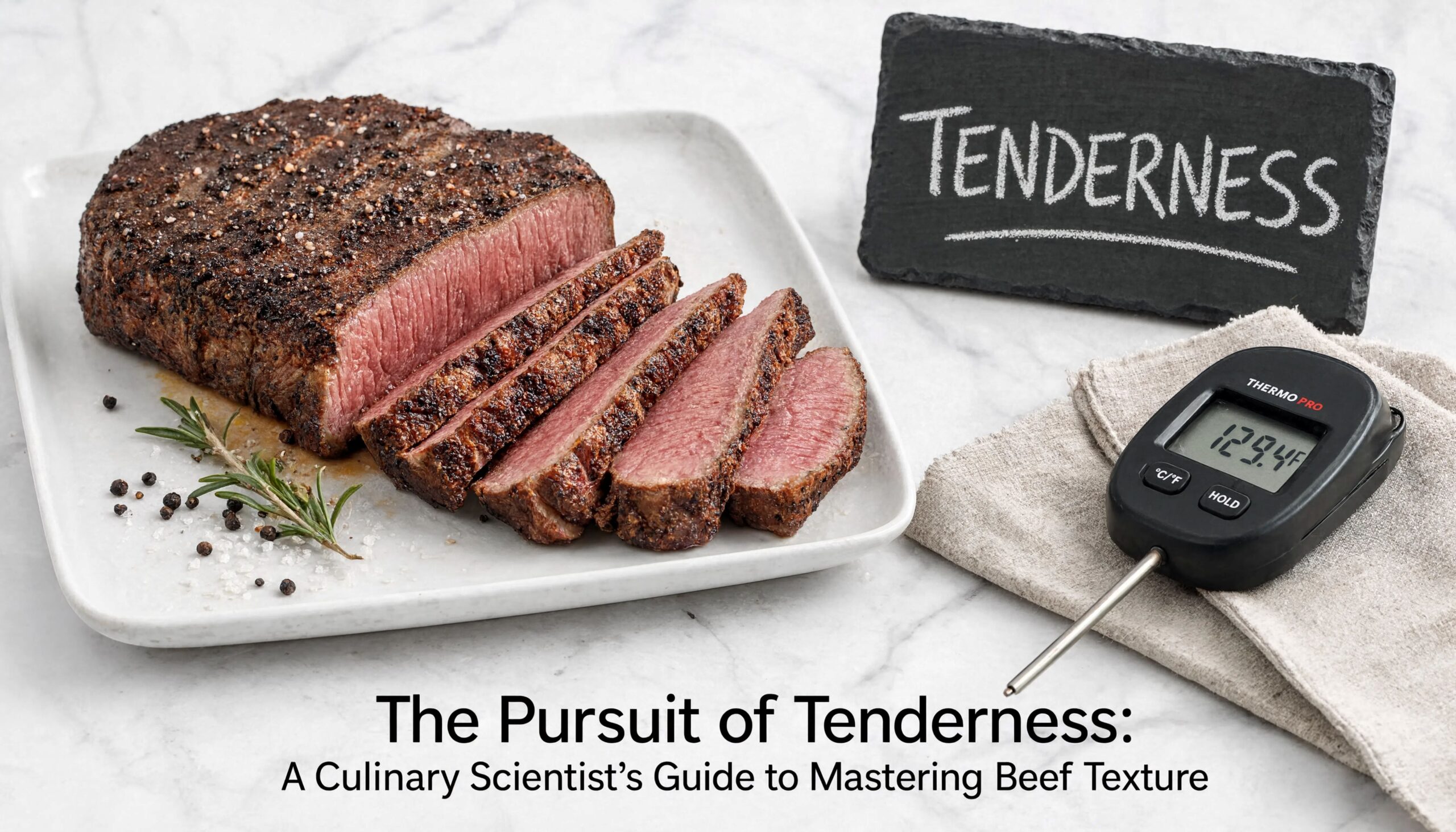
We’ve all faced it: the beautiful, perfectly seared steak that requires the jaw strength of a champion chewer. Or the pot roast that promised “fall-apart” tenderness but delivered a dry, stringy disappointment. For years, I believed I was simply unlucky with my beef selections. After fifteen years in professional kitchens and countless experiments in my home kitchen, I’ve learned that tenderness isn’t a matter of luck, it’s a matter of science and strategy. This guide is the culmination of that journey. We will move beyond simple recipes and dissect the very structure of beef to understand how to manipulate heat, time, and technique to guarantee a tender result, whether you are grilling a delicate fillet or braising a tough chuck roast.
The Cellular Blueprint of Tenderness
To achieve tenderness, you must understand the enemy of a pleasurable bite: connective tissue. This is primarily collagen, a tough, fibrous protein that acts like the scaffolding holding muscle fibers together. The more a muscle is used by the animal, the more collagen it develops to provide structural support. This is why cuts like the brisket and chuck, which come from the hard-working shoulder and chest, are so heavily marbled with this tissue .
Heat is the primary tool we use to transform this structural protein. When you apply a swift, high heat to a tender cut from the rib or loin, like a ribeye or strip steak—you are essentially searing the exterior and gently warming the interior. The goal here is to denature the myosin and actin proteins within the muscle fibers, causing them to coagulate and expel moisture. If you take it too far, the fibers contract so tightly that they squeeze out all the moisture, leading to a dry, tough steak . Conversely, tough cuts demand a different approach. Cooking these collagen-rich cuts low and slow causes the collagen to hydrolyze, breaking down into gelatin . This process literally melts the tough connective tissue, lubricating the muscle fibers and yielding that characteristic “fall-apart” texture we associate with braised dishes.
Mastering the Methodology: A Technique for Every Cut
The first and most critical step in my kitchen is selecting the right cut for the right job . I cannot overstate this. You would never grill a brisket like a steak, and you shouldn’t braise a filet mignon. For grilling or pan-searing, I reach for New York strips, ribeyes, or tenderloins. For the oven, a standing rib roast or tenderloin roast excels with dry heat . Tougher, more flavorful cuts like chuck roast, brisket, and round steak are destined for the braising pot or slow cooker . My current favorite technique for lean grilling cuts, like flank or skirt steak, is velveting, a Chinese restaurant classic. I toss thinly sliced beef with a slurry of baking soda and water (about 1 teaspoon per pound) and let it rest for 15 minutes. The alkaline environment alters the pH on the meat’s surface, making it nearly impossible to overcook and giving it a silky, tender texture .
When braising or stewing, patience is your only true ingredient. After searing the meat to develop deep, complex flavors through the Maillard reaction, I submerge it in a flavorful liquid and bring it to a gentle simmer. The temperature should be low enough that the liquid barely moves around 190°F to 200°F . At this temperature, the collagen breaks down into gelatin over several hours, and the meat becomes incredibly tender. For roasts, I am a firm believer in the reverse-sear method. I season the roast and place it on a rack in a low oven (around 225°F) until the internal temperature reaches about 10 degrees below my target. This dries the surface and cooks the meat evenly from edge to center. I then finish it with a hard sear in a smoking-hot skillet or a very hot oven for a perfect, crispy crust .
Troubleshooting the Tough Stuff
Even with the best intentions, problems arise. One of the most common is a chewy steak from a naturally tender cut. The culprit is almost always undercooking, where the fat and collagen haven’t had a chance to render, or, more commonly, overcooking, where the muscle fibers have squeezed out their moisture and tightened into leather. If you’re in the middle of cooking, the only fix for an undercooked steak is more time on the heat. An overcooked steak, however, cannot be saved. Prevention is key here, and I always rely on a reliable instant-read thermometer. Pull your steak off the heat 5-10 degrees before your desired doneness, as it will continue to cook while resting. For tough cuts that haven’t gotten enough time to transform, there is a rescue mission available. If your pot roast or brisket is still tough after the recommended cooking time, just keep cooking it. The “stall” is a real phenomenon where the moisture evaporating from the surface cools the meat, halting the cooking process. Wrap it tightly in foil or continue braising at a low temperature until a fork meets no resistance .
Another vital step that is often overlooked is slicing. The direction of the muscle fibers the “grain” is crucial. If you slice a steak or roast with the grain, you are creating long, unbroken strands of muscle that are difficult to chew. Always slice across the grain. This shortens the muscle fibers, making each bite easier to break apart .
Frequently Asked Questions
1. How do I tenderize a tough cut of meat if I don’t have hours to braise it?
Your best option is mechanical and chemical tenderization combined. The Jaccard meat tenderizer, which has dozens of tiny blades, is exceptionally effective at severing the long muscle fibers in cuts like flank steak. You can then marinate the meat in an acidic or enzymatic marinade for 1-2 hours. Acidic marinades (wine, citrus, vinegar) denature surface proteins, while enzymatic marinades like pineapple, kiwi, or papaya contain proteases that break down protein chains. Be careful with enzymatic marinades, they can turn the surface of the meat to mush if left for too long .
2. Why is my grass-fed beef always tougher than grain-fed?
This comes down to the animal’s diet and lifestyle. Grass-fed cattle generally have a more active lifestyle and a leaner diet, resulting in less intramuscular fat (marbling) and potentially more connective tissue, which contributes to a “chewier” texture . To compensate, you should cook grass-fed beef at a lower temperature and for a shorter time than its grain-fed counterpart. Pull it from the heat at a lower internal temperature (e.g., 120°F for rare) and let it rest well. The lack of fat means it will dry out much faster, so precision with the thermometer is critical.
3. Should I salt my steak before cooking or not?
I am firmly in the “pre-salting” camp. The science behind this is called dry-brining. When you season a steak with salt at least 40 minutes before cooking or even up to 24 hours, the salt initially draws moisture out of the meat via osmosis. Then, as the salt dissolves and the concentration gradient reverses, the salty liquid is drawn back into the meat, seasoning it from the inside out. This process also helps denature the proteins, allowing the meat to retain more moisture during cooking . For best results, use a generous amount of kosher salt and rest the steak uncovered on a wire rack in the fridge.
For authentic articles : duarecipes.com